 Back
BackMagnetic Fields and Forces: A Comprehensive Study Guide
Study Guide - Smart Notes
 Tailored notes based on your materials, expanded with key definitions, examples, and context.
Chapter 24: Magnetic Fields and Forces
24.1 Magnetism
Magnetism is a fundamental force of nature, distinct from electricity, though both share some similarities. It arises from moving electric charges and is characterized by the presence of magnetic poles and the ability to exert forces at a distance.
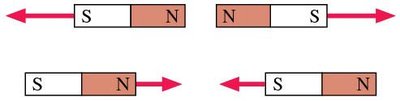
Magnetic Poles: Every magnet has two poles: a north pole and a south pole. Like poles repel, and unlike poles attract.
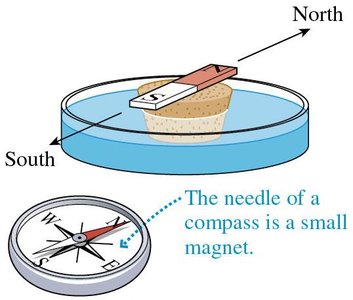
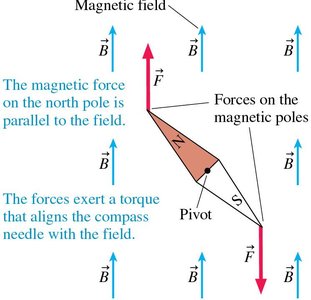
Permanent Magnets: Bar magnets are common examples, and a freely pivoting bar magnet acts as a compass, aligning with Earth's magnetic field.
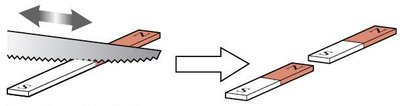
Magnetic Dipoles: Cutting a magnet in half results in two smaller magnets, each with both a north and a south pole. Isolating a single magnetic pole (a monopole) is not possible.
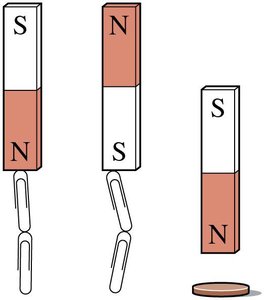
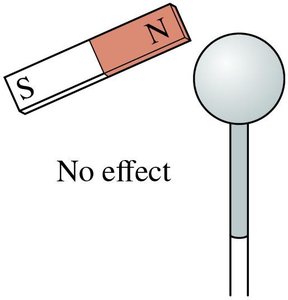
Magnetic Materials: Only certain materials (e.g., iron, nickel, cobalt) are attracted to magnets. Most materials (e.g., copper, aluminum, glass) are unaffected.
Magnetism vs. Electricity: Magnetic poles always come in pairs, while electric charges can exist independently as positive or negative charges.
24.2 The Magnetic Field
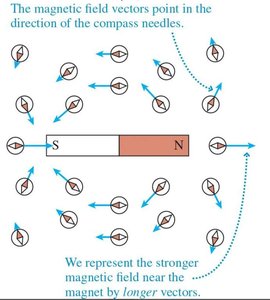
A magnetic field is a vector field that exists at every point in space and is denoted by \( \vec{B} \). It exerts forces on magnetic poles and moving charges, and its direction is defined as the direction a north pole would move.
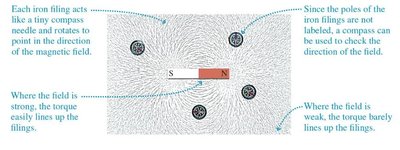
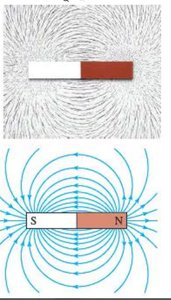
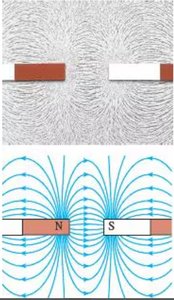
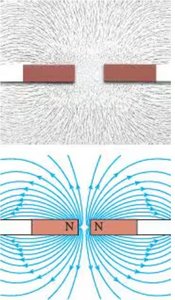
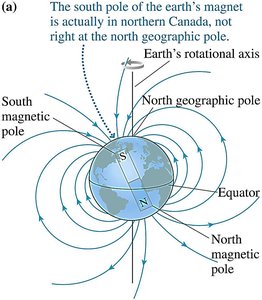
Field Visualization: Iron filings and compasses can be used to visualize magnetic field lines, which point away from the north pole and toward the south pole of a magnet.
Field Lines: Magnetic field lines form closed loops, unlike electric field lines, which begin and end on charges.
Earth's Magnetic Field: The geographic north pole is actually a magnetic south pole, as it attracts the north pole of a compass needle. Earth's field is generated by currents in its molten core.
24.3 Electric Current Creates a Magnetic Field
Moving electric charges (currents) generate magnetic fields. The direction and shape of the field depend on the geometry of the current.
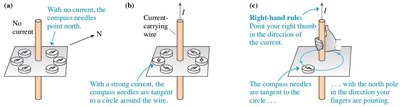
Oersted's Discovery: A current-carrying wire deflects a nearby compass, demonstrating that electric currents produce magnetic fields.
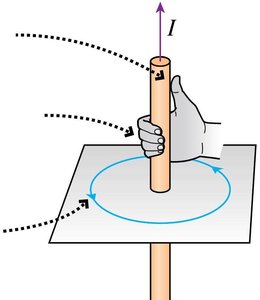
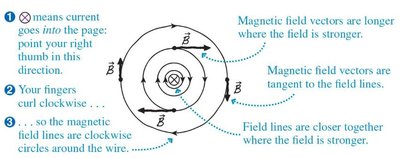
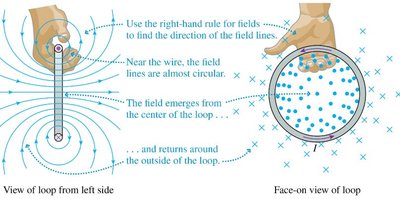
Right-Hand Rule (RHR) for Fields: Point your right thumb in the direction of the current; your curled fingers show the direction of the magnetic field lines encircling the wire.
Three-Dimensional Thinking: Magnetic field vectors and currents can be perpendicular to the plane of the page, requiring special notation (dots for out of the page, crosses for into the page).
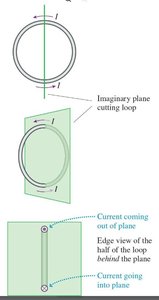
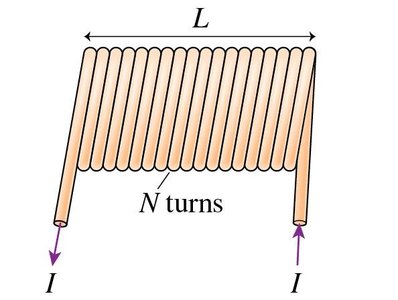
Current Loops and Solenoids: A loop of current produces a magnetic field similar to a bar magnet. A solenoid (many loops) creates a nearly uniform field inside.
24.4 Calculating the Magnetic Field Due to a Current
The strength of a magnetic field produced by a current can be calculated using specific formulas, depending on the configuration.
SI Unit: The unit of magnetic field strength is the Tesla (T), where \( 1\,\mathrm{T} = 1\,\mathrm{N}/(\mathrm{A} \cdot \mathrm{m}) \).
Long, Straight Wire: The field at a distance r from a wire carrying current I is given by: where is the permeability constant.
Current Loop (center):
Solenoid (inside):
Superposition Principle: The total magnetic field from multiple sources is the vector sum of the individual fields.
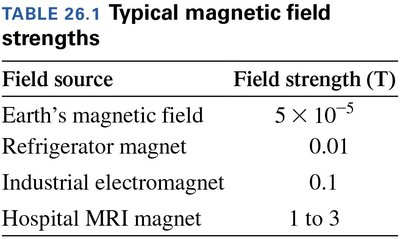
Field source | Field strength (T) |
|---|---|
Earth’s magnetic field | 5 × 10⁻⁵ |
Refrigerator magnet | 0.01 |
Industrial electromagnet | 0.1 |
Hospital MRI magnet | 1 to 3 |
24.5 The Magnetic Force on a Moving Charge
A moving charge in a magnetic field experiences a force, provided its velocity has a component perpendicular to the field. The force is always perpendicular to both the velocity and the magnetic field.
Force Formula: where is the angle between the velocity and the magnetic field.
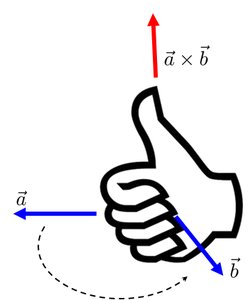
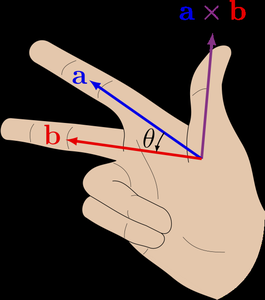
Right-Hand Rule for Forces: For a positive charge, point your thumb in the direction of velocity, your index finger in the direction of the field, and your middle finger points in the direction of the force. For a negative charge, the force is in the opposite direction.
Uniform Circular Motion: If the velocity is perpendicular to the field, the charge moves in a circle of radius .
Helical Motion: If the velocity has both perpendicular and parallel components to the field, the path is a helix.
24.6 Magnetic Forces on Current-Carrying Wires
A current-carrying wire in a magnetic field experiences a force, which is the sum of the forces on all moving charges in the wire.
Force on a Wire: where is the current, is the length of the wire in the field, and is the angle between the wire and the field.
Direction: Use the right-hand rule for forces as with a single charge.
Forces Between Wires: Parallel wires with currents in the same direction attract; opposite directions repel.
Current Loops: Loops with currents in the same direction attract; opposite directions repel. A current loop acts as a magnetic dipole.
24.7 Magnetic Fields Exert Torques on Dipoles
A current loop (magnetic dipole) in a uniform magnetic field experiences a torque that tends to align the dipole with the field.
Torque Formula: where is the magnetic dipole moment, is the area of the loop, and is the angle between and .
Stable and Unstable Equilibrium: The dipole is stable when aligned with the field (), and unstable when anti-aligned ().
Atomic Origin: Electrons have an inherent magnetic moment due to their spin, which is the quantum origin of magnetism.
24.8 Magnets and Magnetic Materials
Magnetic properties of materials arise from the alignment of atomic magnetic moments. Only certain materials, called ferromagnetic materials, can be strongly magnetized.
Ferromagnetism: In materials like iron and nickel, atomic moments align in regions called domains. When exposed to an external field, domains align, producing a net magnetic moment.
Induced Magnetism: When the external field is removed, domains generally return to random orientations, and the material loses its magnetization.
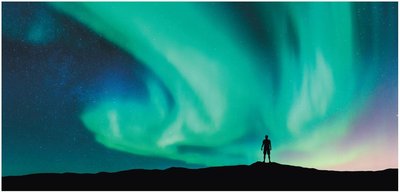
Additional info: The aurora (image_1) is an example of charged particles from the solar wind being trapped and spiraling along Earth's magnetic field lines, causing atmospheric ionization and light emission.
