 Back
BackMagnetic Fields and Forces: Study Notes
Study Guide - Smart Notes
 Tailored notes based on your materials, expanded with key definitions, examples, and context.
Ch 24: Magnetic Fields and Forces
Concept: How Magnets Work
Magnets are materials that exert attractive or repulsive forces on other materials, primarily due to their atomic structure. The most common magnetic materials are iron (Fe), cobalt (Co), and nickel (Ni), but not all samples of these elements are magnetic. Magnetic forces only act between magnetic materials, while electrical forces act between charged materials.
Magnetic Poles: Magnets have two distinct ends called poles—North and South. Like poles repel, and unlike poles attract, similar to electric charges.
Comparison with Electricity: In electricity, we have positive and negative charges; in magnetism, we have North and South poles.
Polarity: If you cut a magnet in half, each piece will still have both a North and a South pole. Magnetic monopoles do not exist in nature; only dipoles do.
Example: If two magnets are fixed and can rotate, releasing one or both will cause them to align so that opposite poles face each other, minimizing potential energy.
Concept: Magnetic Fields and Magnetic Dipoles
Just as electric charges produce electric fields (E), magnets produce magnetic fields (B). The field lines of a magnetic dipole (a bar magnet) emerge from the North pole and enter the South pole outside the magnet, forming closed loops.
Direction: Outside the magnet, the field goes from North to South.
Key Difference: Electric monopoles (single charges) exist, but magnetic monopoles do not; only dipoles exist.
Example: If you cut a bar magnet in half, each half will have both a North and a South pole.
Concept: Compasses and Earth's Magnetic Field
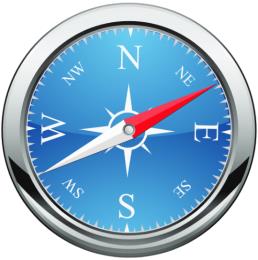
Compasses work because the Earth itself acts as a giant magnet. The end of a compass needle that points toward the geographic North is labeled the North pole of the magnet. This means Earth's geographic North is actually a magnetic South pole.
Earth as a Magnet: The Earth generates its own magnetic field, which is why compasses align with it.
Polarity: The North pole of a compass needle points toward Earth's geographic North, which is actually a magnetic South pole.
Field Direction: The direction of the magnetic field at any point is the direction a North pole would move.

Summary of Magnetism Problems
Both electric charges and magnets produce fields and feel forces. In magnetism, we focus on the directions of fields and forces, and in electricity, calculations depend on whether charges or currents are present.
Producing Fields: Moving charges and currents produce magnetic fields.
Feeling Forces: Charges and wires feel forces only if they are moving or have current, respectively.
Key Equations:
Magnetic field due to a moving charge:
Magnetic field due to a long straight wire:
Magnetic field at the center of a loop:
Magnetic field inside a solenoid:
Force on a moving charge:
Force on a current-carrying wire:
Torque on a current loop:
Magnetic Field Produced by Straight Currents
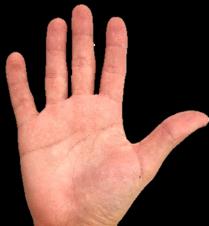
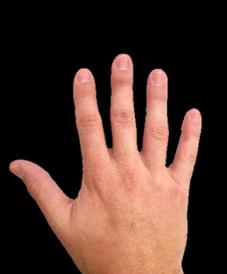
Moving charges in a wire (current) produce magnetic fields. The direction of the field is given by the right-hand rule: point your thumb in the direction of the current, and your fingers curl in the direction of the magnetic field lines.
Magnitude for a long straight wire:
Direction: Use the right-hand rule.
Superposition: If two wires produce fields at the same location, add them if in the same direction, subtract if opposite.
Magnetic Field Produced by Loops and Solenoids
When a wire is formed into a loop or a solenoid, the magnetic field inside becomes stronger and more uniform.
Single Loop:
Multiple Loops:
Solenoid:
Solenoids produce fields similar to bar magnets.
Force on Moving Charges and the Right-Hand Rule
A charge moving in a magnetic field experiences a force perpendicular to both its velocity and the magnetic field. The direction is given by the right-hand rule for positive charges and the left-hand rule for negative charges.
Magnitude:
Direction: Right-hand rule (fingers in direction of velocity, curl toward B, thumb points in direction of force for positive charges).
Circular Motion in Magnetic Fields
When a charged particle moves perpendicular to a uniform magnetic field, it undergoes circular motion due to the magnetic force acting as a centripetal force.
Radius of path:
Work done by magnetic force: ; for circular motion, since force is perpendicular to displacement.
The Mass Spectrometer
A mass spectrometer measures the mass-to-charge ratio of ions by accelerating them through a potential difference, selecting a velocity, and deflecting them in a magnetic field.
Key Steps: Ionization & acceleration, velocity selection, deflection, and detection.
Radius of path in B-field:
Velocity selector:
Kinetic energy from acceleration:
Force on Current-Carrying Wires
When a current-carrying wire is placed in a magnetic field, it experiences a force given by:
Magnitude:
Direction: Right-hand rule for current direction.
Mutual Magnetic Force on Parallel Currents
Parallel current-carrying wires exert forces on each other due to their magnetic fields.
Force per unit length:
Direction: Currents in the same direction attract; opposite directions repel.
Force and Torque on Current Loops
A current loop in a magnetic field experiences a torque that tends to align the loop's magnetic moment with the field.
Torque:
Magnetic moment:
Net force on a loop in a uniform field is zero.
Magnetic Field Produced by Moving Charges
A moving charge produces a magnetic field whose magnitude and direction can be found using the Biot-Savart Law and the right-hand rule.
Magnitude:
Direction: Right-hand rule (grab the line of motion).
Mutual Magnetic Force on Parallel Charges
Parallel moving charges exert magnetic forces on each other, similar to parallel currents in wires.
Force:
Direction: Same direction and charge attract; opposite repel.
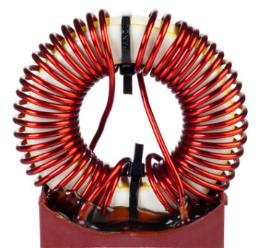
Magnetic Field by Toroidal Solenoids
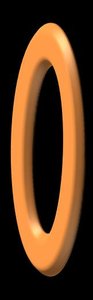
A toroidal solenoid is a coil shaped like a doughnut. The magnetic field inside a toroid is given by:
Field inside toroid: , where is the mean radius.
Field exists only inside the toroid, zero outside.
Additional info: These notes cover all major concepts, equations, and applications relevant to magnetic fields and forces as outlined in a typical college physics curriculum.
