 Back
BackMagnetism: Magnetic Fields, Forces, and Applications
Study Guide - Smart Notes
 Tailored notes based on your materials, expanded with key definitions, examples, and context.
Magnetism and Magnetic Fields
Magnets and Their Properties
Magnets are materials that produce a magnetic field, which can attract certain metals such as iron, cobalt, and nickel. Each magnet has two poles: a north pole and a south pole. The magnetic effect is strongest at the poles. - Key Point 1: Poles are the ends of a magnet where the magnetic force is strongest. - Key Point 2: Like poles repel and unlike poles attract. - Key Point 3: Magnetic monopoles have never been observed; cutting a magnet produces two smaller magnets, each with both poles. - Example: A horseshoe magnet attracts iron pins, demonstrating the magnetic force. 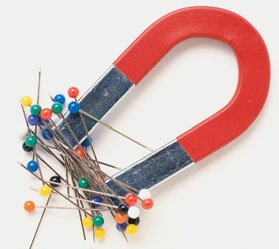
Magnetic Field Lines
Magnetic fields can be visualized using field lines, which show the direction and strength of the field. - Key Point 1: The direction of the magnetic field at any point is tangent to the field line. - Key Point 2: The density of field lines indicates the strength of the field. - Key Point 3: Magnetic field lines always form closed loops, unlike electric field lines. - Example: Iron filings and compass needles reveal the field lines around a bar magnet. 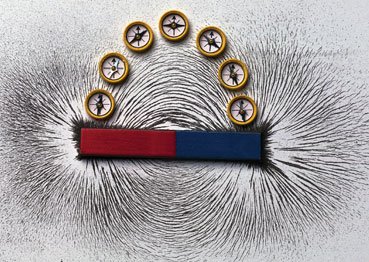
Earth's Magnetic Field
The Earth acts as a giant magnet, with its magnetic field produced by electric currents in its molten iron core. - Key Point 1: The north magnetic pole is actually a magnetic south pole, since it attracts the north pole of a compass. - Key Point 2: The magnetic poles do not coincide with the geographic poles. - Key Point 3: The angle between the magnetic field and the horizontal is called the angle of dip or inclination. - Example: Using a compass and map requires accounting for magnetic declination. 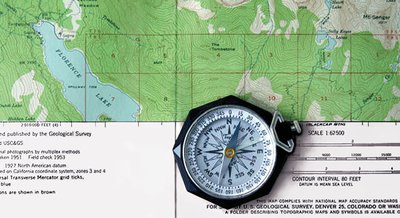
Electric Currents and Magnetic Fields
Electric Currents Produce Magnetic Fields
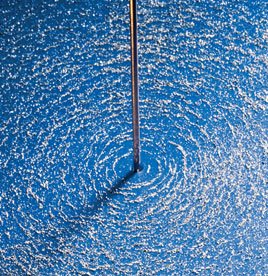
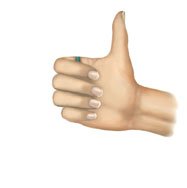
An electric current in a wire produces a magnetic field, as discovered by Oersted. - Key Point 1: The magnetic field lines around a straight current-carrying wire form circles centered on the wire. - Key Point 2: The right-hand rule helps determine the direction of the magnetic field: grasp the wire with your right hand, thumb pointing in the direction of current, fingers curl in the direction of the field. - Example: Compass needles deflect around a current-carrying wire, showing the circular field. 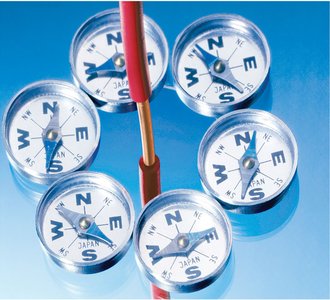
Forces Due to Magnetic Fields
Force on a Current-Carrying Wire
A wire carrying current in a magnetic field experiences a force perpendicular to both the current and the field. - Key Point 1: The force is given by where is current, is length, is magnetic field strength, and is the angle between current and field. - Key Point 2: The direction of the force is determined by the right-hand rule: fingers point in the direction of current, bend toward the field, thumb points in the direction of force.
Force on a Moving Charge
A moving electric charge in a magnetic field experiences a force perpendicular to both its velocity and the field. - Key Point 1: The force is given by where is charge, is velocity, is field strength, and is the angle between velocity and field. - Key Point 2: The force is maximum when the charge moves perpendicular to the field. - Key Point 3: The path of a charged particle moving perpendicular to a uniform magnetic field is a circle, with radius .
Magnetic Field Due to a Long Straight Wire
Field Strength and Formula
The magnetic field produced by a long straight wire is proportional to the current and inversely proportional to the distance from the wire. - Key Point 1: where is the permeability of free space, is current, is distance.
Solenoids and Electromagnets
Solenoids
A solenoid is a coil of wire that produces a strong, nearly uniform magnetic field inside when current flows. - Key Point 1: The field inside a solenoid is where is the number of turns, is current, is length.
Ferromagnetism: Domains and Hysteresis
Ferromagnetic Materials
Ferromagnetic materials, such as iron, are composed of domains that act as tiny magnets. - Key Point 1: In an unmagnetized material, domains are randomly oriented. - Key Point 2: In a magnetized material, domains are aligned, producing a strong magnetic field. - Example: Iron filings align along the field lines of a permanent magnet. 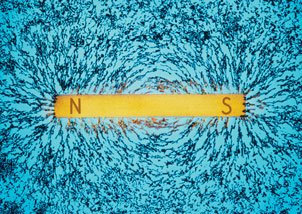
Summary Table: Right-Hand Rules
Situation | How to Orient Right Hand | Result |
|---|---|---|
Magnetic field produced by current | Wrap fingers around wire, thumb in direction of current | Fingers curl in direction of field |
Force on current due to field | Fingers point in direction of current, bend toward field | Thumb points in direction of force |
Force on moving charge due to field | Fingers point in direction of velocity, bend toward field | Thumb points in direction of force (positive charge) |
Applications of Magnetism
Motors, Loudspeakers, Galvanometers
Devices such as motors, loudspeakers, and galvanometers operate based on the force exerted by magnetic fields on current-carrying wires. - Key Point 1: Motors convert electrical energy to mechanical energy using rotating coils in a magnetic field. - Key Point 2: Loudspeakers convert electrical signals to sound by moving a coil in a magnetic field. - Key Point 3: Galvanometers measure current by the deflection of a coil in a magnetic field.
Additional info:
- The notes include expanded explanations, definitions, and formulas for completeness. - Images are included only when directly relevant to the explanation. - The summary table is recreated from the original content for clarity.
