 Back
BackOhm’s Law, Resistors, and DC Circuits: Series and Parallel Connections
Study Guide - Smart Notes
 Tailored notes based on your materials, expanded with key definitions, examples, and context.
Ohm’s Law and Electrical Resistance
Definition and Historical Context
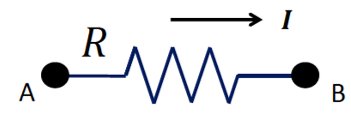
Ohm’s Law is a fundamental principle in physics that relates the current flowing through a conductor to the voltage across it and its resistance. It was formulated by Georg Simon Ohm in the 19th century.
Ohm’s Law: The current (I) through a conductor between two points is directly proportional to the voltage (V) across the two points and inversely proportional to the resistance (R).
Mathematical Form:
Resistance (R): The property of a material that resists the flow of electric current, measured in ohms (Ω).
Physical Meaning: Resistance is caused by dissipative friction; resistors heat up as energy is lost by charges moving over a potential difference.

Types of Resistors
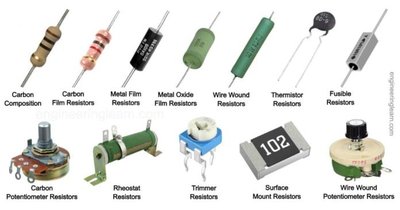
Resistors are electronic components designed to provide a specific resistance in a circuit. They come in various types, each with unique properties and applications.
Carbon Composition, Carbon Film, Metal Film, Metal Oxide Film, Wire Wound: Common fixed-value resistors.
Thermistor: Resistance changes with temperature.
Fusible Resistor: Acts as a fuse, breaking the circuit if current is too high.
Potentiometer, Rheostat, Trimmer: Variable resistors for adjusting resistance in a circuit.
Surface Mount: Compact resistors for modern electronics.
Resistors in Series and Parallel
Series Connection
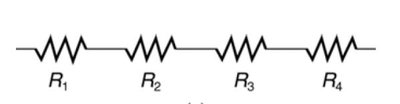
When resistors are connected end-to-end, they are said to be in series. The same current flows through each resistor, and the total resistance is the sum of individual resistances.
Equivalent Resistance (Series):
Current: The same through all resistors.
Voltage: The total voltage is divided among the resistors.

Parallel Connection
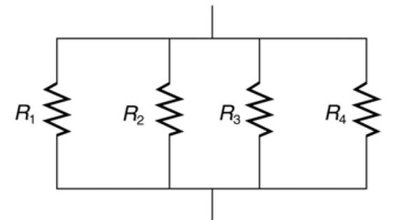
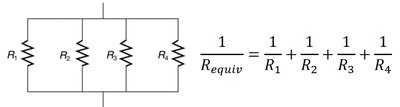
When resistors are connected across the same two points, they are in parallel. The voltage across each resistor is the same, but the total current is divided among the parallel branches.
Equivalent Resistance (Parallel):
Voltage: The same across all resistors.
Current: The total current is the sum of the currents through each resistor.
Applications: Household Circuits and Safety
Household Circuits
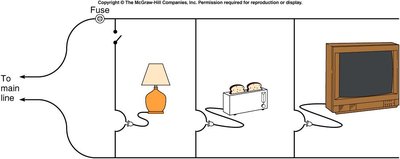
In household wiring, devices are typically connected in parallel so that each device receives the full voltage of the power supply. This allows independent operation of each device.
Parallel wiring: Ensures that turning one device on or off does not affect others.
Fuses and Circuit Breakers: Protect circuits from excessive current by breaking the circuit if the current exceeds a safe value.
Common Household Devices
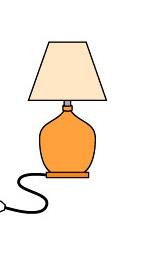
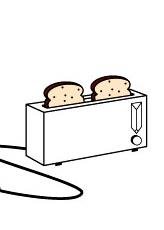
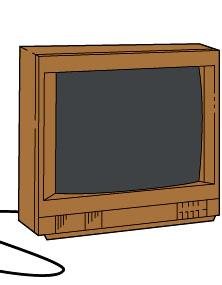
Examples of devices connected in parallel in a typical household circuit include lamps, toasters, and televisions.
Overloading and Safety Hazards
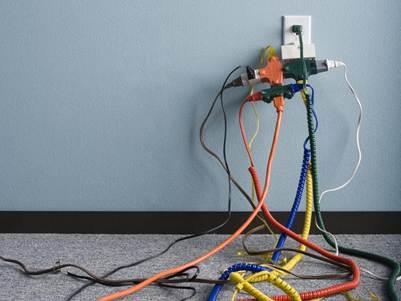
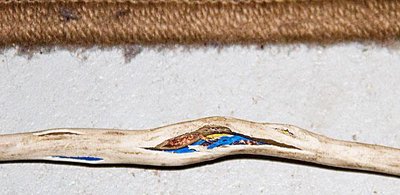
Plugging too many devices into one outlet or using damaged wires can cause excessive current, leading to overheating, blown fuses, or even fire hazards.
Short Circuit: Accidental creation of a low-resistance path, causing a large current.
Ground Fault: Unintended path for current to ground, potentially dangerous.
Summary Table: Series vs. Parallel Resistors
Property | Series | Parallel |
|---|---|---|
Current | Same through all resistors | Divided among branches |
Voltage | Divided among resistors | Same across all resistors |
Equivalent Resistance | ||
Example | Old Christmas lights | Household outlets |
