 Back
BackPearson Edexcel International GCSE in Science (Double Award): Physics Study Guide
Study Guide - Smart Notes
 Tailored notes based on your materials, expanded with key definitions, examples, and context.
Physics Content Overview
Forces and Motion
Electricity
Waves
Energy Resources and Energy Transfers
Solids, Liquids, and Gases
Magnetism and Electromagnetism
Radioactivity and Particles
Astrophysics
Forces and Motion
Units
Kilogram (kg)
Metre (m)
Metre/second (m/s)
Metre/second2 (m/s2)
Newton (N)
Second (s)
Newton/kilogram (N/kg)
Movement and Position
Understanding motion involves analyzing distance, speed, velocity, and acceleration. Key relationships include:
Average speed:
Acceleration: , where is final velocity, is initial velocity, and is time taken.
Velocity-time graphs: The gradient gives acceleration; the area under the graph gives distance travelled.
Equation of motion:
Forces, Movement, Shape, and Momentum
Forces cause changes in motion and shape. Important concepts include:
Resultant force: The net force acting along a line.
Friction: A force opposing motion.
Newton's Second Law:
Weight:
Stopping distance: Sum of thinking and braking distances.
Elastic behavior: Ability to recover original shape after deformation.
Electricity
Units
Key units in electricity include:
Ampere (A)
Coulomb (C)
Joule (J)
Ohm (\Omega)
Volt (V)
Watt (W)
Mains Electricity
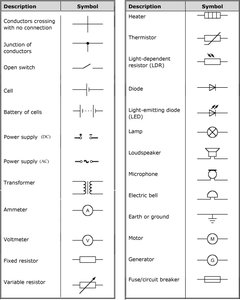
Safety features in domestic appliances include insulation, earthing, fuses, and circuit breakers. Electrical energy transfer results in heating, which is used in devices like kettles and heaters.
Power:
Energy transferred:
Alternating current (a.c.) vs. direct current (d.c.): Mains electricity is a.c.; batteries supply d.c.
Energy and Voltage in Circuits
Understanding series and parallel circuits is essential for practical applications. Key relationships:
Voltage:
Charge:
Energy:
Current is conserved at junctions; voltage is the same across parallel components.
Waves
Units
Units for waves include degree (°), hertz (Hz), metre (m), metre/second (m/s), and second (s).
Properties of Waves
Waves transfer energy and information without transferring matter. Types include:
Longitudinal waves: Oscillations parallel to direction of travel (e.g., sound).
Transverse waves: Oscillations perpendicular to direction of travel (e.g., light).
Wave speed:
Frequency:
The Electromagnetic Spectrum
Light is part of the electromagnetic spectrum, which includes radio, microwave, infrared, visible, ultraviolet, x-ray, and gamma ray. All travel at the same speed in free space.
Order: Decreasing wavelength, increasing frequency.
Uses: Radio waves for communication, microwaves for cooking, infrared for heaters, visible for optical fibres, ultraviolet for lamps, x-rays for medical imaging, gamma rays for sterilization.
Light and Sound
Law of reflection: Angle of incidence equals angle of reflection.
Refraction:
Critical angle:
Energy Resources and Energy Transfers
Units
Units include kilogram (kg), joule (J), metre (m), newton (N), second (s), watt (W).
Energy Transfers
Energy can be stored in various forms and transferred by different mechanisms:
Chemical, kinetic, gravitational, elastic, thermal, magnetic, electrostatic, nuclear
Transfers: mechanically, electrically, by heating, by radiation
Efficiency:
Work and Power
Work done:
Gravitational potential energy:
Kinetic energy:
Power:
Solids, Liquids, and Gases
Units
Units include degree Celsius (°C), Kelvin (K), joule (J), kilogram (kg), kilogram/metre3 (kg/m3), metre (m), newton (N), pascal (Pa).
Density and Pressure
Density:
Pressure:
Pressure difference:
Ideal Gas Molecules
Gas molecules move randomly and exert pressure.
Absolute zero is –273°C.
Kelvin temperature is proportional to average kinetic energy.
Pressure and temperature:
Pressure and volume:
Magnetism and Electromagnetism
Units
Units include ampere (A), volt (V), watt (W).
Magnetism
Magnets attract/repel other magnets and attract magnetic substances.
Magnetic field lines show the direction and strength of the field.
Magnetism can be induced in some materials.
Electromagnetism
Electric current in a conductor produces a magnetic field.
Force on a current-carrying wire in a magnetic field is used in motors and loudspeakers.
Left-hand rule predicts direction of force.
Electromagnetic Induction
Voltage is induced when a conductor moves through a magnetic field.
Electricity can be generated by rotating a magnet within a coil.
Radioactivity and Particles
Units
Units include becquerel (Bq), centimetre (cm), hour (h), minute (min), second (s).
Radioactivity
Atoms consist of protons, neutrons, electrons.
Alpha, beta, gamma rays are ionising radiations from unstable nuclei.
Penetrating power and ionising ability differ for each type.
Half-life is the time for half the radioactive nuclei to decay.
Uses include industry and medicine; dangers include mutations and waste disposal.
Fission and Fusion
Nuclear fission splits heavy nuclei, releasing energy and neutrons.
Fusion combines light nuclei, releasing energy (source for stars).
Fusion requires high temperature and pressure due to electrostatic repulsion.
Astrophysics
Units
Units include kilogram (kg), metre (m), metre/second (m/s), newton (N), second (s), newton/kilogram (N/kg).
Motion in the Universe
The universe contains billions of galaxies; our solar system is in the Milky Way.
Gravitational field strength varies between planets.
Gravitational force causes orbits of moons, planets, satellites, comets.
Orbital speed:
Stellar Evolution
Stars are classified by colour and temperature.
Evolution stages: nebula → main sequence → red giant → white dwarf (for Sun-like stars).
More massive stars evolve differently, possibly ending as supernovae or black holes.
