 Back
BackRotational Motion, Angular Momentum, Statics, and Fluids: Study Notes for Physics for Scientists & Engineers (Giancoli, Chapters 10–13)
Study Guide - Smart Notes
 Tailored notes based on your materials, expanded with key definitions, examples, and context.
Rotational Motion
Angular Quantities
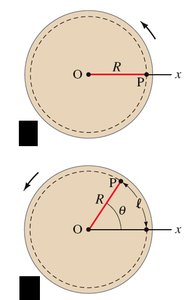
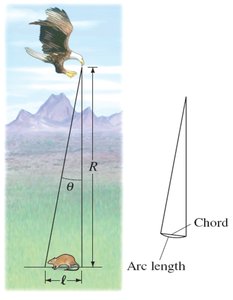
Rotational motion involves objects moving in circles around an axis. All points on a rotating object move through the same angle in the same time. The angle θ in radians is defined as the ratio of arc length l to radius R: .
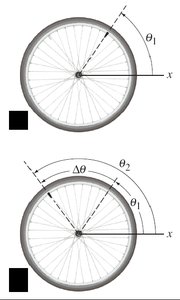
Angular displacement: The change in angle as an object rotates.
Angular velocity (ω): The rate of change of angular displacement. Average angular velocity:
Instantaneous angular velocity:
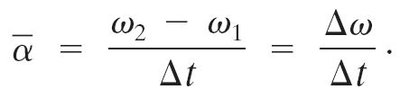
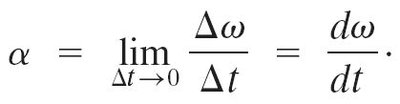
Angular acceleration (α): The rate of change of angular velocity. Average angular acceleration:
Instantaneous angular acceleration:
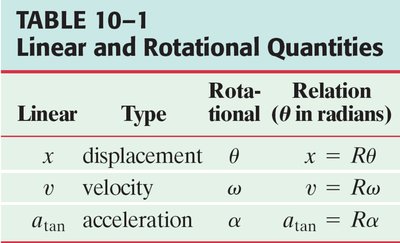
Linear and Rotational Quantities
There is a direct correspondence between linear and rotational quantities:
Linear | Type | Rotational | Relation (θ in radians) |
|---|---|---|---|
x | displacement | θ | x = Rθ |
v | velocity | ω | v = Rω |
atan | acceleration | α | atan = Rα |
Vector Nature of Angular Quantities
Angular velocity and angular acceleration are vectors, pointing along the axis of rotation. Their direction is determined by the right-hand rule.
Constant Angular Acceleration
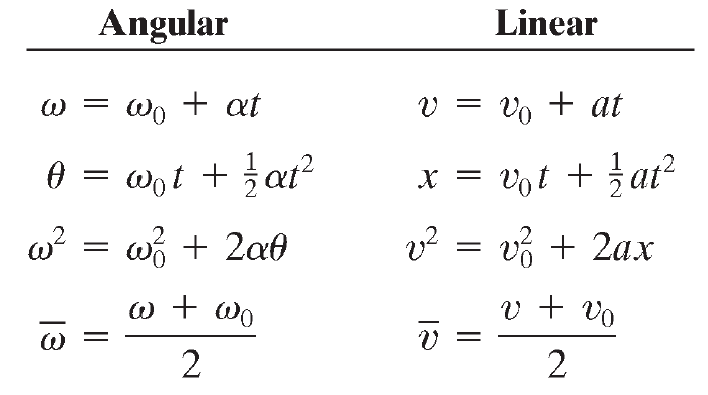
The equations of motion for constant angular acceleration mirror those for linear motion:
Angular | Linear |
|---|---|
Torque
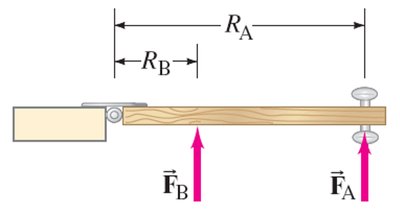
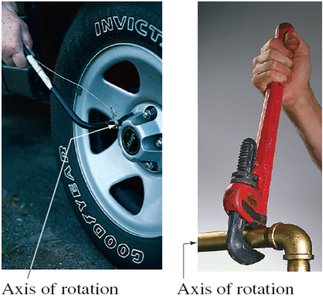
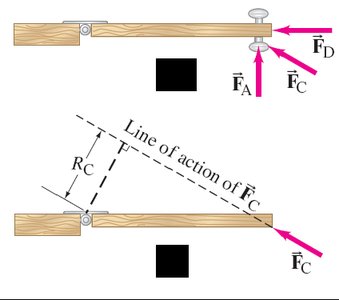
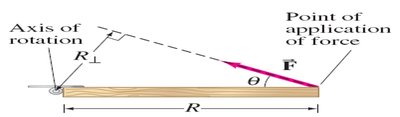
Torque is the rotational equivalent of force. It is defined as the product of force and lever arm (perpendicular distance from axis of rotation): .
Lever arm: The distance from the axis of rotation to the line of action of the force.
Torque increases with longer lever arms.
Rotational Dynamics; Torque and Rotational Inertia
Newton's second law for rotation: , where I is the moment of inertia (rotational inertia).
Moment of inertia depends on mass distribution and axis location.
Objects with mass farther from the axis have greater rotational inertia.
Determining Moments of Inertia
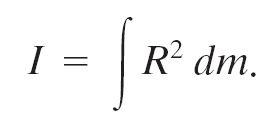
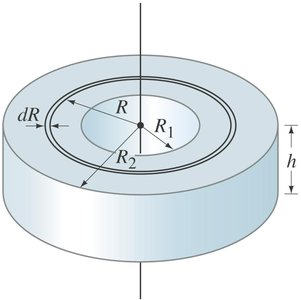
Moment of inertia for continuous mass distributions: .
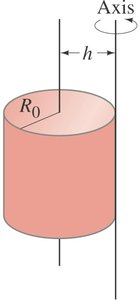
Parallel-axis theorem: (for axis parallel to center of mass axis).
Perpendicular-axis theorem: Valid for flat objects.
Rotational Kinetic Energy
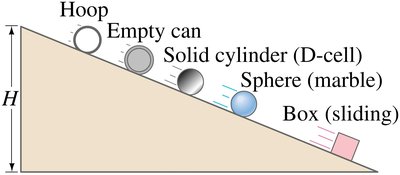
The kinetic energy of a rotating object: . For objects with both translational and rotational motion: .
Rotational Plus Translational Motion; Rolling
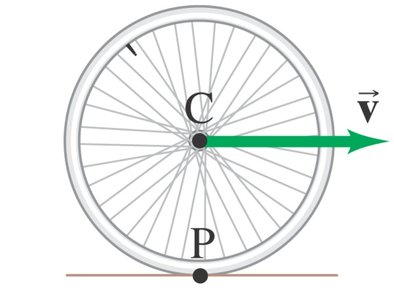
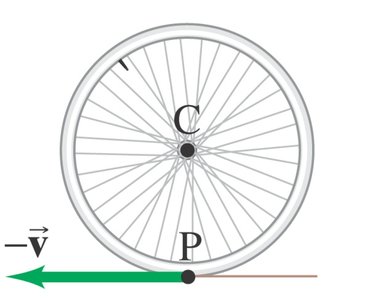
For rolling without slipping, the point of contact is instantaneously at rest. The center moves with velocity v, and the linear speed relates to angular speed: .
Angular Momentum; General Rotation
Angular Momentum—Objects Rotating About a Fixed Axis
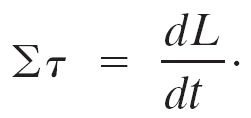
Angular momentum L is the rotational analog of linear momentum: . Newton's second law for rotation: .

Conservation of Angular Momentum
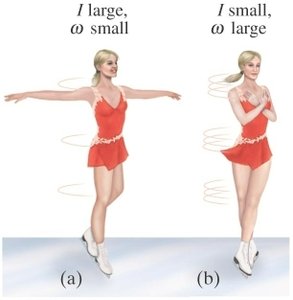
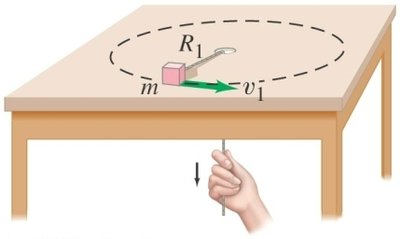
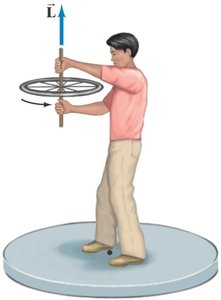
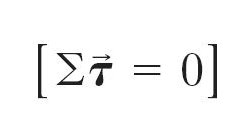
If the net external torque is zero, angular momentum is conserved: .
Vector Cross Product; Torque as a Vector
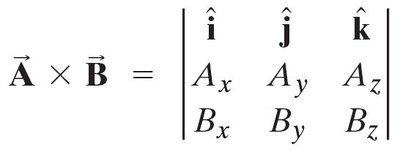
The cross product defines the direction of angular momentum and torque. is perpendicular to both vectors.

Angular Momentum of a Particle
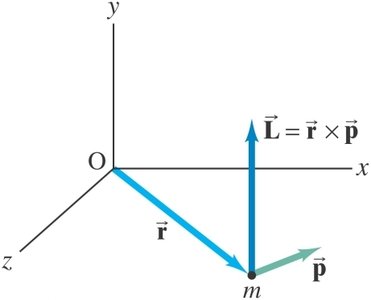
For a particle: , where r is the position vector and p is the linear momentum.

Angular Momentum and Torque for a System of Particles; General Motion
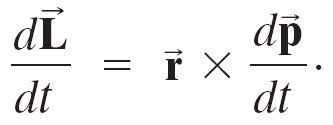
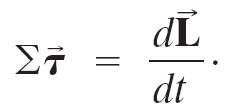
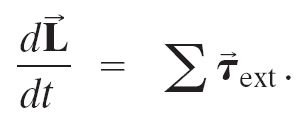
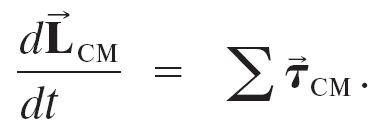
For a system, only external torques change total angular momentum. .
Conservation of Angular Momentum: Applications
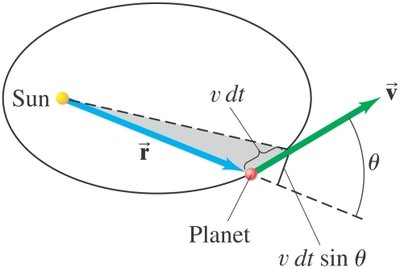
Examples include planetary motion (Kepler's second law), collisions, and spinning objects.

Static Equilibrium; Elasticity and Fracture
Conditions for Equilibrium
An object is in equilibrium if the net force and net torque are zero:
(translational equilibrium)
(rotational equilibrium)
Solving Statics Problems
Steps include drawing free-body diagrams, resolving forces, and writing equilibrium equations.

Stability and Balance
Stable equilibrium returns to original position after disturbance; unstable moves away. Center of gravity must be over the base for stability.
Elasticity; Stress and Strain
Hooke's law: . Stress is force per unit area; strain is change in length over original length. Young's modulus: .
Fracture
If stress exceeds elastic limit, material fractures. Safety factors are used in engineering design.
Fluids
Phases of Matter
Solids have definite shape and size; liquids have fixed volume but variable shape; gases are compressible and take any shape. Liquids and gases are called fluids.
Density and Specific Gravity
Density: ; SI unit is kg/m3. Specific gravity is the ratio of density to water.
Pressure in Fluids
Pressure: ; SI unit is pascal (Pa). Pressure at depth: .
Atmospheric Pressure and Gauge Pressure
Atmospheric pressure at sea level is about Pa. Gauge pressure is above atmospheric; absolute pressure is sum of atmospheric and gauge.
Pascal’s Principle
External pressure applied to a confined fluid is transmitted equally throughout the fluid. Used in hydraulic systems.
Measurement of Pressure; Gauges and the Barometer
Pressure is measured in pascals, atmospheres, bars, and mmHg. Barometers and manometers are used for measurement.
Buoyancy and Archimedes’ Principle
Buoyant force equals the weight of displaced fluid. .
Fluids in Motion; Flow Rate and the Equation of Continuity
Laminar flow is smooth; turbulent flow has eddies. Equation of continuity: for incompressible fluids.
Bernoulli’s Equation
Where fluid velocity is high, pressure is low. Bernoulli’s equation: .
Viscosity
Viscosity is internal friction in fluids. Poiseuille’s equation describes flow in tubes: .
Surface Tension and Capillarity
Surface tension is force per unit length acting perpendicular to the surface. Capillarity is the rise or fall of liquid in a narrow tube due to surface tension.
Pumps and the Heart
Pumps move fluids; the heart is a biological pump.
Summary Tables
Linear and Rotational Quantities
Linear | Rotational | Relation |
|---|---|---|
x | θ | x = Rθ |
v | ω | v = Rω |
atan | α | atan = Rα |
Key Equations
Angular velocity:
Angular acceleration:
Torque:
Moment of inertia:
Rotational kinetic energy:
Angular momentum:
Pressure:
Buoyant force:
Bernoulli’s equation:
