 Back
BackStep-by-Step Guidance for PHY 2053 General Physics I Quiz Questions
Study Guide - Smart Notes
 Tailored notes based on your materials, expanded with key definitions, examples, and context.
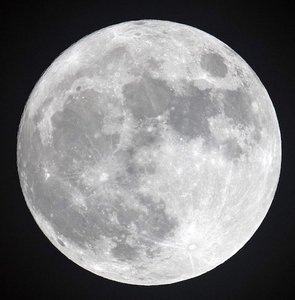
Q1. What is the approximate distance between the Earth and the Moon?
Background
Topic: Units and Orders of Magnitude
This question tests your understanding of astronomical distances and your ability to estimate and compare large-scale measurements using scientific notation.
Key Terms:
Distance: The length between two points, often measured in kilometers (km) for astronomical objects.
Scientific notation: A way to express very large or very small numbers using powers of ten.
Step-by-Step Guidance
Recall that the Earth-Moon distance is a commonly cited value in physics and astronomy. Think about the scale: is it closer to hundreds, thousands, or hundreds of thousands of kilometers?
Compare the answer choices. Notice the difference in orders of magnitude (e.g., 380 km vs. 380,000 km).
Use scientific notation to help visualize the size of each option. For example, .
Consider what you know about the Moon's orbit and typical values for planetary distances.
Try solving on your own before revealing the answer!
Final Answer: 380,000 km
The average distance from the Earth to the Moon is about 380,000 km, which matches option D. This is a standard value used in introductory physics and astronomy.
Q2. What is the number of seconds in one year?
Background
Topic: Unit Conversion
This question tests your ability to convert units, specifically from years to seconds, using multiplication and knowledge of time units.
Key Terms and Formulas:
Unit conversion: Changing from one unit to another using conversion factors.
Time units: 1 year = 365 days (or 365.25 for leap years), 1 day = 24 hours, 1 hour = 60 minutes, 1 minute = 60 seconds.
Step-by-Step Guidance
Start by writing the conversion factors: , , , .
Set up the multiplication: .
Multiply the numbers step by step, keeping track of units at each stage.
Check if the answer choices match your calculated value, paying attention to scientific notation and significant digits.
Try solving on your own before revealing the answer!
Final Answer: 31,557,600 s
Multiplying the conversion factors gives approximately 31,557,600 seconds in one year, which matches option D.
Q3. How many protons (mp = 1.67 x 10⁻²⁷ kg) are there in a 70.0 kg person? Assume they are completely made of protons.
Background
Topic: Scientific Notation and Mass Calculation
This question tests your ability to use scientific notation and perform calculations involving mass and the number of particles.
Key Terms and Formulas:
Proton mass:
Number of protons:
Scientific notation: Expressing numbers as
Step-by-Step Guidance
Write the formula for the number of protons:
Set up the division, noting that the units (kg) will cancel out, leaving a pure number.
Divide 70.0 by 1.67 to get the coefficient.
Apply the exponent rules for scientific notation: .
Try solving on your own before revealing the answer!
Final Answer: 4.19 x 1028 protons
Dividing the total mass by the mass of a single proton gives approximately protons, which matches option B.
Q4. In the expression , m has units of mass, and k has units of mass divided by time squared. What are the units of T?
Background
Topic: Dimensional Analysis
This question tests your ability to analyze the units in a physical equation and determine the resulting units for a variable.
Key Terms and Formulas:
Dimensional analysis: The process of determining the units of a quantity based on the units of other quantities in an equation.
Square root:
Step-by-Step Guidance
Write the units for (mass, ) and (mass divided by time squared, ).
Set up the ratio:
Simplify the units:
Take the square root:
Try solving on your own before revealing the answer!
Final Answer: s (seconds)
The units of are seconds, which matches option A. Dimensional analysis confirms this result.
Q5. Jarmilla gets her morning coffee by walking to the bodega and back. Which statement about her entire trip is true?
Background
Topic: Linear Motion, Displacement, and Velocity
This question tests your understanding of the difference between speed, velocity, and displacement in one-dimensional motion.
Key Terms:
Displacement: The change in position from start to finish.
Average velocity: Displacement divided by total time.
Average speed: Total distance traveled divided by total time.
Step-by-Step Guidance
Consider the scenario: Jarmilla walks to the bodega and returns to her starting point.
Calculate her displacement: Since she ends where she started, displacement is zero.
Calculate her average velocity: Since displacement is zero, average velocity is also zero.
Think about her average speed: She traveled a nonzero distance, so average speed is not zero.

Try solving on your own before revealing the answer!
Final Answer: Her average velocity and her displacement are zero.
Option B is correct. The round trip means displacement and average velocity are zero, but average speed is not.
Q6. Which scenario describes a trip with zero average velocity?
Background
Topic: Linear Motion and Average Velocity
This question tests your understanding of average velocity and how it relates to displacement.
Key Terms:
Average velocity:
Displacement: The net change in position.
Step-by-Step Guidance
Recall that zero average velocity means zero displacement over the trip.
Analyze each scenario: Which involves returning to the starting point?
Consider the dog fetching a stick and returning: The displacement is zero.
Compare with other options: Do any others involve zero displacement?

Try solving on your own before revealing the answer!
Final Answer: A dog fetches a stick and returns it to her human.
Option E is correct. The dog's trip starts and ends at the same location, so displacement and average velocity are zero.
Q7. Which statement correctly describes the motion represented on the graph of x vs. t?
Background
Topic: Linear Motion and Graph Interpretation
This question tests your ability to interpret position vs. time graphs and relate them to velocity and acceleration.
Key Terms:
Position (): The location of an object at a given time.
Velocity: The slope of the vs. graph.
Magnitude of velocity: The absolute value of the slope.
Step-by-Step Guidance
Examine the graph: Is the slope positive, negative, or zero?
Positive slope means positive velocity; negative slope means negative velocity; zero slope means zero velocity.
Look for changes in the slope: Is it constant or changing?
Relate the slope to the answer choices: Which best matches the graph's behavior?
Try solving on your own before revealing the answer!
Final Answer: The object has positive velocity.
Option B is correct if the graph shows a positive slope. The slope of vs. gives the velocity.
