 Back
BackThe Solar System: Structure, Formation, and Planetary Properties
Study Guide - Smart Notes
 Tailored notes based on your materials, expanded with key definitions, examples, and context.
The Solar System
Overview of the Solar System
The Solar System consists of the Sun, eight major planets, their moons, dwarf planets, asteroids, and comets. It is governed by gravitational forces, with the Sun at its center, providing the majority of the system's mass and energy.
Heliocentric Model: The Sun is at the center, and all planets orbit around it.
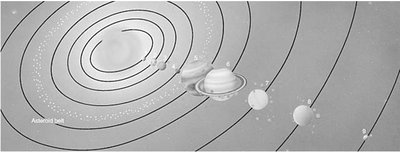
Planetary Order: Mercury, Venus, Earth, Mars, Jupiter, Saturn, Uranus, Neptune.
Classification: Terrestrial (rocky) planets and Jovian (gas giant) planets.
Origin of the Solar System
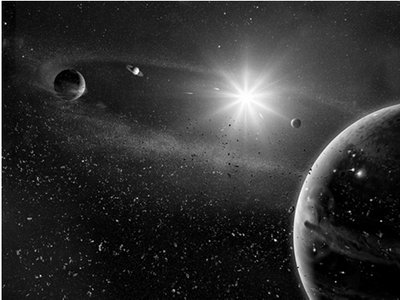
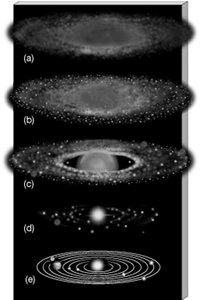
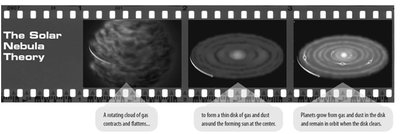
The most accepted theory for the formation of the Solar System is the Protoplanetary Nebular Model, also known as the Nebular Condensation Theory. This model describes the Solar System's formation from a rotating cloud of gas and dust.
Initial Cloud: A large, cold cloud of gas and dust began to contract due to gravity.
Rotation: As the cloud contracted, its rotation speed increased (conservation of angular momentum).
Heating: The cloud heated up as it contracted, with the Sun forming at the center.
Flattening: Collisions between gas particles reduced random motions, causing the cloud to flatten into a disk.
Evidence for the Nebular Theory
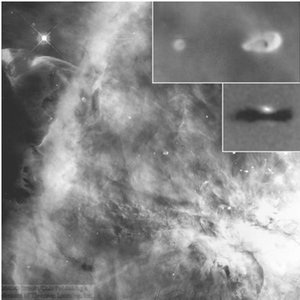
Observations of star formation in other interstellar gas clouds support the nebular theory. The process of planet formation is seen in protoplanetary disks around young stars.
Formation of Planetesimals and Planets
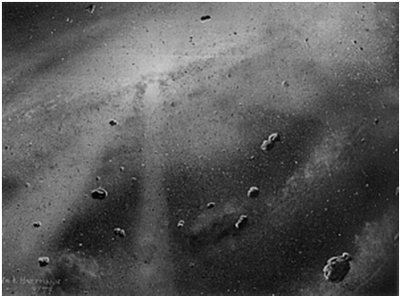
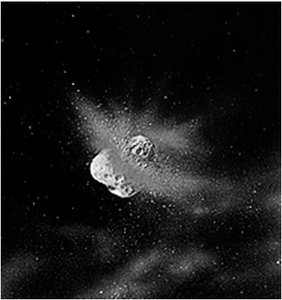
Small grains of dust aggregated into planetesimals, which further collided and merged to form planets. The largest bodies dominated their zones, sweeping up most material.
Planetesimals: Small solid objects formed from dust grains.
Collisions: High-speed collisions fragmented some planetesimals, creating asteroids and meteorites.
Planetary Growth: Gravity allowed the largest bodies to become planets.
Classification of Planets
Terrestrial (Rocky) Planets
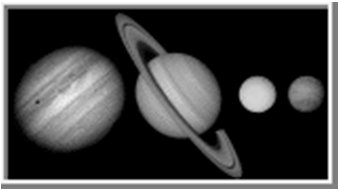
Mercury, Venus, Earth, and Mars are terrestrial planets. They are composed primarily of rock and metal, have high densities, solid surfaces, and few satellites.
Characteristics: High density, slow rotation, no rings, few satellites.
Examples: Mercury, Venus, Earth, Mars.
Jovian (Gas Giant) Planets
Jupiter, Saturn, Uranus, and Neptune are Jovian planets. They are composed mainly of hydrogen and helium, have low densities, rapid rotation, deep atmospheres, rings, and many satellites.
Characteristics: Low density, rapid rotation, rings, many satellites.
Examples: Jupiter, Saturn, Uranus, Neptune.
Planetary Orbits and Kepler's Laws
Kepler's Laws of Planetary Motion
Kepler's laws describe the motion of planets around the Sun:
First Law (Law of Ellipses): Planets move in elliptical orbits with the Sun at one focus.
Second Law (Law of Equal Areas): A line joining a planet and the Sun sweeps out equal areas in equal times.
Third Law (Law of Harmonies): The square of a planet's orbital period is proportional to the cube of its semimajor axis.
Properties of the Sun
The Sun
The Sun is a G2-type star and the largest object in the Solar System, containing more than 99.8% of its total mass. It is the primary source of energy for all planets.
Diameter: 1,390,000 km (about 109 Earths)
Mass: 332,800 Earths
Temperature: 5800 K (surface), 15,600,000 K (core)
Composition: Mostly hydrogen and helium
Individual Planetary Properties
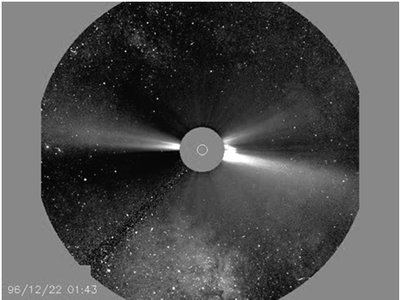
Mercury
Mercury is the closest planet to the Sun, with extreme temperature variations and a surface similar to the Moon. It has a dense iron core and a very thin atmosphere.
Diameter: Smaller than Ganymede and Titan, but more massive
Atmosphere: Atoms blasted off by solar wind
Venus
Venus is similar to Earth in size and composition but has a slow, retrograde rotation and a thick atmosphere dominated by carbon dioxide. Its surface temperature is extremely high due to the greenhouse effect.
Diameter: 0.95 Earth’s
Atmosphere: Mostly CO2, thick clouds of sulfuric acid
Surface: Hot enough to melt lead
Earth
Earth is the densest major body in the Solar System, with a core composed mostly of iron and nickel. Its surface is 71% water, and its atmosphere is primarily nitrogen and oxygen.
Atmosphere: 77% nitrogen, 21% oxygen
Surface: 71% water
Magnetic Field: Protects from solar wind
Moon
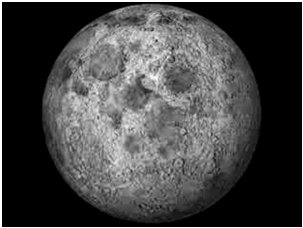
The Moon is Earth's only natural satellite, with synchronous rotation and no atmosphere. Its formation is explained by the large-impact hypothesis.
Diameter: 0.28 Earth’s
Orbit: 384,400 km from Earth
Formation: Impact with a Mars-sized planetesimal
Mars
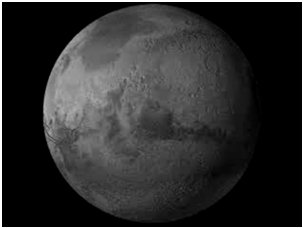
Mars has a significantly elliptical orbit, a thin atmosphere, and surface temperatures ranging from -133°C to 27°C. It has two small satellites, Phobos and Deimos, likely captured asteroids.
Atmosphere: Mostly CO2, very low pressure
Satellites: Phobos and Deimos
Asteroids and the Asteroid Belt
Asteroids
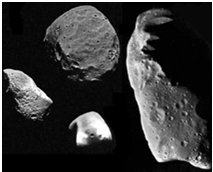
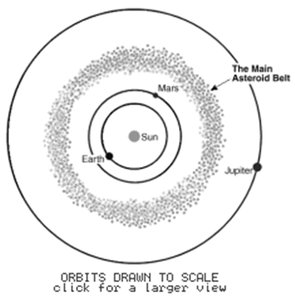
Asteroids are stony, carbonaceous, or metallic bodies found mainly in the asteroid belt between Mars and Jupiter. Their sizes range from pebbles to 1000 km (Ceres).
Main Asteroid Belt: Located at about 2.7 AU from the Sun
Composition: Iron, nickel, rock, carbon
Jovian Planets
Jupiter
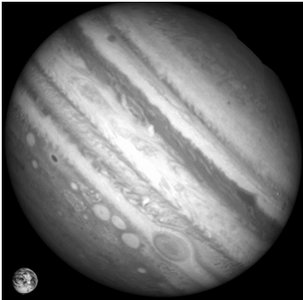
Jupiter is the largest planet, composed mainly of hydrogen and helium, with a rocky core and liquid metallic hydrogen layer. It has strong magnetic fields and radiates more energy than it receives from the Sun.
Mass: 318 times Earth
Atmosphere: Hydrogen, helium, traces of methane, water, ammonia
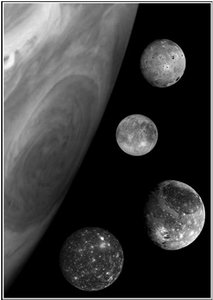
Satellites: 52 known, including four Galilean moons: Io, Europa, Ganymede, Callisto
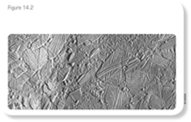
Saturn
Saturn is similar to Jupiter in composition, with a prominent ring system and many satellites. Its density is less than water, and it radiates more energy than it receives.
Rings: Thin, composed of water ice and rocky particles
Satellites: Over 40 moons, including Titan
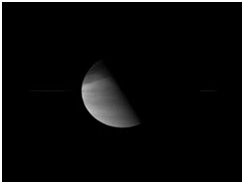
Titan
Titan, Saturn's largest moon, has a thick atmosphere rich in organic compounds, which may provide clues to the origin of life.
Uranus and Neptune
Uranus and Neptune have rocky cores surrounded by water and ice, with atmospheres of hydrogen, helium, and methane. Uranus has an extreme axial tilt, leading to unusual seasons.
Uranus: Axis almost parallel to the ecliptic, 11 rings, 20 satellites
Neptune: Rapid winds, largest storms, 11 satellites
Dwarf Planets and Other Celestial Bodies
Pluto and the Kuiper Belt
Pluto is now classified as a dwarf planet, along with Ceres and Eris. It is the largest of the Kuiper Belt objects, with a highly inclined orbit and three moons.
Oort Cloud and Comets
The Oort Cloud is a distant region containing icy bodies and comets. Comets are composed of frozen gases and dust, with tails that always point away from the Sun.
Oort Cloud: 50,000 AU from the Sun
Comets: Short-period comets originate from the Kuiper Belt
Meteors and Meteorites
Meteoroids are remnants of asteroids and comets. When they enter Earth's atmosphere, they become meteors (shooting stars). If they survive the atmosphere, they are called meteorites.
Types: Iron, stony, stony-iron, carbonaceous chondrites
Summary Table: Planetary Properties
Planet | Distance from Sun (000 km) | Radius (km) | Mass (kg) | Discoverer | Date |
|---|---|---|---|---|---|
Mercury | 57,910 | 2439 | 3.30 x 10²³ | ||
Venus | 108,200 | 6052 | 4.87 x 1024 | ||
Earth | 149,600 | 6378 | 5.98 x 1024 | ||
Mars | 227,940 | 3397 | 6.42 x 10²³ | ||
Jupiter | 778,330 | 71492 | 1.90 x 1027 | ||
Saturn | 1,426,940 | 60268 | 5.69 x 1026 | ||
Uranus | 2,870,990 | 25559 | 8.69 x 1025 | Herschel | 1781 |
Neptune | 4,497,070 | 24764 | 1.02 x 1026 | Galle | 1846 |
Pluto | 5,913,520 | 1160 | 1.31 x 10²² | Tombaugh | 1930 |
Conclusion
The Solar System is a dynamic and diverse collection of celestial bodies, formed from a protoplanetary nebula and governed by physical laws such as gravity and Kepler's laws. Understanding its structure and evolution provides insight into planetary science and the processes that shape our universe.
