Back
BackUnits, Physical Quantities, and Vectors – Study Notes
Study Guide - Smart Notes
 Tailored notes based on your materials, expanded with key definitions, examples, and context.
Units, Physical Quantities & Vectors
Introduction to Units and the S.I. System
Physics is the study of natural phenomena, which involves making measurements and using equations to describe the world. Every physical quantity must have both a number (magnitude) and a unit (standard of measurement). For equations in physics to be valid, all units must be compatible, meaning they belong to the same system. The most widely used system in physics is the S.I. (Système International) system.
Physical Quantity: A property of a material or system that can be quantified by measurement (e.g., mass, length, time).
Unit: A standard quantity used to specify measurements (e.g., kilogram, meter, second).
Dimension: The physical nature of a quantity (e.g., length [L], mass [M], time [T]).
Quantity | S.I. Unit | Imperial Unit |
|---|---|---|
Mass | Kilogram [kg] | Pound [lb] |
Length | Meter [m] | Foot [ft] |
Time | Second [s] | Second [s] |
Force | Newton [N] | Foot-pound |
Example: The force equation requires compatible units: .
Metric Prefixes
Metric prefixes are used to express units in powers of ten, making it easier to handle very large or small numbers. Each prefix represents a specific power of ten.
Prefix | Symbol | Power of 10 |
|---|---|---|
tera- | T | |
giga- | G | |
mega- | M | |
kilo- | k | |
hecto- | h | |
deca- | da | |
deci- | d | |
centi- | c | |
milli- | m | |
micro- | μ | |
nano- | n | |
pico- | p |
When converting from a larger to a smaller unit, the number becomes larger.
When converting from a smaller to a larger unit, the number becomes smaller.
Example: ;
Scientific Notation
Scientific notation is used to express very large or very small numbers in a compact form. The general format is , where and is an integer.
To convert to scientific notation, move the decimal to get a number between 1 and 10, and count the places moved as the exponent.
To convert from scientific notation to standard form, move the decimal according to the exponent.
Example:
Unit Conversions
Unit conversions are essential for solving physics problems, especially when working with non-S.I. units. Conversion factors are used to change from one unit to another.
Write the given and target units.
Write conversion factors as fractions to cancel out unwanted units.
Multiply all numbers on top and bottom, then solve.
Quantity | Conversion Factors / Ratios |
|---|---|
Mass | 1 kg = 2.2 lbs; 1 lb = 450 g; 1 oz = 28.4 g |
Length | 1 km = 0.621 mi; 1 ft = 0.305 m; 1 in = 2.54 cm |
Volume | 1 gal = 3.79 L; 1 mL = 1 cm³; 1 L = 1.06 qt |
Solving Density Problems
Density () is defined as mass divided by volume: . It is used to relate the mass and volume of objects, often requiring unit conversions.
For a rectangular prism:
For a sphere:
For a cylinder:
Example: If a cylinder has a radius of 3.5 cm, height of 6 cm, and mass of 161 g, its density is .
Dimensional Analysis
Dimensional analysis checks if equations are dimensionally consistent, meaning both sides have the same units. It is also used to determine the units of unknown variables.
Replace variables with their units.
Ignore numerical coefficients.
Multiply and divide to cancel units.
Check if units on both sides match.
Example: For Hooke's Law ,
Significant Figures (Sig Figs)
Significant figures reflect the precision of a measurement. Only digits that carry meaning contribute to the precision of a number.
Eliminate leading zeros.
If no decimal, eliminate trailing zeros.
Count remaining digits; never eliminate non-zero or middle zeros.
Rules for Calculations:
Addition/Subtraction: Round to the least number of decimal places.
Multiplication/Division: Round to the least number of significant figures.
Introduction to Vectors and Scalars
Physical quantities are classified as either scalars (having only magnitude) or vectors (having both magnitude and direction).
Scalar: Quantity with magnitude only (e.g., mass, temperature, time).
Vector: Quantity with both magnitude and direction (e.g., displacement, velocity, force).
Displacement vs. Distance
Distance is the total length of the path traveled (always positive, scalar). Displacement is the straight-line change in position from the initial to the final point (can be positive or negative, vector).
= total path length (scalar)
(vector)
Vector Math: Addition and Subtraction
Vectors are represented as arrows. To add vectors graphically, place them tip-to-tail. The resultant vector is the shortest path from the start to the end point. Subtracting a vector is equivalent to adding its negative (reverse direction).
Order does not matter for addition (commutative).
Order matters for subtraction (not commutative).
Vector Composition and Decomposition
Vectors can be broken into components along the x and y axes, or composed from components using trigonometry.
Vector Addition by Components
To add vectors using components, sum all x-components and all y-components, then use the Pythagorean theorem and arctangent to find the resultant's magnitude and direction.
Unit Vectors
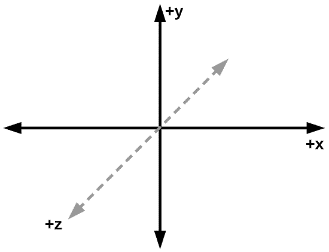
Unit vectors are vectors of length 1 used to specify directions in space. In 2D, points in the +x direction, in the +y direction, and in 3D, in the +z direction.
Any vector can be written as .
Dot Product (Scalar Product)
The dot product of two vectors results in a scalar and is defined as:
Maximum when vectors are parallel ().
Zero when vectors are perpendicular ().
Negative when vectors are in opposite directions ().
In component form:
Cross Product (Vector Product) and the Right-Hand Rule
The cross product of two vectors results in a vector perpendicular to both:
Direction is given by the right-hand rule: point fingers along , curl toward , thumb points in 's direction.
Zero if vectors are parallel or antiparallel ( or ).
In component form:
Describing Vector Directions with Words
Directions can be described using angles (counterclockwise is positive, clockwise is negative) or compass points (e.g., 30° north of east).
Reference angle is always measured from the nearest x-axis.
Summary Table: Scalar vs. Vector Operations
Operation | Result | Formula |
|---|---|---|
Dot Product | Scalar | |
Cross Product | Vector | (direction by right-hand rule) |