 Back
BackAnalytic Trigonometry: Solving Trigonometric Equations
Study Guide - Smart Notes
 Tailored notes based on your materials, expanded with key definitions, examples, and context.
Analytic Trigonometry
Solving Trigonometric Equations
Trigonometric equations are equations involving trigonometric functions of a variable, typically an angle. Solving these equations is a fundamental skill in precalculus, especially in analytic trigonometry. The process often involves algebraic manipulation, use of identities, and graphical or calculator-based methods.
Equations Involving a Single Trigonometric Function
When an equation contains only one trigonometric function, solutions can often be found by isolating the function and considering its periodic nature.
Key Point 1: Isolate the trigonometric function (e.g., sin, cos, tan).
Key Point 2: Find solutions within one period, then generalize using the function's period.
Example: Solve . First, isolate :
Since cannot equal for real , there is no solution in real numbers.
Checking Solutions
To check if a given value is a solution, substitute it into the equation and verify the equality.
Example: Is a solution to ?
Substitute :
Therefore, is not a solution.
Finding All Solutions
Trigonometric functions are periodic, so solutions repeat at regular intervals. To find all solutions, first solve within one period, then add integer multiples of the period.
Example: Solve .
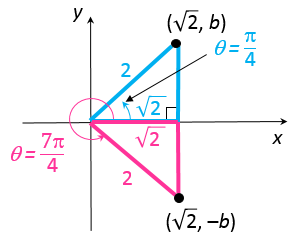
Within , and .
General solution: and , .
Graphical Solution of Trigonometric Equations
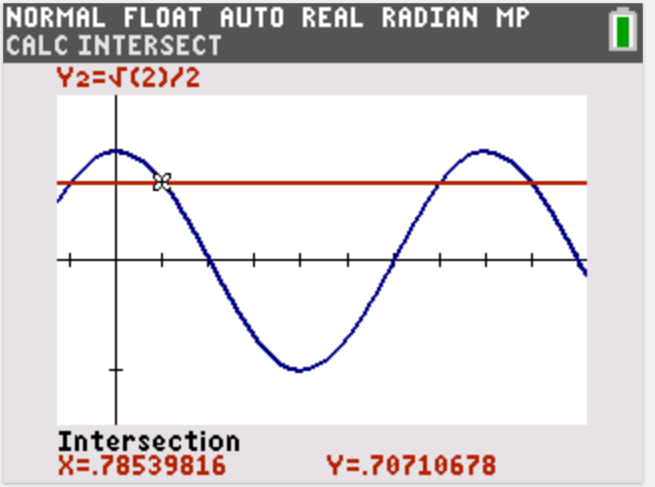
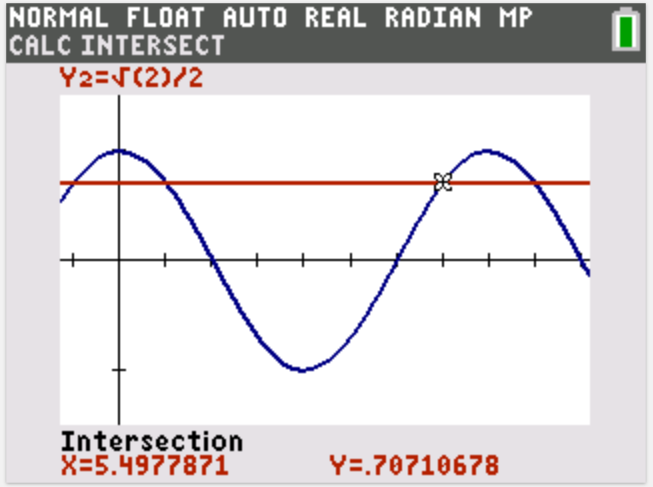
Graphing utilities can be used to solve trigonometric equations by finding intersection points between the function and a constant or another function.
Key Point: The x-coordinates of intersection points correspond to solutions.
Example: Solve graphically.
Solving Linear Trigonometric Equations
Linear trigonometric equations can be solved by isolating the function and using inverse trigonometric functions.
Example: Solve for .
Isolate :
Within , .
Solving Equations Involving Double Angles
Equations with double angles require careful consideration of the function's period and the use of identities.
Example: Solve for .
Find values where :
Divide by 2:
Include all solutions within by considering the period.
Solving Trigonometric Equations Using a Calculator
Calculators can be used to solve equations numerically, especially when exact solutions are not possible.
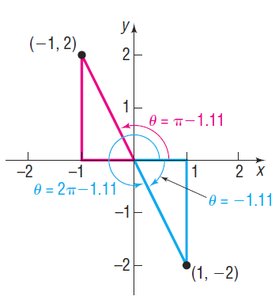
Example: Solve for .
Use the inverse tangent function:
(in radians)
To find all solutions in , add to the solution:
Solving Trigonometric Equations Quadratic in Form
Some trigonometric equations can be rewritten as quadratic equations in terms of a trigonometric function.
Example: Solve for .
Factor:
or or
Find all solutions in :
:
:
Solving Trigonometric Equations Using Fundamental Identities
Trigonometric identities, such as the Pythagorean Identity, can be used to rewrite equations in terms of a single function.
Key Identity:
Example: Solve for .
Rewrite using the identity:
or
Find all solutions in :
:
:
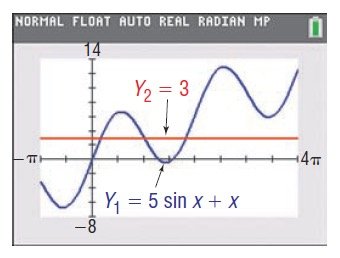
Solving Trigonometric Equations Using a Graphing Utility
Graphing utilities are useful for equations that cannot be solved algebraically. The solution is the x-coordinate where the graphs intersect.
Example: Solve .
Graph and .
Find intersection points.
Solutions (rounded to two decimal places): , ,
Summary Table: Methods for Solving Trigonometric Equations
Method | When to Use | Example |
|---|---|---|
Algebraic Manipulation | Single function, simple form | |
Use of Identities | Multiple functions, can be rewritten | |
Quadratic Form | Equation is quadratic in function | |
Calculator/Graphing Utility | Complex or non-algebraic equations |
