 Back
BackGraphing Techniques: Transformations of Functions
Study Guide - Smart Notes
 Tailored notes based on your materials, expanded with key definitions, examples, and context.
Section 1.5 Graphing Techniques: Transformations
Introduction
This section explores how to graph functions using transformations, including vertical and horizontal shifts, compressions and stretches, and reflections. Mastery of these techniques allows for efficient graphing and understanding of function behavior without plotting numerous points.
Graph Functions Using Vertical and Horizontal Shifts
Vertical Shifts
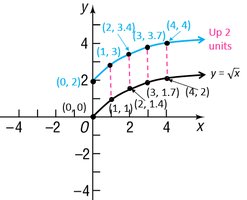
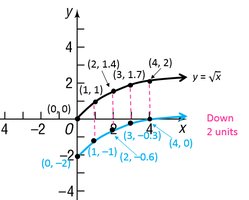
A vertical shift moves the graph of a function up or down without changing its shape. If a constant k is added to or subtracted from the output of a function f(x), the graph shifts vertically:
Upward Shift: shifts the graph of f up by k units.
Downward Shift: shifts the graph of f down by k units.
Example: Shifting up 2 units yields .
Example: Shifting down 2 units yields .
Horizontal Shifts
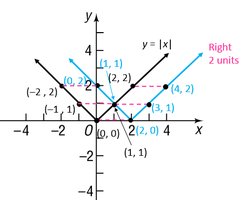
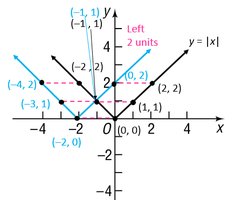
A horizontal shift moves the graph left or right. If the input x is replaced by x - h or x + h:
Right Shift: shifts the graph of f right by h units.
Left Shift: shifts the graph of f left by h units.
Example: Shifting right 2 units yields .
Example: Shifting left 2 units yields .
Combining Vertical and Horizontal Shifts
Multiple transformations can be applied in sequence. For example, is the graph of shifted right 3 units and up 2 units.
Step 1: Start with .
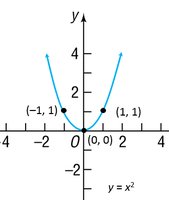
Step 2: Shift right 3 units to get .
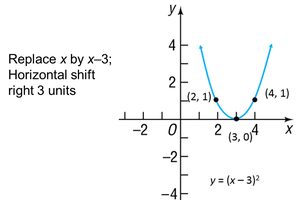
Step 3: Shift up 2 units to get .
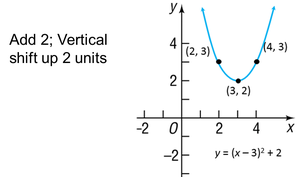
Graph Functions Using Compressions and Stretches
Vertical Compressions and Stretches
Multiplying the output of a function by a constant a results in a vertical stretch or compression:
Stretch: If , stretches the graph vertically by a factor of a.
Compression: If , compresses the graph vertically by a factor of a.
Example: is a vertical compression of by a factor of .
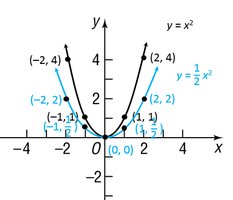
Horizontal Compressions and Stretches
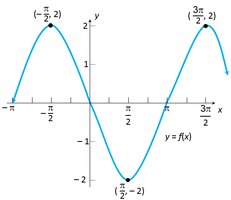
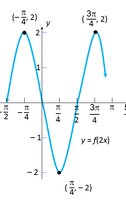
Multiplying the input x by a constant a results in a horizontal stretch or compression:
Compression: If , compresses the graph horizontally by a factor of .
Stretch: If , stretches the graph horizontally by a factor of .
Example: is a horizontal compression of by a factor of .
Graph Functions Using Reflections About the x-Axis or y-Axis
Reflection About the x-Axis
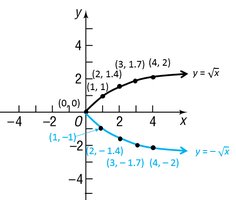
Multiplying the output of a function by -1 reflects the graph about the x-axis:
is the reflection of about the x-axis.
Example: is the reflection of about the x-axis.
Reflection About the y-Axis
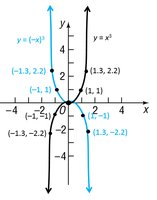
Replacing x with -x in a function reflects the graph about the y-axis:
is the reflection of about the y-axis.
Example: is the reflection of about the y-axis.
Graphing Power Functions Using Transformations
Example: Graphing a Power Function
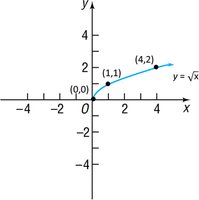
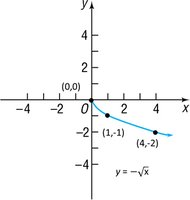
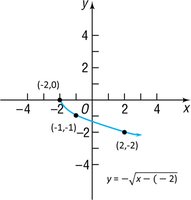
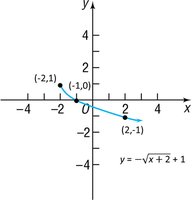
Transformations can be combined to graph more complex functions. For example, involves a reflection, a horizontal shift, and a vertical shift.
Step 1: Start with .
Step 2: Reflect about the x-axis to get .
Step 3: Shift left 2 units to get .
Step 4: Shift up 1 unit to get .
Summary Table: Transformations of Functions
Transformation | Equation | Effect on Graph |
|---|---|---|
Vertical Shift Up | Up by units | |
Vertical Shift Down | Down by units | |
Horizontal Shift Right | Right by units | |
Horizontal Shift Left | Left by units | |
Vertical Stretch | Stretched vertically by | |
Vertical Compression | Compressed vertically by | |
Horizontal Compression | Compressed horizontally by | |
Horizontal Stretch | Stretched horizontally by | |
Reflection about x-axis | Reflected over x-axis | |
Reflection about y-axis | Reflected over y-axis |
Additional info: These transformation techniques are foundational for understanding more advanced topics in precalculus, such as function composition, inverse functions, and modeling real-world phenomena.
