 Back
BackPolynomial and Rational Functions: Precalculus Study Guide
Study Guide - Smart Notes
 Tailored notes based on your materials, expanded with key definitions, examples, and context.
Polynomial and Rational Functions
Quadratic Functions & Models
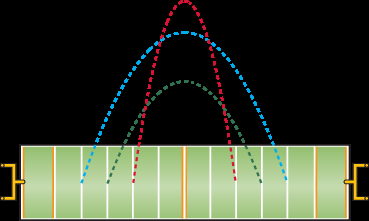
Quadratic functions are fundamental in precalculus, modeling various real-world phenomena such as projectile motion. The general form of a quadratic function is , where . The graph of a quadratic function is a parabola, which is symmetrical about a vertical line called the axis of symmetry. The vertex is the intersection of the parabola and its axis of symmetry.
Definition: A quadratic function is any function of the form .
Graph: The graph is a parabola. If , the parabola opens upward and the vertex is a minimum. If , it opens downward and the vertex is a maximum.
Axis of Symmetry: The axis of symmetry is .
Vertex: The vertex is at .
Standard Form: , where is the vertex.
x-Intercepts: Found by solving .
Example: has vertex at .




Polynomial Functions of Higher Degree
Polynomial functions generalize quadratics to higher degrees. The degree of a polynomial is the highest power of with a nonzero coefficient. The leading coefficient is the coefficient of the highest degree term.
Definition: , where .
Degree: The degree is .
Coefficients: is the leading coefficient, is the constant term.
Example: is degree 5; is degree 0.
Not a Polynomial: If a variable is raised to a non-integer or negative power, it is not a polynomial.
Polynomials and Synthetic Division
Polynomial division is used to simplify expressions and find zeros. Long division is similar to numerical division, while synthetic division is a shortcut for divisors of the form .
Long Division:
Synthetic Division: Efficient for divisors . Steps: list coefficients, use , perform operations to get quotient and remainder.
Division Algorithm: , where has degree less than .
Example: Divide by using synthetic division.
The Remainder Theorem and Factor Theorem
These theorems connect division and zeros of polynomials.
Remainder Theorem: If is divided by , the remainder is .
Factor Theorem: is a factor of if and only if .
Application: Use synthetic division to test if is a factor.
Complex Numbers
Complex numbers extend real numbers to include solutions to equations like . The imaginary unit is defined as .
Standard Form: , where is real, is imaginary.
Equality: if and only if and .
Operations:
Addition:
Subtraction:
Multiplication:
Complex Conjugate: and ;
Quadratic Equations: Use the quadratic formula ; if , solutions are complex.




Zeros of a Polynomial Function
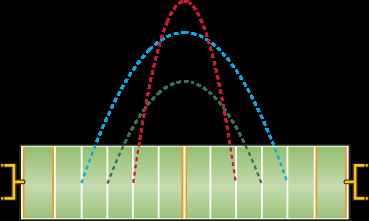
Zeros of a polynomial are values of where . These can be real, rational, irrational, or complex.
Rational Zero Test: Possible rational zeros are , where is a factor of the constant term and is a factor of the leading coefficient.
Conjugate Pairs: If is a zero, is also a zero for polynomials with real coefficients.
Linear Factorization Theorem: Any polynomial of degree can be written as , where are complex numbers.







Non-linear Inequalities
Polynomial and rational inequalities involve finding intervals where the function is positive or negative.
Polynomial Inequality: Find zeros, divide the number line into intervals, test each interval, and construct a sign chart.
Rational Inequality: Consider zeros and undefined values (where denominator is zero).
Domain: The set of all -values for which the expression is defined.
Example: Solve by finding zeros and testing intervals.




Summary Table: Polynomial Function Properties
Property | Description |
|---|---|
Degree | Highest power of |
Leading Coefficient | Coefficient of highest degree term |
Constant Term | Term with no |
Zeros | Values where |
Rational Zero Test | Possible zeros: |
Factor Theorem | is a factor if |
Domain | All where function is defined |
Additional info:
Some examples and step-by-step procedures were expanded for clarity.
Images were included only when directly relevant to the mathematical explanation.
