 Back
BackPrecalculus Algebra and Trigonometry: Course Competencies and Study Guide
Study Guide - Smart Notes
 Tailored notes based on your materials, expanded with key definitions, examples, and context.
Course Overview
This course, Pre-Calculus Algebra/Trigonometry, covers foundational and advanced topics in algebra and trigonometry, preparing students for calculus and further mathematical studies. The curriculum aligns with standard precalculus chapters, including functions, equations, graphs, trigonometric concepts, analytic geometry, systems, sequences, probability, and more.
Course Competencies and Learning Outcomes
Piecewise Defined Functions
Piecewise functions are defined by different expressions for different intervals of the domain. Understanding and graphing these functions is essential for modeling real-world scenarios with abrupt changes.
Definition: A function composed of multiple sub-functions, each applying to a certain interval.
Graphing: Plot each segment according to its domain.
Example:
Exponential and Logarithmic Functions
These functions model growth, decay, and many natural phenomena. Their properties and graphs are fundamental in precalculus.
Exponential Function: where and
Logarithmic Function: , the inverse of the exponential function
Properties: Domain, range, transformations, and inverse relationships
Solving Equations: Use properties of exponents and logarithms
Example: Solve ;
Applications: Exponential growth/decay, compound interest
Polynomial Functions and the Fundamental Theorem of Algebra
Polynomials are central to algebra, with their roots and behavior forming the basis for many mathematical analyses.
Definition:
Fundamental Theorem of Algebra: Every non-zero polynomial of degree has $n$ complex roots.
Graphing: Analyze zeros, multiplicity, and end behavior
Example:
Rational Functions
Rational functions are quotients of polynomials, with unique behaviors near points of discontinuity.
Definition: where
Domain: All real numbers except where
Graphing: Identify asymptotes and discontinuities
Example:
Equations and Inequalities
Solving equations and inequalities, both linear and nonlinear, is a fundamental skill in precalculus.
Linear Equations:
Nonlinear Equations: Involve powers, roots, or products of variables
Inequalities: Solve and graph solution sets
Example: Solve ;
Conic Sections
Conic sections arise from the intersection of a plane and a cone, resulting in parabolas, ellipses, and hyperbolas.
Types: Parabola, ellipse, hyperbola, circle
Standard Forms: Parabola: ; Ellipse:
Applications: Satellite orbits, optics
Matrices and Determinants
Matrices are arrays of numbers used to solve systems of equations and perform linear transformations.
Definition: Rectangular array of numbers
Operations: Addition, multiplication, finding determinants
Solving Systems: Use matrix methods (e.g., Gaussian elimination)
Example:
Sequences and Series
Sequences are ordered lists of numbers; series are their sums. Arithmetic and geometric sequences are especially important.
Arithmetic Sequence:
Geometric Sequence:
Sum of Series: Arithmetic: ; Geometric:
Mathematical Induction
Induction is a proof technique used to establish the truth of an infinite sequence of statements.
Principle: Prove base case, then show if true for , true for
Example: Prove
Binomial Theorem
The Binomial Theorem provides a formula for expanding powers of binomials.
Formula:
Finding Terms: Use binomial coefficients
Trigonometric Functions and Their Graphs
Trigonometric functions describe relationships in triangles and periodic phenomena.
Definitions: Ratios in right triangles, unit circle, arc length
Domain and Range: Varies by function (e.g., sine: domain , range )
Graphing: Plot basic and transformed functions
Example:
Inverse Trigonometric Functions
Inverse trigonometric functions allow for finding angles given ratios.
Definition: , ,
Domain and Range: Restricted to ensure functions are invertible
Trigonometric Identities
Identities are equations involving trigonometric functions that hold for all values in their domains.
Fundamental Identities:
Sum/Difference Formulas:
Double Angle:
Solving Trigonometric Equations
Solving equations involving trigonometric functions is essential for applications in geometry and physics.
General Solutions: Find all solutions, often using identities
Interval Solutions: Restrict to specified intervals
Solving Triangles
Solving triangles involves finding unknown sides or angles using trigonometric relationships.
Right Triangles: Use basic trigonometric ratios
Oblique Triangles: Use Law of Sines and Law of Cosines
Law of Sines:
Law of Cosines:
Complex Numbers in Trigonometric Form
Complex numbers can be represented in trigonometric form, facilitating multiplication, division, and finding roots.
Standard Form:
Trigonometric Form:
DeMoivre’s Theorem:
Vectors
Vectors are quantities with magnitude and direction, used in physics and engineering.
Graphing: Represent vectors in the plane
Operations: Addition, subtraction, scalar multiplication
Component Form:
Parametric Equations
Parametric equations express curves using parameters, allowing for more flexible representations.
Definition:
Conversion: Between parametric and rectangular forms
Polar Coordinates
Polar coordinates describe points in the plane using radius and angle, useful for circular and spiral patterns.
Conversion: ,
Graphing: Plot polar equations
Applications of Trigonometry
Trigonometry is applied in calculating arc lengths, areas, and solving real-world problems involving triangles and vectors.
Arc Length:
Area of Sector:
Applications: Navigation, engineering, physics
Course Materials
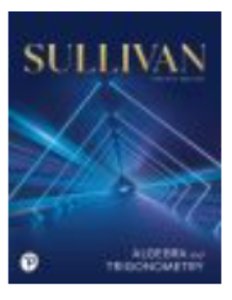
Required Textbook: Sullivan, Michael. Algebra and Trigonometry, 12th Edition, Pearson.
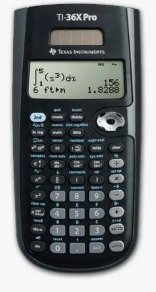
Optional Calculator: TI-36X Pro Scientific Calculator
Grading and Assessment
Participation: 15%
Homework: 15% (lowest 8 dropped)
Quizzes: 25% (lowest 2 dropped)
Tests: 45% (lowest dropped)
Minimum Passing Requirement: Average score on 10 proctored exams must be 60% or higher
Attendance Policy
Roll taken every class; three absences lower final grade by 2%
Three tardiness count as one absence
More than two absences may result in withdrawal
Support Services
Tutoring labs, virtual tutoring, advisement, technical support
ACCESS Disability Services for students with documented disabilities
Summary Table: Key Precalculus Topics
Chapter | Main Topics |
|---|---|
Ch. 1 | Equations and Inequalities |
Ch. 2 | Graphs |
Ch. 3 | Functions and Their Graphs |
Ch. 4 | Linear and Quadratic Functions |
Ch. 5 | Polynomial and Rational Functions |
Ch. 6 | Exponential and Logarithmic Functions |
Ch. 7 | Trigonometric Functions |
Ch. 8 | Analytic Trigonometry |
Ch. 9 | Applications of Trigonometric Functions |
Ch. 10 | Polar Coordinates, Vectors |
Ch. 11 | Analytic Geometry |
Ch. 12 | Systems of Equations and Inequalities |
Ch. 13 | Sequences; Induction; Binomial Theorem |
Ch. 14 | Counting and Probability |
