 Back
BackSolving Inequalities Involving Quadratic Functions
Study Guide - Smart Notes
 Tailored notes based on your materials, expanded with key definitions, examples, and context.
Section 3.5: Inequalities Involving Quadratic Functions
Solving Inequalities Involving a Quadratic Function
Quadratic inequalities involve expressions of the form ax^2 + bx + c > 0, ax^2 + bx + c < 0, ax^2 + bx + c \geq 0, or ax^2 + bx + c \leq 0, where a is nonzero. Solving these inequalities requires analyzing the corresponding quadratic function and determining where its graph lies above or below the x-axis.
Step 1: Move all terms to one side so the other side is zero. The inequality should be in the form ax^2 + bx + c \gtrless 0.
Step 2: Graph the quadratic function f(x) = ax^2 + bx + c using the vertex, y-intercept, and x-intercepts (if any).
Step 3: Determine where the function is above the x-axis (for > or \geq) or below the x-axis (for < or \leq). This means finding the intervals where f(x) > 0 or f(x) < 0.
Step 4: For non-strict inequalities (\geq or \leq), include the x-intercepts (solutions to ax^2 + bx + c = 0) in the solution set. For strict inequalities (> or <), exclude them.
Note: The solution set is typically expressed as intervals of x-values.
Example 1: Solving a Quadratic Inequality
Problem: Solve the inequality x^2 - 4x > 0 and graph the solution set.
Rewrite as x^2 - 4x > 0.
Factor: x(x - 4) > 0.
Find zeros: x = 0 and x = 4.
Test intervals: (-∞, 0), (0, 4), (4, ∞).
Solution: x < 0 or x > 4.
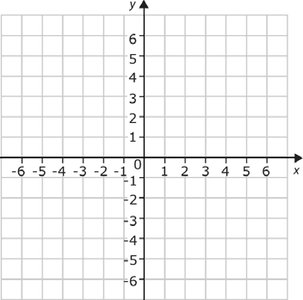
Additional info: The graph of y = x^2 - 4x is a parabola opening upward, crossing the x-axis at x = 0 and x = 4. The solution set corresponds to the regions where the parabola is above the x-axis.
Example 2: Solving a Quadratic Inequality with Non-Strict Inequality
Problem: Solve the inequality x^2 + 4x + 3 \geq 0 and graph the solution set.
Rewrite as x^2 + 4x + 3 \geq 0.
Factor: (x + 1)(x + 3) \geq 0.
Find zeros: x = -1 and x = -3.
Test intervals: (-∞, -3], [-3, -1], [-1, ∞).
Solution: x \leq -3 or x \geq -1.
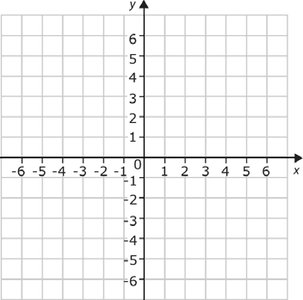
Additional info: The solution includes the points where the graph touches the x-axis (x = -3 and x = -1) because the inequality is non-strict (\geq).
Example 3: Solving a Quadratic Inequality with Less Than or Equal To
Problem: Solve the inequality x^2 - x + 1 \leq 0 and graph the solution set.
Rewrite as x^2 - x + 1 \leq 0.
Attempt to factor or use the quadratic formula to find zeros.
Discriminant: (-1)^2 - 4(1)(1) = 1 - 4 = -3 (no real roots).
Since the parabola opens upward and does not cross the x-axis, f(x) > 0 for all x. Thus, there is no solution to the inequality.
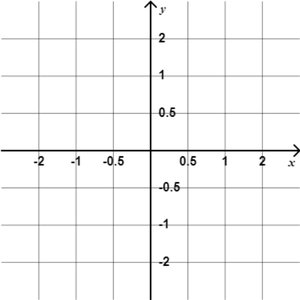
Additional info: If the quadratic has no real roots and opens upward, it is always above the x-axis; if it opens downward, it is always below the x-axis.
Summary Table: Steps for Solving Quadratic Inequalities
Step | Description |
|---|---|
1 | Move all terms to one side; set the other side to zero. |
2 | Factor the quadratic, if possible, or use the quadratic formula to find zeros. |
3 | Test intervals between and beyond the zeros to determine where the inequality holds. |
4 | For non-strict inequalities, include zeros; for strict, exclude them. |
5 | Express the solution as intervals of x-values. |
