 Back
BackThe Distance and Midpoint Formulas in the Coordinate Plane
Study Guide - Smart Notes
 Tailored notes based on your materials, expanded with key definitions, examples, and context.
Section F.1: The Distance and Midpoint Formulas
Plotting Points in the Coordinate Plane
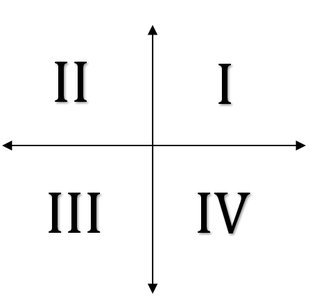
The coordinate plane is a fundamental concept in precalculus, allowing us to visually represent points, lines, and geometric figures. It is formed by two perpendicular number lines that intersect at a point called the origin. The horizontal axis is known as the x-axis, and the vertical axis is the y-axis. These axes divide the plane into four regions called quadrants.
Ordered Pair (x, y): Each point in the plane is represented by an ordered pair (x, y).
x-coordinate: The first value in the pair, indicating horizontal position.
y-coordinate: The second value in the pair, indicating vertical position.
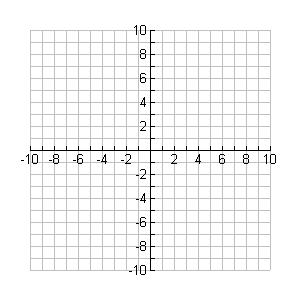
Example: Graph and label the points (−3, 5), (3, 4), (−4, −2), and (0, 4) on the coordinate plane.
The Distance Formula
The distance formula allows us to calculate the straight-line distance between any two points in the coordinate plane. If the points are (x1, y1) and (x2, y2), the distance d between them is given by:
This formula is derived from the Pythagorean Theorem.
It is used to find the length of a segment connecting two points.
Example: Find the distance between the points (−2, 2) and (−5, 8).
Applications: Triangles in the Coordinate Plane
By plotting three points, we can form a triangle and use the distance formula to find the lengths of its sides. This is useful for verifying properties such as whether a triangle is a right triangle and for finding its area.
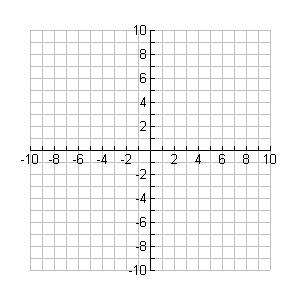
Example: Consider points A = (−6, 11), B = (3, 9), and C = (1, 0). Plot each point and form triangle ABC.
Find the length of each side using the distance formula.
To verify if the triangle is a right triangle, check if the side lengths satisfy the Pythagorean Theorem.
To find the area, use the formula for the area of a triangle given coordinates:
The Midpoint Formula
The midpoint formula finds the point exactly halfway between two given points in the coordinate plane. If the endpoints are (x1, y1) and (x2, y2), the midpoint M is:
This formula is useful for dividing a segment into two equal parts or finding the center of a line segment.
Example: Find the midpoint of the segment whose endpoints are (−4, −2) and (2, 5).
Application: Real-World Example
The midpoint formula can be used in real-world contexts, such as estimating values that change linearly over time. For example, if the poverty threshold for a family of four was $15,604 in 1995 and $19,716 in 2005, the estimated threshold in 2000 (the midpoint year) is:
This represents the estimated poverty threshold in 2000, assuming a straight-line increase.
