 Back
BackAP Psychology Unit 1: Foundations, Biological Bases, and Sensation
Study Guide - Smart Notes
 Tailored notes based on your materials, expanded with key definitions, examples, and context.
Measures of Central Tendency and Variability
Measures of Central Tendency
Measures of central tendency are statistical tools used to summarize a set of data by identifying the center point or typical value within that set.
Mean: The arithmetic average, calculated by adding all values and dividing by the number of values. Sensitive to outliers.
Median: The middle value when data are ordered from least to greatest. Less affected by outliers.
Mode: The most frequently occurring value in a data set. There can be one mode, more than one, or none.
Measures of Variability (Spread)
Measures of variability describe how spread out the values in a data set are.
Range: The difference between the highest and lowest values. Formula:
Standard Deviation: Indicates how much scores differ from the mean. A low standard deviation means scores are close to the mean; a high standard deviation means they are more spread out.
Normal Distribution and Z-Scores
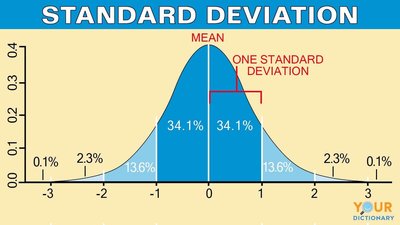
The normal distribution is a symmetrical, bell-shaped curve where most scores cluster around the mean. Z-scores measure how many standard deviations a value is from the mean.
68-95-99 Rule (Empirical Rule): About 68% of scores fall within one standard deviation, 95% within two, and 99% within three standard deviations of the mean.
Z-Score Formula: where is the value, is the mean, and is the standard deviation.
Percentile Score: Indicates the percentage of scores at or below a specific value.
Experimental and Non-Experimental Methods
Experimental Method
The experimental method is the only research approach that can establish cause-and-effect relationships.
Independent Variable (IV): The factor manipulated by the researcher.
Dependent Variable (DV): The outcome measured in the experiment.
Operational Definition: A precise description of how variables are measured or manipulated.
Experimental Group: Receives the treatment or intervention.
Control Group: Does not receive the treatment; serves as a baseline.
Random Sample: Participants are randomly selected from the population to ensure representativeness.
Random Assignment: Participants are randomly assigned to groups to minimize preexisting differences.
Confounding Variables: Other factors that might influence the DV.
Placebo Effect: Changes due to participants' expectations rather than the treatment itself.
Blinding Techniques: Single-blind (participants unaware of group), double-blind (both participants and researchers unaware).
Non-Experimental Methods
Correlational Research: Examines relationships between variables but cannot establish causation. Correlation Coefficient: Measures the strength and direction of a relationship.
Case Study: In-depth analysis of an individual or group.
Naturalistic Observation: Observing subjects in their natural environment.
Meta-Analysis: Combines results from multiple studies.
Longitudinal Study: Follows the same group over time.
Cross-Sectional Study: Examines different groups at one point in time.
Quasi-Experiment: Lacks random assignment; cannot establish causality.
Survey: Collects self-reported data from participants.
Ethical Guidelines in Psychological Research
Ethical guidelines ensure the protection of research participants and the integrity of scientific inquiry.
Informed Consent: Participants must be fully informed and voluntarily agree to participate.
Protection from Harm: Participants must not be exposed to significant risk.
Confidentiality: Participants' data must be kept private.
Deception and Debriefing: Deception must be minimized and explained during debriefing after the study.
Biological Bases of Behavior
Interaction of Heredity and Environment
Both genetic inheritance (nature) and environmental factors (nurture) shape behavior and mental processes. Their interaction is studied through twin, family, and adoption studies, and the field of epigenetics explores how the environment can affect gene expression.
Evolutionary Perspective: Examines how natural selection influences behavior.
Nervous System Organization
The nervous system is divided into the central nervous system (CNS) and peripheral nervous system (PNS).
CNS: Brain and spinal cord; processes information and controls reflexes.
PNS: Connects CNS to the body; includes the somatic (voluntary movement) and autonomic (involuntary functions) systems.
Autonomic System: Divided into sympathetic (arouses, fight-or-flight) and parasympathetic (calms, rest-and-digest) branches.
Neurons & Neural Transmission
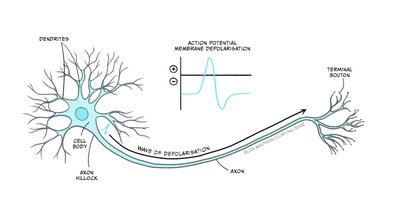
Neurons are specialized cells that transmit information via electrochemical signals. Neural transmission follows the all-or-nothing principle.
Key Structures: Dendrites (receive input), cell body (soma), axon (sends output), myelin sheath (insulation), terminal buttons (release neurotransmitters), glial cells (support).
Neurogenesis: Formation of new neurons throughout life.
Neuroplasticity: Brain's ability to reorganize and form new connections.
Neural Transmission Steps:
Resting Potential: Neuron is negatively charged inside (-70mV).
Depolarization: Excitatory signals raise internal charge.
Threshold: If reached (-55mV), action potential is triggered.
Action Potential: Rapid electrical signal (+40mV) travels down axon.
Synaptic Transmission: Neurotransmitters released into synapse.
Receptor Binding: Neurotransmitters bind to receptors on next neuron.
Reuptake/Breakdown/Diffusion: Neurotransmitters are reabsorbed, broken down, or diffuse away.
Major Neurotransmitters
Acetylcholine (ACh): Muscle action, learning, memory.
Dopamine: Movement, learning, emotion; excess linked to schizophrenia, deficit to Parkinson's.
Serotonin: Mood, hunger, sleep; deficit linked to depression.
Norepinephrine: Alertness, arousal; deficit can cause depression.
GABA: Major inhibitory neurotransmitter; deficit linked to seizures, insomnia.
Glutamate: Major excitatory neurotransmitter; excess can cause migraines, seizures.
Endorphins: Natural painkillers; involved in pleasure and addiction.
Substance P: Pain transmission.
Hormones and the Endocrine System
Adrenaline: Fight-or-flight response.
Melatonin: Regulates sleep-wake cycle.
Oxytocin: Social bonding, trust, childbirth.
The Brain
Brain Imaging Techniques
CAT: X-ray slices for structure.
MRI: Magnetic fields for detailed structure.
EEG: Measures electrical activity (brain waves).
PET: Tracks glucose consumption for activity.
fMRI: Measures blood flow for function.
Major Brain Structures and Functions
Brainstem: Basic life functions (medulla, pons, reticular activating system).
Cerebellum: Balance, coordination, procedural learning.
Thalamus: Sensory relay station (except smell).
Hypothalamus: Homeostasis, hunger, thirst, emotion, hormone release.
Pituitary Gland: Master gland of the endocrine system.
Hippocampus: Formation of new long-term memories.
Amygdala: Emotion processing, especially fear and aggression.
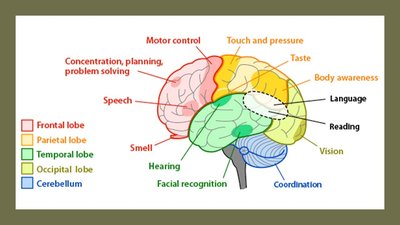
Cerebrum: Higher cognitive functions; divided into four lobes:
Frontal Lobe: Executive function, voluntary movement, speech.
Parietal Lobe: Sensory processing, spatial awareness.
Temporal Lobe: Auditory processing, language, memory.
Occipital Lobe: Visual processing.
Basal Ganglia: Smooth movement execution.
Corpus Callosum: Connects hemispheres for communication.
Brain Lateralization and Plasticity
Left Hemisphere: Language, logic, analytical thought.
Right Hemisphere: Spatial abilities, creativity, intuition.
Contralateral Organization: Each hemisphere controls the opposite side of the body.
Neuroplasticity: Brain's ability to adapt and reorganize.
Consciousness and Sleep
Sleep and Circadian Rhythms
Sleep is a state of reduced awareness governed by circadian rhythms. It is essential for memory consolidation and restoration.
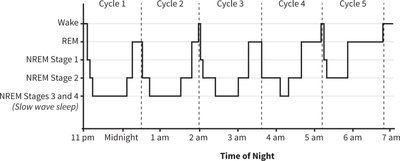
Sleep Stages: NREM-1 (light sleep), NREM-2 (sleep spindles, K-complexes), NREM-3 (deep sleep, delta waves), REM (paradoxical sleep, dreaming).
Sleep Cycle: Each cycle lasts about 90 minutes, with 4-7 cycles per night.
REM Rebound: Increased REM sleep after deprivation.
Dream Theories
Activation-Synthesis Theory: Dreams are the brain's attempt to make sense of random neural activity.
Memory Consolidation Theory: Dreams help consolidate memories and learning.
Psychoanalytic Perspectives: Freud (personal unconscious), Jung (collective unconscious).
Sleep Disorders
Insomnia: Difficulty falling or staying asleep.
Narcolepsy: Sudden sleep attacks.
Sleep Apnea: Breathing interruptions during sleep.
Somnambulism: Sleepwalking during deep NREM sleep.
REM Sleep Behavior Disorder: Acting out dreams due to lack of muscle paralysis.
Improving Sleep
Regular exercise (not before bed), limit caffeine, consistent sleep schedule, relaxing bedtime routine, reduce screen time before bed.
Sensation
Basic Concepts
Sensation is the process of detecting environmental stimuli and converting them into neural signals. Perception is the interpretation of these signals.
Absolute Threshold: Minimum stimulation needed to detect a stimulus 50% of the time.
Just-Noticeable Difference (JND): Smallest detectable difference between two stimuli.
Weber's Law: JND is a constant proportion of the original stimulus.
Sensory Adaptation: Diminished sensitivity due to constant stimulation.
Signal Detection Theory: Detection depends on stimulus intensity and psychological factors.
Subliminal Stimulation: Below conscious awareness.
Synesthesia: Stimulation of one sense triggers another.
Process of Sensation
Reception: Detecting sensory information via receptor cells.
Transduction: Converting sensory input into neural signals.
Transmission: Sending neural signals to the brain.
Vision
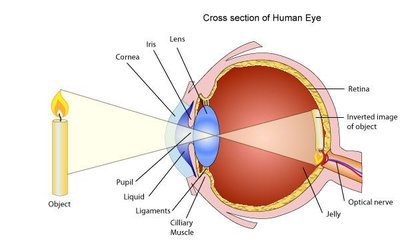
Vision is the dominant human sense, involving the conversion of light into neural signals by the eye's photoreceptors.
Cornea: Protective outer layer.
Iris: Colored muscle controlling pupil size.
Pupil: Opening that regulates light entry.
Lens: Focuses light onto the retina.
Retina: Contains rods (light/dark) and cones (color, acuity).
Fovea: Area of sharpest vision.
Optic Nerve: Transmits visual information to the brain.
Blind Spot: Where optic nerve exits; no receptors.
Trichromatic Theory: Three types of cones (red, green, blue).
Opponent-Process Theory: Opposing color pairs (red-green, blue-yellow, black-white).
Accommodation: Lens changes shape to focus.
Acuity: Sharpness of vision.
Dark Adaptation: Increased sensitivity in low light.
Hearing
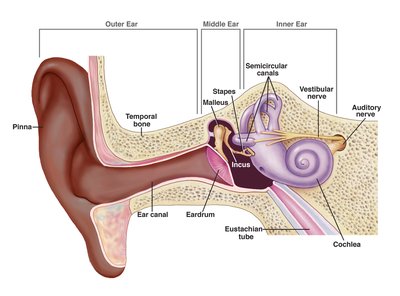
Hearing involves the detection of sound waves and their conversion into neural signals by the ear.
Amplitude: Height of sound wave (loudness, dB).
Frequency: Number of waves per second (pitch, Hz).
Timbre: Quality of sound.
Sound Localization: Determining sound source location.
Outer Ear: Collects sound waves.
Middle Ear: Amplifies vibrations (ossicles: malleus, incus, stapes).
Inner Ear: Cochlea (transduction), semicircular canals (balance).
Place Theory: Pitch perception depends on location of stimulation in cochlea (high pitches).
Frequency Theory: Pitch perception depends on rate of neural firing (low pitches).
Conduction Deafness: Damage to mechanical structures.
Sensorineural Deafness: Damage to cochlea or auditory nerve.
Other Senses
Touch (Somatosensation): Pressure, warmth, cold, pain. Gate-control theory explains pain modulation.
Taste (Gustation): Sweet, sour, salty, bitter, umami; taste buds on tongue.
Smell (Olfaction): Chemical sense; only sense not routed through thalamus.
Vestibular Sense: Balance and equilibrium; semicircular canals in inner ear.
Kinesthetic Sense: Body movement and position; receptors in muscles and joints.
Interoception: Internal body sensations (hunger, thirst, pain).
Table: Comparison of Experimental and Non-Experimental Methods
Method | Key Feature | Can Establish Causation? |
|---|---|---|
Experiment | Manipulation of IV, random assignment | Yes |
Correlational Study | Measures relationship between variables | No |
Case Study | In-depth analysis of individual/group | No |
Naturalistic Observation | Observes in natural environment | No |
Survey | Self-reported data | No |
