 Back
BackComprehensive Study Notes: Social Psychology
Study Guide - Smart Notes
 Tailored notes based on your materials, expanded with key definitions, examples, and context.
Social Psychology: Understanding Human Behaviour in Social Contexts
Introduction to Social Psychology
Social psychology examines how individuals' thoughts, feelings, and behaviours are influenced by the actual, imagined, or implied presence of others. It explores the impact of social situations, group dynamics, and interpersonal relationships on human behaviour.
Key Focus: Influence of social context on behaviour, attitudes, and decision-making.
Applications: Understanding phenomena such as obedience, conformity, prejudice, and group processes in real-world events (e.g., WWII, COVID-19 pandemic).
Humans as a Social Species
Need to Belong Theory
Humans have a biologically based need for interpersonal connections. Social isolation is associated with negative psychological and physiological outcomes, such as increased anxiety, abnormal eating, and reduced cognitive functioning.
Example: Solitary confinement leads to distress and abnormal behaviour.
Situational Influences on Behaviour
Mimicry, Social Norms, and Social Rules
People often unconsciously mimic the behaviours, emotional displays, and facial expressions of others, which acts as a social glue. Social norms are unwritten rules for behaviour in social contexts, while social rules are guidelines for specific roles within a group (e.g., student, professor).
Ostracism: Being ignored or excluded is a powerful social regulator, increasing aggression and distress.
Stanford Prison Experiment
This classic study demonstrated how quickly individuals adopt social roles, leading to extreme behaviours. Guards became authoritarian, and prisoners became submissive or rebellious, illustrating the power of situational factors over personal dispositions.
Social Comparison Theory
People evaluate their abilities and beliefs by comparing themselves to others.
Upward Comparison: Comparing to someone better can inspire motivation or cause envy.
Downward Comparison: Comparing to someone worse off can boost self-esteem but may lead to complacency.
Attribution Processes
Internal vs. External Attributions
Attributions are explanations for behaviour. Internal (dispositional) attributions focus on personal qualities, while external (situational) attributions consider the context.
Example: "He’s reckless" (internal) vs. "My GPS told me to merge last second" (external).
Fundamental Attribution Error & Actor-Observer Bias
The fundamental attribution error is the tendency to attribute others' actions to their character, while the actor-observer bias is the tendency to attribute our own actions to situational factors.
Example: Assuming a classmate failed a test due to laziness, but attributing your own failure to external circumstances.
Just World Hypothesis
This is the belief that people get what they deserve, which can lead to victim blaming. It helps people feel safe but can perpetuate injustice.
Example: Blaming victims of crime or poverty for their circumstances.
Social Influence
Conformity
Conformity is the tendency to alter behaviour due to group pressure. It is more likely in large groups, among friends, when tasks are ambiguous, and when responses are public.
Normative Influence: Conforming to be accepted.
Informational Influence: Conforming because others are perceived as correct.
Example: Asch’s line judgment study.
Groupthink
Groupthink is a decision-making style where the desire for unanimity overrides critical thinking. It is more likely with strong leaders and homogenous groups.
Example: Failure to report E. coli contamination due to group pressure.
Deindividuation
Deindividuation is the loss of self-awareness and individual accountability in groups, leading to deviant behaviour ("mob mentality").
Example: Abu Ghraib prison abuses, violent sports crowds.
Compliance
Compliance is submitting to direct social pressure. Common techniques include:
Foot-in-the-door: Small request followed by a larger one.
Door-in-the-face: Large request followed by a smaller one.
Low-ball technique: Start with a low price, then add costs.
Obedience
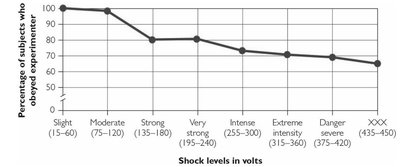
Obedience is following direct orders from authority figures. The Milgram experiment demonstrated that people are likely to obey authority even when it conflicts with personal conscience.
Key Finding: Obedience decreases as the authority figure is less present or the victim is more present.
Helping and Harming Others
Prosocial Behaviour
Prosocial behaviour benefits others and includes helping, giving, sharing, and cooperating. Situational factors influence helping, such as the ability to escape, victim characteristics, mood, role models, conformity, and time pressure.

Bystander Effect
The bystander effect is the tendency for individuals to be less likely to help in an emergency when others are present, due to diffusion of responsibility.
Five Steps to Helping: Notice event, interpret as emergency, take responsibility, know how to help, provide help.
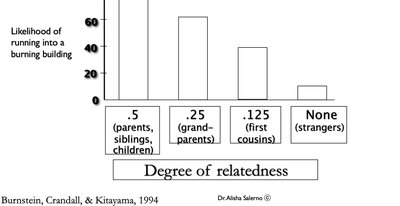
Kin Selection
Kin selection theory suggests people are more likely to help close relatives than strangers, as helping relatives increases the likelihood of genetic survival.
Learning to be Helpful
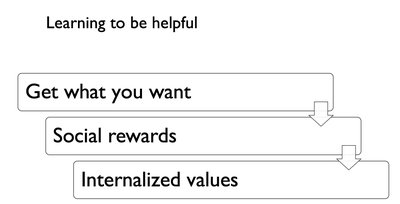
Helping behaviour can be learned through rewards and internalized values.
Altruism
Altruism is helping others with no expectation of personal gain. The existence of true altruism is debated in psychology.
Aggression
Definition and Types
Aggression is any behaviour intended to harm another. It can be hostile (driven by anger) or instrumental (goal-oriented).
Frustration-Aggression Theory: Frustration from blocked goals increases aggression.
Evolutionary Theory: Aggression may have adaptive value.
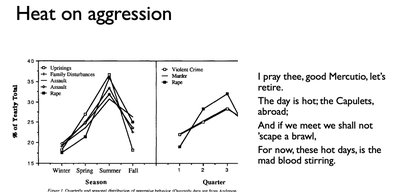
Other Influences: Media, aggressive cues, arousal, substances, temperature.
Culture of Honour
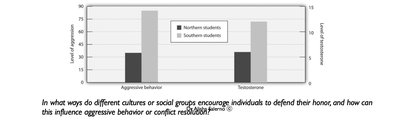
Some cultures encourage aggressive responses to threats against honour, influencing behaviour and physiological responses.
Attitudes and Persuasion
ABC Model of Attitudes
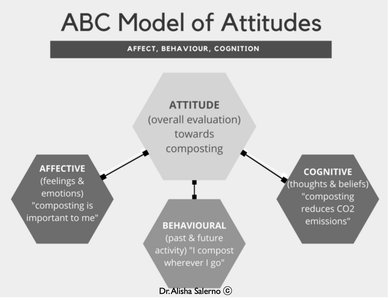
Attitudes consist of affective (emotions), behavioural (actions), and cognitive (beliefs) components.
Persuasion and the Elaboration Likelihood Model
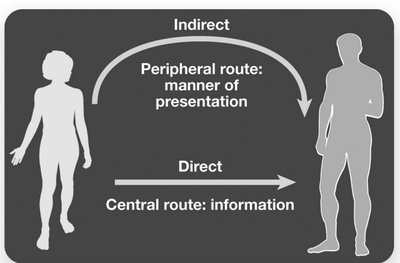
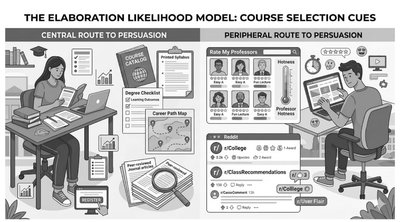
Persuasion is an attempt to change attitudes and behaviour. The elaboration likelihood model describes two routes:
Central Route: Focuses on information and logic.
Peripheral Route: Focuses on superficial cues (e.g., attractiveness, credibility).
Cognitive Dissonance
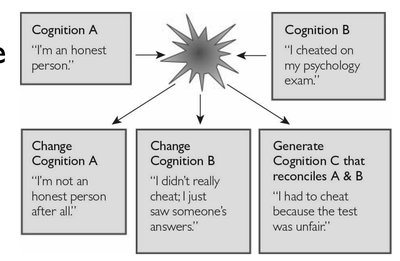
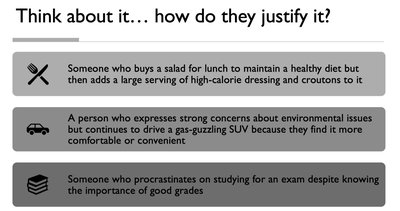
Cognitive dissonance is the discomfort from holding conflicting beliefs or behaviours. People are motivated to reduce dissonance by changing behaviour, rationalizing, or adding new cognitions.
Prejudice, Stereotypes, and Discrimination
Definitions
Prejudice: Negative attitude toward a group.
Stereotype: Generalized belief about a group.
Discrimination: Negative behaviour toward a group.
Nature and Roots of Prejudice
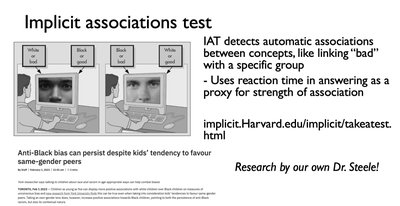
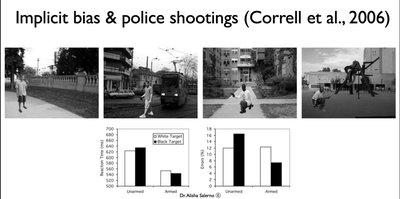
Prejudice can be explicit (conscious) or implicit (unconscious). It is learned through socialization and media. In-group bias and out-group homogeneity contribute to prejudice.
Just-World and Scapegoat Hypotheses
The just-world hypothesis leads to victim blaming, while the scapegoat hypothesis explains prejudice as a way to blame others for personal misfortunes.

Reducing Prejudice
Awareness and Training: Exposure to counter-stereotypical imagery and awareness of bias can reduce prejudice.
Superordinate Goals: Working together toward common goals reduces intergroup hostility (Robber’s Cave study).
Classic Studies in Social Psychology
Stanford Prison Experiment: Power of roles and situational factors.
Asch Conformity Study: Influence of group pressure on conformity.
Milgram Obedience Study: Obedience to authority, even against personal conscience.
Jane Elliott’s Blue Eyes-Brown Eyes Experiment: Demonstrated the effects of discrimination and prejudice in a classroom setting.
Robber’s Cave Study: Intergroup conflict and cooperation among boys at a summer camp.
