 Back
BackConducting and Interpreting Sport and Exercise Psychology Research
Study Guide - Smart Notes
 Tailored notes based on your materials, expanded with key definitions, examples, and context.
Introduction to Sport and Exercise Psychology Research
Sport and exercise psychology research investigates the psychological factors that influence participation in physical activity and the psychological effects of exercise. This field uses scientific methods to understand both the antecedents (causes) and consequences (effects) of exercise behavior.
Key Research Questions in Exercise Psychology
Antecedents: What psychological factors lead to the decision to exercise or not? (e.g., motivation, confidence, self-regulation)
Consequences: How does exercise affect psychological outcomes? (e.g., mood, depression, anxiety, body image)

How Do We Know? Methods of Inquiry
Researchers use various methods to gather and interpret data in sport and exercise psychology:
Scientific Method: Systematic approach to investigating phenomena.
Systematic Observation: Careful monitoring and recording of behaviors.
Single Case Study: In-depth analysis of an individual or group.
Shared Public Experience: Collective observations and experiences.
Introspection: Examination of one's own thoughts and feelings.
Intuition: Gut reactions or instinctive understanding.
Objectives of Science in Exercise Psychology
The scientific approach in exercise psychology aims to:
Describe: Accurately portray phenomena (e.g., low exercise adherence rates).
Explain: Identify causes, correlates, barriers, and facilitators.
Predict: Anticipate events before they occur (e.g., who is at risk for low adherence).
Control: Manipulate antecedent conditions to influence outcomes (e.g., interventions to increase adherence).




The Scientific Method in Exercise Psychology
The scientific method provides a structured approach to research:
Develop the Problem: Identify the research question and variables.
Formulate the Hypothesis: Make a testable prediction about the relationship between variables.
Design the Study: Choose an appropriate research design and methodology.
Gather the Data: Collect data using valid and reliable measures.
Analyze & Interpret Results: Draw conclusions based on the data.

Identifying Variables
Independent Variable (IV): The variable that is manipulated (cause).
Dependent Variable (DV): The variable that is affected by the IV (outcome).

Formulating Hypotheses
A hypothesis is a testable prediction about the expected outcome of the study.
Example: "We hypothesize that exercise will lead to an improvement in body image."
Research Designs in Exercise Psychology
Observational Designs
Cross-sectional Study: Compares different groups at one point in time (e.g., exercisers vs. non-exercisers).
Pros: Quick, low administration, can observe differences.
Cons: Cannot infer causation; only correlation.

Experimental Designs
Pre-Post Design: Measures outcomes before and after an intervention.
Quasi-Experimental: Lacks random assignment but includes manipulation of the IV.
Randomized Controlled Trial (RCT): Participants are randomly assigned to intervention or control groups, allowing for strong causal inference.

Review Designs
Systematic Review: Comprehensive summary of research on a topic.
Meta-Analysis: Statistical analysis combining results from multiple studies.
Narrative Review: Qualitative summary of research findings.
Rapid Review: Streamlined review process for timely evidence synthesis.
Measuring Physical Activity and Exercise
Definitions
Term | Broad Definition |
|---|---|
Physical Activity | Any movement that results in increased energy expenditure |
Leisure Time Physical Activity | Physical activity done in one’s leisure time |
Exercise | A form of leisure time physical activity done to achieve a specific objective |
Organized Sport | Physical activity setting that involves sport (may or may not be competitive) |
Competitive Sport | Physical activity setting that involves competitive sport |

FITT Principles
Frequency: How often activity is performed
Intensity: How hard the activity is
Time: Duration of the activity
Type: Kind of activity performed
Measuring Physical Activity
Self-Report/Survey: Logs, recall questionnaires
Objective/Technical: Accelerometers, heart rate monitors
Observational: Direct observation of activity or attendance
Operational Definitions
Clearly define how physical activity is measured (e.g., "number of steps per day" using an accelerometer).
Measuring Psychological Constructs
Antecedents: Motivation, perceived behavioral control, self-regulation
Consequences: Depression, anxiety, body image, cognitive function
Measurement Methods: Questionnaires, self-report, observation, medical diagnosis, behavioral observation
Validity in Research
Internal Validity: The extent to which results can be attributed to the intervention and not other factors.
External Validity: The extent to which results can be generalized beyond the research setting.
Maximizing Internal Validity: Appropriate measurement, control for confounding variables, use of control groups, standardized protocols
Maximizing External Validity: Representative samples, real-world implementation, follow-up, replication
Analyzing and Interpreting Results
Interpret results to describe observations, support or refute hypotheses, and compare with other research.
Caution: Avoid over-generalizing results; remember that correlation does not imply causation.

Effect Size
Quantifies the size of the difference between two means (e.g., exercisers vs. non-exercisers).
Cohen’s d: A common measure of effect size, expressed in standard deviations.
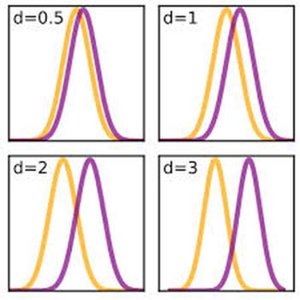
Interpretation: Small (~0.2), Medium (~0.5), Large (~0.8)
Confounding, Moderator, and Mediator Variables
Confounding Variables
A variable that affects both the independent and dependent variables, potentially distorting the true relationship.
Moderator Variables
A variable that alters the direction or strength of the relationship between the independent and dependent variables.
Moderator questions: "When?" and "For whom?"
Mediator Variables
A variable that explains the mechanism through which the independent variable affects the dependent variable.
Mediator questions: "How?" and "What mechanisms?"
Additional info: Understanding moderators and mediators is crucial for designing effective interventions and for interpreting the mechanisms underlying observed effects in exercise psychology research.
