 Back
BackConsciousness: mod 6
Study Guide - Smart Notes
 Tailored notes based on your materials, expanded with key definitions, examples, and context.
Consciousness
Introduction to Consciousness
Consciousness refers to an individual's awareness of their environment and themselves, including their body and mental perspective. It is a central topic in psychology, philosophy, and neuroscience, with ongoing debates about its nature and mechanisms.
Subjective and Private: Each person's conscious experience is unique and inaccessible to others.
Dynamic: Consciousness is a continuous, ever-changing stream of awareness.
Self-Reflective: The mind can reflect on its own state of consciousness.
Example: The question "How do you know you are not dreaming right now?" illustrates the complexity and depth of consciousness studies.
Levels of Consciousness
Freud's Model of Consciousness
Sigmund Freud proposed a model of consciousness with three distinct levels, each representing different types of mental content and accessibility.
Conscious: Current awareness and contact with the external world.
Preconscious: Information just below the surface of awareness, easily retrievable.
Unconscious: Deep-seated material that is difficult to access but influences behavior.
The iceberg metaphor is often used to illustrate Freud's model, with the conscious mind above water, the preconscious just below, and the unconscious as the largest, submerged portion.
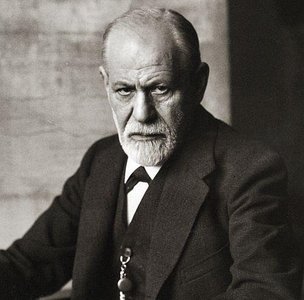

Additional info: Although widely used, Freud himself did not explicitly use the iceberg metaphor; its origins are debated among historians.
Consciousness and the Brain
Neural Basis of Consciousness
Consciousness arises from the coordinated activity of multiple brain regions rather than a single "consciousness center." Integration of sensory, cognitive, and emotional information is essential for unified awareness.
Cerebral Cortex: Especially the frontal and parietal lobes, supports higher-order thinking, attention, and self-awareness.
Thalamus: Acts as a relay station for sensory information and regulates alertness.
Brainstem (Reticular Activating System): Controls wakefulness and overall level of consciousness.
Example: Damage to the reticular activating system can result in coma or loss of consciousness.
Sleep and Its Stages
Stages of Sleep
Sleep is not a uniform state but consists of multiple stages, each with distinct physiological and psychological characteristics. Sleep is divided into Non-REM (NREM) and REM (Rapid Eye Movement) stages.
Stage 1 (NREM): Light sleep, transition from wakefulness, easily awakened, lasts 5-10 minutes.
Stage 2 (NREM): True sleep, muscle relaxation, slowed heart rate and breathing, minimal awareness of surroundings, constitutes about 50% of sleep time.
Stage 3 (NREM): Deep sleep, difficult to awaken, essential for feeling rested, lowest levels of physiological activity.
REM Sleep: Characterized by rapid eye movements, increased brain activity, vivid dreams, and REM sleep paralysis (prevents acting out dreams).
Additional info: Modern sleep research typically combines the former Stage 3 and Stage 4 into a single deep sleep stage.
Sleep Cycle Sequence
Sleep progresses in cycles, each lasting about 90 minutes. A typical night includes 4-6 cycles, with the pattern shifting from deep sleep in early cycles to more REM and Stage 2 sleep in later cycles.
Sleep stages do not occur in a simple sequence; instead, they follow a wave-like pattern.
Deep sleep predominates early in the night, while REM and lighter sleep stages dominate later cycles.
Theories of Sleep
Why Do We Sleep?
There is no single consensus on the function of sleep, but several theories have been proposed:
Restoration Theory: Sleep restores and repairs the body and brain.
Energy Conservation Theory: Sleep reduces energy expenditure during periods of inactivity.
Memory Consolidation Theory: Sleep helps process and store memories.
Additional info: Sleep deprivation negatively affects physiological, cognitive, and emotional functioning.
Dreams
When and Why Do We Dream?
Dreams can occur in any sleep stage, but are most vivid and memorable during REM sleep. Several theories attempt to explain the purpose of dreaming:
Freud's Dream Theory: Dreams are the "royal road to the unconscious," expressing hidden desires and needs. Manifest content is the surface storyline; latent content is the underlying symbolic meaning.
Activation-Synthesis Theory: Dreams result from random neural activity, which the brain synthesizes into a narrative. Dreams have no inherent meaning.
Cognitive Models: Dreams reflect cognitive processes and may aid in problem-solving and emotional regulation.
Example: Recurring dreams are not well explained by the activation-synthesis theory.
Lucid Dreaming
Lucid dreaming occurs when a person becomes aware they are dreaming and may even control the dream. This phenomenon is most common during REM sleep and provides insight into self-awareness and cognitive control during sleep.
Altered States of Consciousness
Types of Altered States
Hallucinations: Perceptual experiences without external stimuli. Can affect any sense (visual, auditory, olfactory, gustatory, tactile). Auditory hallucinations are most common.
Out-of-Body Experiences (OBE): Sensation of consciousness leaving the body, often reported during near-death experiences or neurological events.
Mystical Experiences: Feelings of unity, peace, and transcendence, sometimes induced by religious practices or drugs.
Déjà vu: The sensation of reliving a new experience, with various theories explaining its occurrence.
Drugs and Consciousness
Drug Effects on Consciousness
Drugs can alter states of consciousness by affecting neurotransmitter activity in the brain. They are classified based on their effects:
Agonists: Increase neurotransmitter activity.
Antagonists: Decrease or inhibit neurotransmitter activity.
Types of Psychoactive Drugs
Drug Type | Main Effects | Examples |
|---|---|---|
Depressants | Decrease nervous system activity, relaxation, reduced anxiety; high doses can cause unconsciousness or death | Barbiturates, tranquilizers, alcohol |
Stimulants | Increase nervous system activity, alertness, elevated mood; high doses can cause hallucinations or death | Amphetamines, cocaine, ecstasy |
Opiates | Pain relief, drowsiness, euphoria; high doses can cause respiratory problems or death | Opium, morphine, heroin, oxycodone, fentanyl |
Hallucinogens | Alter perception, cause hallucinations, distort time and reality | LSD, mescaline, psilocybin, ecstasy |
Additional info: Alcohol is a depressant, not a stimulant, despite initial feelings of relaxation or disinhibition.
Summary and Key Takeaways
Consciousness is private, dynamic, and self-reflective.
Sleep consists of multiple stages, with REM sleep being the most active.
Dreams occur in all sleep stages, but are most vivid during REM sleep.
Theories of sleep and dreaming remain debated, with no single accepted explanation.
Altered states of consciousness can occur naturally or be drug-induced.
Psychoactive drugs affect consciousness by altering neurotransmitter activity.
