 Back
BackPsychology chapter 11
Study Guide - Smart Notes
 Tailored notes based on your materials, expanded with key definitions, examples, and context.
Theories of Emotion
Emotions, Feelings, and Moods
Emotions are immediate, specific responses to environmental events or internal thoughts. They are distinct from moods, which are diffuse, long-lasting emotional states without a clear trigger, and from feelings, which are the subjective experiences of emotions. Affect refers to the observable expression of emotion.
Emotions: Immediate, specific responses to stimuli.
Moods: Long-lasting, less specific emotional states.
Feelings: Subjective experiences of emotions (e.g., "I feel scared").
Affect: Outward, observable expression of emotion.
Components of Emotion
Emotions involve three main components:
Bodily arousal: Physiological changes (e.g., heart rate, sweating).
Subjective conscious experience: Personal, cognitive interpretation of the emotion.
Characteristic overt expressions: Behavioral and non-verbal expressions (e.g., facial expressions).
Cognitive Theories of Emotion
Several theories explain how emotions are generated and experienced:
Common Sense Approach: Stimulus leads to conscious feeling, which then triggers physiological arousal.
James-Lange Theory: Perception of autonomic arousal leads to the conscious experience of emotion. Different patterns of arousal produce different emotions.
Cannon-Bard Theory: Criticizes James-Lange; argues that physiological arousal and emotional experience occur simultaneously via subcortical brain activity.
Schachter-Singer (Two-Factor) Theory: Emotion depends on both physiological arousal and cognitive interpretation of that arousal based on environmental context.
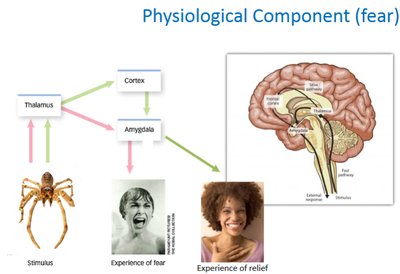
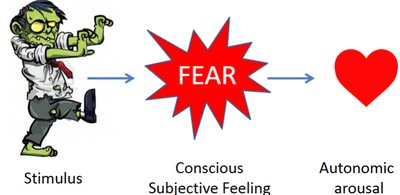
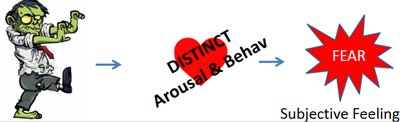
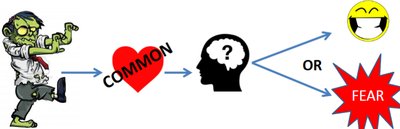
Evaluation of Theories: No single theory fully explains all aspects of emotion. Some emotions can be physiologically distinguished, but not all; some emotions are experienced without arousal.
Primary and Secondary Emotions
Primary emotions: Universal, innate emotions (e.g., disgust, anger, joy, sadness, contempt, surprise, fear, pride).
Secondary emotions: Blends of primary emotions, often more complex and culturally influenced.
Circumplex Model of Emotions
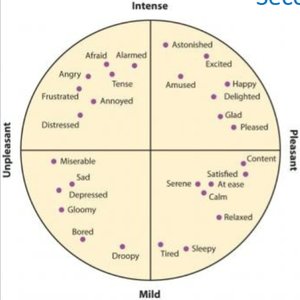
The circumplex model organizes emotions along two dimensions: valence (pleasant-unpleasant) and arousal (intense-mild).
Facial Expression and Evolution of Emotions
Universality Hypothesis
Emotional expressions are largely universal, supporting the idea that emotions are adaptive responses shaped by natural selection. For example, blind individuals and infants display similar emotional expressions as sighted adults.
Emotions and Communication
Emotions communicate internal states and intentions to others, facilitating social interaction and survival.
Examples: Smiling increases affiliation; sadness elicits support; guilt and embarrassment help repair social bonds.
Display Rules
Display rules are culturally learned norms that dictate how and when emotions should be expressed. These rules vary across cultures and between genders.
Women tend to display emotions more readily and intensely, especially crying and laughing, while men display more anger.
Socialization plays a significant role in teaching gender-appropriate emotional expression.
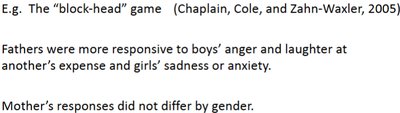
Empirical Example: The "Block-head" Game
Research shows fathers are more responsive to boys' anger and laughter and girls' sadness or anxiety, while mothers' responses do not differ by gender.
Emotional Sensitivity and Regulation
Emotional Regulation
Emotional regulation refers to how individuals control which emotions they have, when they have them, and how these emotions are experienced and expressed. Strategies include:
Situation selection: Approaching or avoiding certain situations to regulate emotions.
Situation modification: Changing the environment to alter emotional impact.
Attentional deployment: Directing attention to influence emotions (e.g., distraction, concentration, rumination).
Cognitive change: Reappraising situations to alter emotional responses (e.g., positive reappraisal, downward social comparison).
Response modulation: Modifying behavioral or physiological responses (e.g., suppression, exercise, biofeedback).
Emotional Sensitivity vs. Regulation
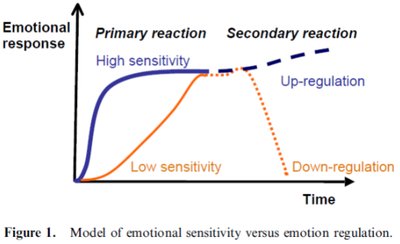
Emotional sensitivity refers to how strongly one reacts to emotional stimuli, while regulation involves up-regulating or down-regulating emotional responses over time.
Theories of Motivation & Achievement
What is Motivation?
Motivation is the process that influences the direction, persistence, and vigor of goal-directed behavior.
Theories of Motivation
Instinct Theory: Behaviors are driven by innate, evolutionary instincts.
Drive Theory: Physiological disruptions to homeostasis create drives that motivate behavior to restore balance.
Incentive Theories: External stimuli with high incentive value can motivate behavior, even without biological need.
Psychoanalytic Theories: Behavior results from unconscious impulses and psychological defenses (largely discredited).
Expectancy (x Value) Theory: Motivation is determined by the expectation of success and the value placed on the goal.
Formula:
Humanistic Theories: Focus on psychological needs for competence, autonomy, and relatedness (Self-Determination Theory).
Motives to Achieve
Need for achievement: Desire to accomplish tasks and attain standards of excellence.
Motive for success: Mastering skills or outperforming others.
Motive to avoid failure: Anxiety in achievement situations.
Motivation & Goals
Performance goals: Focus on being judged favorably and avoiding criticism.
Mastery (learning) goals: Focus on increasing competence and finding intrinsic pleasure in the task.
Mindsets and Motivation
Mindsets influence motivation and response to setbacks:
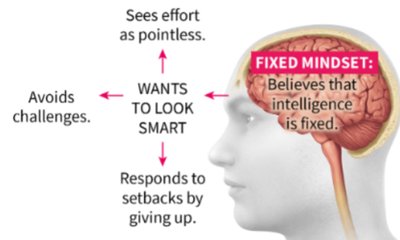
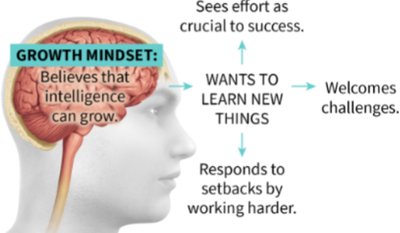
Fixed mindset: Belief that intelligence is static; avoids challenges, gives up easily, sees effort as pointless.
Growth mindset: Belief that intelligence can be developed; welcomes challenges, works harder after setbacks, sees effort as crucial.
Motivations to Eat: Biological, Environmental, and Social Factors
Biological Factors
Hypothalamus: Regulates hunger and satiety.
Ventroimedial hypothalamus: Satiety center; lesion leads to overeating.
Lateral hypothalamus: Hunger center; lesion leads to undereating.
Hunger hormones:
Ghrelin: Increases appetite.
Leptin: Decreases appetite.
Genetics: Account for 40-70% of variation in body mass; over 200 genes implicated in obesity.
Environmental and Social Factors
Portion sizes: Larger portions lead to increased consumption (unit bias).
Proximity and visibility: Easily accessible and visible food increases intake.
Variety: Greater variety leads to increased consumption.
Eating with others: Social context influences eating behavior (longer meals, more relaxed, distracted from monitoring consumption).
Mood: Emotional states can influence food choices and consumption.
Obesity: A Multifactorial Disease
Obesity is a chronic disease influenced by genes, not just lifestyle choices.
It impacts both physical and mental health and is treatable.
Weight bias and stigma are harmful and widespread.
Contributing factors include increased availability of processed foods, high-sugar drinks, decreased activity, larger portions, and food variety.
Culture and the "Ideal" Body
Societal expectations of beauty and body ideals change over time and influence eating habits and motivation to eat.
