 Back
BackExercise and Body Image: Psychological Science Perspectives
Study Guide - Smart Notes
 Tailored notes based on your materials, expanded with key definitions, examples, and context.
Exercise and Body Image
Introduction
This topic explores the psychological science behind body image, its formation, and its relationship with exercise. Body image is a complex, multidimensional construct that affects psychological well-being and physical health. Understanding its origins, measurement, and implications is essential for students of psychology, especially in the context of health, motivation, and social influences.
Body Image: Definition and Dimensions
What is Body Image?
Body image is the subjective picture individuals have of their own bodies, regardless of how their bodies actually look. It encompasses thoughts, feelings, evaluations, and behaviors related to one’s body.
Perceptual Dimension: How one "sees" their body, which may not reflect reality.
Cognitive Dimension: What one thinks about their body, including beliefs about function and appearance.
Emotional Dimension: Positive or negative feelings about the body (e.g., pride, shame).
Behavioral Dimension: Actions reflecting body image, such as checking, dieting, or avoidance behaviors.
Reference: Hosseini & Padhy, 2020
Formation and Influences on Body Image
Origins of Body Image
Body image is shaped by a variety of factors:
Changes in body reality (e.g., BMI, physical changes)
Media influences (portrayal of body ideals)
Cultural influences (societal standards and norms)
Familial and social pressures
Participation in activities (e.g., sports, dance)
Chronic illness or disability
References: Lox et al., 2010; Hosseini & Padhy, 2020
Changing Body Ideals
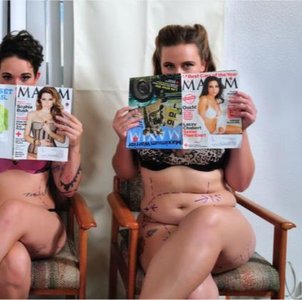
Body ideals have shifted dramatically across historical periods, but the pressure to conform to these ideals remains persistent, especially for women. Each era has promoted different standards of beauty, often unattainable for most people.
Renaissance: Fuller figures were idealized.
Victorian Era: Emphasis on a cinched waist.
1920s: Flapper, boyish look.
1930s-1950s: Curvier silhouettes.
1960s-1970s: Slim, model-like figures.
1980s: Athletic, toned bodies.
1990s-2020s: Diverse but often unrealistic standards.

Prevalence and Demographics of Body Dissatisfaction
Body Dissatisfaction Among Adolescents and Adults
Body dissatisfaction is highly variable, with rates ranging from 18% to over 80% in both sexes, but consistently higher among girls and women.
Body dissatisfaction tends to increase with age and is associated with lower education levels.
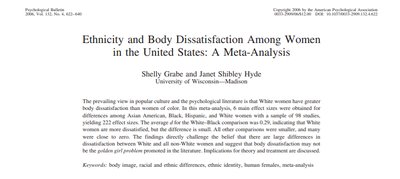
Contrary to stereotypes, body dissatisfaction is not exclusive to white women; differences across ethnic groups are small or negligible.
Comparison | Number of Effect Sizes | Effect Size |
|---|---|---|
White - Black | 93 | 0.29 |
White - Asian | 34 | 0.01 |
Black - Hispanic | 26 | -0.18 |
White - Hispanic | 31 | 0.09 |
Black – Asian | 19 | -0.12 |
Asian - Hispanic | 17 | -0.07 |
Source: Frederick et al., 2012
Body Dissatisfaction in Men and Gender-Diverse Individuals
Body dissatisfaction is common among men (8–61% report dissatisfaction).
Research has traditionally focused on binary gender, but gender-diverse individuals may be at higher risk for negative body image.


Measuring Body Image
Perceptual Measures
Assess the accuracy of judgments about the size of one’s body parts or the body as a whole.
Example: Comparing perceived vs. actual body size.
Cognitive Measures
Questionnaires assess satisfaction with body shape and appearance. The Multidimensional Body-Self Relations Questionnaire (MBSRQ) is widely used.
Criticism: Some scales may not adequately measure concerns about muscularity, especially in men.
Affective/Emotional Measures
Assess feelings such as worry, shame, anxiety, comfort, embarrassment, and pride in relation to the body.
Example: Social Physique Anxiety Scale (12 items, self-report).
Behavioral Measures
Assess the frequency of behaviors indicating body image disturbance, such as avoidance or body checking.
Example: Body Checking and Avoidance Questionnaire (BCAQ; Shafran et al., 2004).
Body Image and Health
Psychological Well-being
Poor body image is associated with greater anxiety and depression symptoms.
It can be both a cause and consequence of psychological disturbances.
Physical Well-being
Positive body image is linked to health-promoting behaviors (e.g., healthy eating, physical activity).
Poor body image is associated with health-damaging behaviors (e.g., eating disorders, unhealthy weight control, smoking).
Exercise and Body Image: The Relationship
Conceptual Relationship
Exercise can be both a motivator and a demotivator for body image improvement.
Some individuals are motivated to exercise to improve appearance, while others avoid exercise due to body image concerns (e.g., embarrassment, fear of judgment).
Influence of Exercise on Body Image
Meta-analytic studies show that exercise training leads to significant improvements in body image for both men and women.
Both aerobic and weight training are effective.
Study | Men (Effect Size d) | Women (Effect Size d) |
|---|---|---|
Hausenblas & Fallon (2006) Single group | .26 | .45 |
Hausenblas & Fallon (2006) Experimental vs. Control | .39 | .43 |
Reel et al. (2007) | .50 | .50 |
Campbell & Hausenblas (2009) | .19 | .32 |
Note: Significant differences between men and women, p<.01
Moderators and Mediators
Program length: At least 10 weeks for significant effects.
Gender: Women tend to benefit more than men.
Age: Older adults show greater improvements.
Mode: Aerobic, weight training, or both are effective.
Intensity: Moderate to strenuous intensity is more effective than mild exercise.
Mediators: Perceived physical fitness (38% of effect), objective fitness (9%), self-efficacy (3%).
The Dark Side of Exercise and Body Image
Potential Negative Outcomes
Exercise can exacerbate body image concerns, especially when motivated by appearance-related reasons.
Unrealistic expectations and exercise dependence syndrome (uncontrollable, excessive exercise) can lead to negative psychological and physiological symptoms.
Rates of exercise dependence: 3–5% in the general population, 10–20% in competitive athletes.
Practical Recommendations
Promote a wide range of body shapes, sizes, and abilities in exercise settings.
Focus on function, strength, and endurance rather than appearance.
Encourage enjoyable exercise experiences for the greatest improvements in body image.
