 Back
BackExercise and Mood: Psychological Effects and Moderators
Study Guide - Smart Notes
 Tailored notes based on your materials, expanded with key definitions, examples, and context.
Exercise and Mood
Introduction to Exercise Psychology
Exercise psychology investigates the relationship between physical activity and psychological well-being. Research in this field aims to understand both the effects of exercise on the brain and behavior, and how to encourage individuals to start and maintain regular exercise routines.
Key Point: Exercise psychology explores how physical activity influences mental states and behaviors.
Key Point: It also examines strategies to promote exercise adherence.
What is Mood?
Mood is defined as a general state of mind or feeling. In psychology, mood typically refers to broad states of positive or negative affect, rather than specific emotions.
Definition: "A state of mind or feeling" (Webster’s Dictionary).
Psychological Use: Refers to general positive or negative affective states.
Why is Mood Important?
Mood significantly influences human judgment and decision-making. The affect heuristic describes how affective responses shape our choices, often outside of conscious logic or cognition. Researchers have shifted focus toward pleasure and enjoyment as key drivers of behavior, especially in exercise contexts.
Affect Heuristics: Judgments and decisions are influenced by affective responses (Finucane et al., 2000).
Pleasure and Enjoyment: These affective constructs are important predictors of exercise behavior (Zenko et al., 2016).
Takeaway: How we feel during and after exercise affects our likelihood of exercising again.
Measuring Mood
Researchers use both generalized and exercise-specific tools to assess mood changes related to physical activity.
Generalized Measures: The Profile of Mood States (POMS) is a gold standard, consisting of 65 items rated on a scale from 0 (not at all) to 4 (very strongly). It measures negative moods (tension, anger, fatigue, confusion) and positive mood (vigor).
Exercise-Specific Measures:
Exercise-Induced Feelings Inventory (EFI): Assesses revitalization, tranquility, positive engagement, and physical exhaustion (Gauvin & Rejeski, 1993).
Physical Activity Affect Scale (PAAS): Measures affective responses specific to physical activity (Lox et al., 2000).
Effects of Exercise on Mood: Acute vs. Chronic
Exercise can influence mood both in the short term (acute effects) and over longer periods (chronic effects).
Acute Effects: Mood changes following a single bout of exercise (e.g., after a 30-minute walk).
Chronic Effects: Mood changes after sustained exercise over weeks or months (e.g., after 6 months of regular walking).
Mood During vs. After Exercise
Mood can be measured during exercise (how one feels in the moment) and after exercise (immediate post-exercise affect).
During Exercise: Ideally measured in real-time or recalled immediately after.
After Exercise: Measured post-exercise to assess immediate effects.
How Much Exercise is Enough?
Research indicates that even short bouts of exercise can positively affect mood. Optimal mood enhancement is typically observed with low-to-moderate intensity exercise.
10–15 minutes of walking can boost energy and reduce tension (Ekkekakis et al., 2000).
10–30 minutes of moderate-intensity exercise is optimal for mood enhancement (Chan et al., 2019).
Exercise increases positive mood states and decreases negative mood states (Reed & Buck, 2009; Reed & Ones, 2006).
Meta-Analytic Evidence
Meta-analyses synthesize findings from multiple studies to estimate the overall effect of exercise on mood.
Reed and Buck (2009): 105 studies, N = 9840 participants, Effect Size = 0.57 (moderate effect).
Moderators of the Exercise-Mood Relationship
Not all individuals experience the same mood benefits from exercise. Several variables can moderate these effects:
Exercise Characteristics: Intensity, duration, frequency, and type of exercise.
Exerciser Characteristics: Gender, fitness level, and individual preferences.
Environmental Factors: Presence of mirrors, music, and social context.
Experimental Studies on Moderators
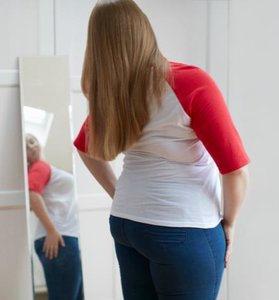
Mirror Presence
Martin-Ginis et al. (2003) investigated whether exercising in front of a mirror affects mood. In a randomized study with sedentary female students, mood was assessed using the EFI before and after exercise in mirror and no-mirror conditions.
Findings: Mirrors reduced feelings of tranquility and diminished the revitalization effect of exercise.
Gender, Duration, and Intensity
Courtney et al. (2004) examined whether gender, exercise duration, and exertion level moderate mood effects in 135 undergraduates choosing between weight training and cardiovascular exercise.
Gender: Women experienced greater reductions in negative mood after weight training than men.
Duration: Each additional 30 minutes of exercise led to a 0.51 standard deviation decrease in negative mood.
Intensity (RPE): Low exertion produced the greatest mood boost; high exertion produced no change.
Takeaway: Low-to-moderate intensity, longer sessions are especially effective for improving mood.
Other Moderators
Exercise Intensity: Low-to-moderate intensity exercise produces the greatest increase in positive affect; high intensity may increase negative affect (Reed & Buck, 2009).
Exercise Frequency: More frequent exercise is associated with improved mood.
Fitness Level: Less-fit individuals may experience less positive and more negative affective responses (Lox et al., 2006).
Music: High-groove music can enhance positive mood and exercise adherence, especially in women.
Intensity Progression: Decreasing exercise intensity over time increases post-exercise pleasure and enjoyment (Zenko et al., 2016).
Summary and Practical Recommendations
Exercise is consistently associated with positive mood, especially when performed at low-to-moderate intensity for 30–35 minutes, 3–5 days per week, over 10–12 weeks. Meta-analyses support these findings, and practical recommendations include considering exercise intensity, duration, frequency, environmental factors (e.g., mirrors, music), and individual preferences to maximize mood benefits.
Optimal Exercise Prescription:
30–35 minute sessions
Low to moderate intensity (~30% VO2R)
3–5 days per week for 10–12 weeks
