 Back
BackFoundations of Psychological Science: Science Practices, Research Methods, and Statistics
Study Guide - Smart Notes
 Tailored notes based on your materials, expanded with key definitions, examples, and context.
Foundations of Psychological Science
Psychology as a Science
Psychology is defined as the science of behavior and mental processes. Psychologists employ the scientific method to gather data and test hypotheses, ensuring objectivity and reliability in their findings.
Scientific Method: Involves observation, hypothesis formation, experimentation, data analysis, and publication/replication.
Theories: Organized sets of concepts that explain phenomena and generate hypotheses.
Hypothesis: A testable prediction about the relationship between variables; must be falsifiable.
Scientific Attitude: Requires curiosity, skepticism, and humility.
Replication: Essential for confirming results and scientific reliability.
Psychological Biases
Psychology aims to counteract cognitive biases that can distort thinking and research outcomes.
Hindsight Bias: Believing, after an event, that one would have predicted it.
Overconfidence: Overestimating the accuracy of one's judgments.
Wording Effect: Survey question wording can influence responses.
Self-Report Bias: Participants may provide inaccurate information, often due to social desirability bias.
Research Methods and Design
Experimental Method
The experimental method is the only research approach that can establish cause-and-effect relationships by manipulating variables in a controlled setting.
Independent Variable (IV): The factor manipulated by the researcher.
Dependent Variable (DV): The outcome measured, affected by the IV.
Operational Definition: Specifies how variables are measured or defined in a study.
Experimental Group: Receives the treatment or intervention.
Control Group: Receives no treatment or a placebo.
Random Sample: Participants are randomly selected from the population to ensure representativeness.
Random Assignment: Participants are randomly assigned to groups to minimize confounding variables.
Confounding Variables: Factors other than the IV that may affect results.
Placebo Effect: Changes due to participants' expectations rather than the treatment.
Blinding Techniques: Single-blind (participants unaware), double-blind (both participants and researchers unaware) to reduce bias.
Non-Experimental Methods
Non-experimental methods describe relationships and phenomena without manipulating variables, and cannot establish causation.
Correlational Research: Examines associations between variables; uses correlation coefficients to quantify relationships.
Case Study: In-depth analysis of an individual or group.
Naturalistic Observation: Observing subjects in their natural environment.
Meta-Analysis: Combines results from multiple studies for comprehensive conclusions.
Longitudinal Study: Follows participants over time.
Cross-Sectional Study: Examines data from a population at one point in time.
Quasi-Experiment: Lacks random assignment; cannot establish causation.
Survey: Collects data from participants, often used in conjunction with other methods.
Reliability vs. Validity
Psychological assessments must be both reliable and valid to be useful.
Reliability: Consistency or repeatability of a measure.
Validity: Accuracy; the extent to which a test measures what it is intended to measure.
Example: A psychology test should not include calculus questions, as they are not valid measures of psychological knowledge.
Statistics and Data Analysis
Descriptive Statistics
Descriptive statistics summarize and describe characteristics of a data set.
Measures of Central Tendency: Mean (average), median (middle value), mode (most frequent value).
Mean: Sensitive to outliers; calculated by summing values and dividing by the number of values.
Median: Less affected by outliers; the middle value in an ordered data set.
Mode: Most frequently occurring value; can be unimodal, bimodal, or multimodal.
Measures of Variability
Measures of variability describe the spread or dispersion of data.
Range: Difference between the highest and lowest values. Formula:
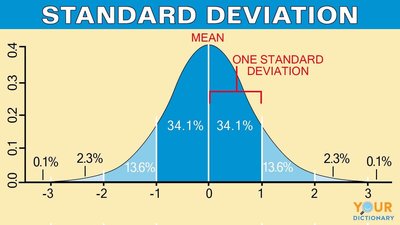
Standard Deviation: Indicates how much scores differ from the mean. Formula:
Example: High standard deviation in student heights means a wide range of heights.
Normal Distribution and Z-Scores
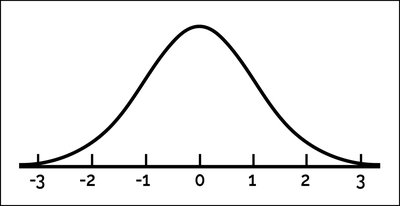
The normal distribution is a symmetrical, bell-shaped curve representing how traits are distributed in a population. Z-scores measure how far a value is from the mean in standard deviation units.
Normal Distribution: Mean, median, and mode are all at the center (0).
Standard Deviations: 68% of scores within 1 SD, 95% within 2 SDs, 99% within 3 SDs.
Z-Score:
Percentile Score: Percentage of scores at or below a specific value.
Inferential Statistics
Inferential statistics determine whether findings from a sample can be generalized to the population.
Statistical Significance: Indicates whether results are likely due to chance.
Data Visualization: Frequency distributions can be shown as histograms or frequency polygons.
Ethical Guidelines in Psychological Research
Ethical Principles
Psychologists must follow ethical guidelines to protect participants and maintain scientific integrity.
Informed Consent: Participants must be fully informed and voluntarily consent.
Protection from Harm: Participants must not be exposed to significant risk.
Confidentiality: Participant information must be kept private.
Deception and Debriefing: Minimal deception is allowed if necessary, but participants must be debriefed after the study.
Animal Research: Must be humane and scientifically justified.
Additional info:
Generalizability: The extent to which findings can be applied to the broader population depends on sampling methods and study design.
Peer Review: Ensures research quality and integrity before publication.
Laboratory Setting: Offers control but may lack ecological validity.
Institutional Review: Protects participant rights and ensures ethical compliance.
