 Back
BackHelping and Harming Others: Prosocial Behavior, Aggression, and Attitudes
Study Guide - Smart Notes
 Tailored notes based on your materials, expanded with key definitions, examples, and context.
Helping and Harming Others
Prosocial Behaviour
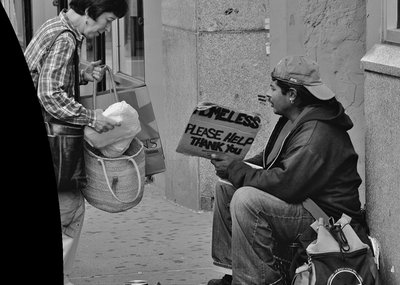
Prosocial behaviour refers to actions intended to benefit another person. This includes helping, giving, sharing, and cooperating. Such behaviours are fundamental to social cohesion and positive group dynamics.
Helping: Providing assistance to others in need.
Giving: Donating resources, time, or effort for the benefit of others.
Sharing: Distributing resources or opportunities among individuals.
Cooperating: Working together towards a common goal.
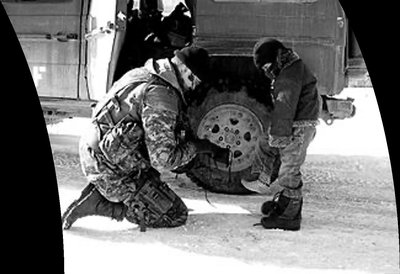
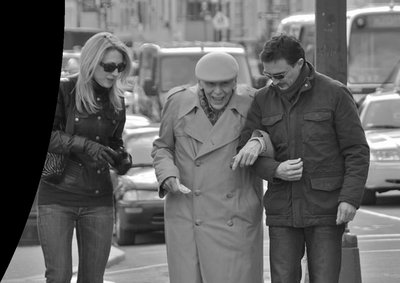
Example: A soldier helping a child tie their shoe, or a person assisting an elderly individual to cross the street.

Helping: Situational Influences
People are more likely to help in certain situations, influenced by both the context and characteristics of those involved.
Escape Difficulty: People are more likely to help when they cannot easily leave the situation.
Victim Characteristics: Individuals perceived as deserving or vulnerable (e.g., using a cane) are more likely to receive help than those seen as responsible for their plight (e.g., intoxicated individuals).
Mood: Good moods increase the likelihood of helping.
Role Models: Observing others help increases prosocial actions.
Conformity: Social norms and group behaviour can encourage helping (e.g., community drives).
Time Pressure: People in a hurry are less likely to help (as shown in the Samaritan study).
The Bystander Effect
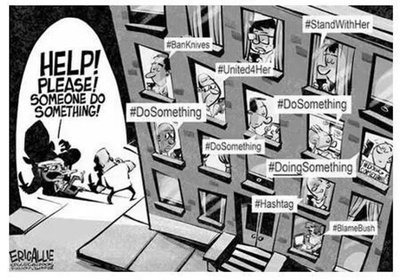
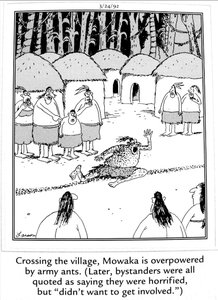
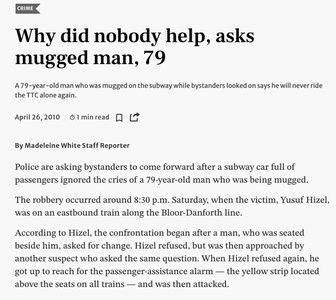
The bystander effect describes the phenomenon where individuals are less likely to help in an emergency when others are present. This is due to diffusion of responsibility and social influence.
Five Steps to Helping in an Emergency:
Notice the event
Interpret it as an emergency
Assume responsibility
Know how to help
Implement help
Diffusion of Responsibility: The presence of others leads to a perceived reduction in personal responsibility.
Social Influence: People look to others for cues on how to behave.
Why Do We Help Others?
Helping behaviour is influenced by both genetic and learned factors.
Kin Selection: Evolutionary theory suggests we are more likely to help close relatives to ensure the survival of shared genes.
Norms of Reciprocity: Social norms encourage helping those who have helped us.
Learning: Helping can be reinforced through rewards, internalized values, and socialization.
Altruism
Altruism is the motive to increase another’s welfare without conscious regard for one’s self-interest. True altruism is debated, as some argue all helping has underlying self-benefit.
Example: Providing disaster relief to strangers or risking one’s life to save others.
Aggression, Attitudes, and Prejudice
Aggression
Aggression is any physical or verbal behaviour—or deliberate failure to act—intended to harm another person or living thing. It can be hostile (driven by anger) or instrumental (goal-oriented).
Frustration-Aggression Theory: Frustration from blocked goals increases the likelihood of aggression.
Evolutionary Theory: Aggression may serve adaptive functions, such as defending resources.
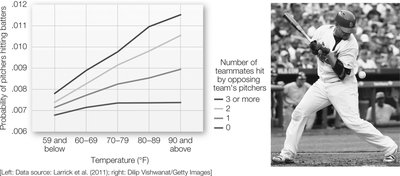
Situational Influences: Media, aggressive cues (e.g., weapons), arousal, substances, and temperature can all increase aggression.
Heat and Aggression
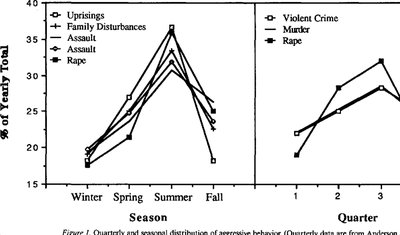
Higher temperatures are associated with increased rates of aggression and violent crime.
Culture of Honour
Some cultures endorse the use of aggression to defend one’s honour, leading to higher aggression in response to perceived slights.
Attitudes and Persuasion
Attitudes are evaluations of people, objects, or ideas, and can be changed through persuasion.
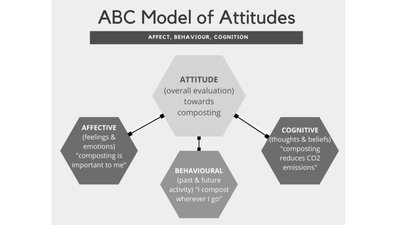
ABC Model of Attitudes
The ABC model breaks attitudes into three components:
Affective: Emotional response
Behavioural: Actions or intentions
Cognitive: Beliefs or thoughts
Persuasion: Elaboration Likelihood Model
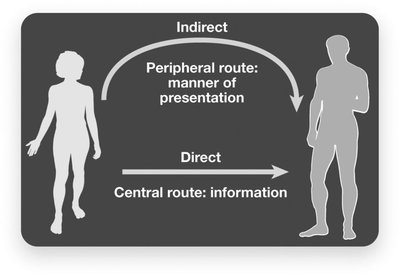
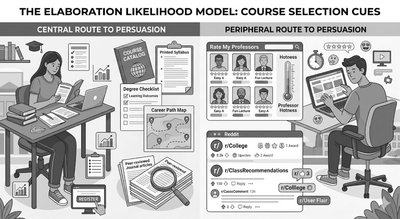
The elaboration likelihood model describes two routes to persuasion:
Central Route: Focuses on the quality of arguments and information.
Peripheral Route: Relies on superficial cues such as attractiveness, credibility, or emotional appeal.
Source, Message, and Audience Characteristics
Source: Credibility, attractiveness, and expertise can enhance persuasion, especially via the peripheral route.
Message: Two-sided messages and emotional appeals (especially fear, if accompanied by solutions) are effective.
Audience: Young adults, those with low self-esteem, and individuals low in need for cognition are more easily persuaded.
Cognitive Dissonance
Cognitive dissonance is the uncomfortable tension from holding conflicting thoughts or beliefs. People are motivated to reduce this tension by changing their attitudes, behaviours, or rationalizing inconsistencies.
Example: Justifying unhealthy eating despite valuing health, or procrastinating despite valuing academic success.
Prejudice and Discrimination
Prejudice is a negative attitude toward individuals based on group membership. Stereotypes are specific beliefs about groups, and discrimination is negative behaviour toward group members.
Adaptive Conservatism: Evolutionary tendency to distrust unfamiliar individuals.
In-group Bias: Favouring one’s own group.
Out-group Bias: Viewing out-group members as similar and different from the in-group.
Explicit Prejudice: Conscious, openly expressed negative attitudes.
Implicit Prejudice: Unconscious biases, measured by tools like the Implicit Association Test (IAT).
Roots and Consequences of Prejudice
Social Learning: Prejudice is learned from parents, peers, and media.
Scapegoat Hypothesis: Blaming out-groups for personal or societal problems.
Just-world Hypothesis: Belief that the world is fair leads to victim-blaming.
Conformity: Social pressure can reinforce prejudiced attitudes.
Reducing Prejudice
Contact Hypothesis: Positive interaction between groups can reduce prejudice.
Superordinate Goals: Cooperation toward shared goals (as in the Robber’s Cave study) reduces intergroup hostility.
