Back
BackIntroduction to Psychology: Foundations, Critical Thinking, and Major Perspectives
Study Guide - Smart Notes
 Tailored notes based on your materials, expanded with key definitions, examples, and context.
What is Psychology?
Definition and Scope
Psychology is the scientific discipline concerned with behavior and mental processes and how they are affected by an organism’s physical state, mental state, and external environment. Psychological science is grounded in empirical evidence, meaning knowledge is acquired through observation, experimentation, and measurement rather than anecdote or intuition.
Behavior: Observable actions of humans and animals.
Mental Processes: Internal experiences such as thoughts, feelings, and motives.
Empirical Evidence: Information acquired by observation or experimentation that is used to support or refute a hypothesis.
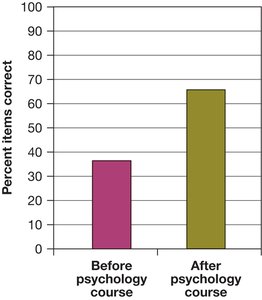
What Isn’t Psychology?
Psychology is often confused with "pop psychology" and pseudoscience, which lack empirical support. Common pseudoscientific practices include fortune telling, astrology, and numerology. These are not based on scientific methods and should be distinguished from psychology as a science.
Pseudoscience: Claims or beliefs mistakenly regarded as being based on the scientific method.
Pop Psychology: Popularized psychological theories or concepts that may not be scientifically validated.
Scientific Literacy and Critical Thinking
Critical Thinking in Psychology
Critical thinking is the ability and willingness to assess claims and make objective judgments on the basis of well-supported reasons and evidence rather than emotion or anecdote. This skill is increasingly important in the digital age, where information is abundant but not always reliable.
Critical Thinking: Evaluating information and arguments, identifying errors in reasoning, and making reasoned judgments.

Five Steps to Being a Good Critical Thinker
Ask Questions, Be Willing to Wonder: Curiosity drives scientific inquiry. Asking "why" is fundamental to understanding behavior and mental processes.
Define Your Terms: Frame questions in clear and concrete terms to avoid ambiguity and ensure meaningful answers.
Analyze Assumptions and Biases: Recognize beliefs taken for granted (assumptions) and how they may lead to biases, which can impair objective judgment.
Examine the Evidence: Base conclusions on evidence, avoid oversimplification, and resist easy generalizations.
Weigh Conclusions: Tolerate uncertainty and consider alternative interpretations before drawing conclusions.

Scientific Principles in Psychology
Core Philosophical Tenets
Empiricism: Knowledge comes through experience and observation.
Determinism: All events are governed by lawful, cause-and-effect relationships.
Materialism: The belief that humans and other living beings are composed exclusively of physical matter.
Zeitgeist: The general set of beliefs of a particular culture at a specific time in history, which can influence scientific progress.

Historical Blunders in Psychology
Early attempts to understand behavior often lacked empirical rigor, leading to flawed theories and practices. Examples include phrenology (the belief that bumps on the skull reflect personality traits) and the use of the "Lobotomobile" for psychosurgery.

The Beginnings of Psychology
Wilhelm Wundt and Introspection
Wilhelm Wundt established the first laboratory dedicated to studying human behavior. He used introspection, a process of looking within to describe psychological sensations, laying the groundwork for experimental psychology.

Structuralism
Structuralism, pioneered by Wundt and his followers, aimed to analyze conscious experience by breaking it down into basic elements and understanding how these elements combine.
Example: Describing an apple by its color, taste, shape, and texture.

Functionalism
William James, influenced by Darwin, proposed functionalism: the study of the purpose and function of behavior and conscious experience. Functionalism emphasized how mental processes help individuals adapt to their environments.

Psychoanalysis
Sigmund Freud developed psychoanalysis, emphasizing unconscious causes of psychological problems. Freud introduced concepts such as the id, ego, and superego, and developed a method of psychotherapy. However, many empirically oriented psychologists rejected his theories due to a lack of scientific evidence.
Major Perspectives in Modern Psychology
The Biological Pillar
The biological perspective emphasizes bodily events associated with actions, thoughts, and feelings, as well as genetic contributions to behavior. Biological psychologists study how electrical impulses, hormones, and brain activity interact with the environment to produce perceptions, memories, and behavior.
The Cognitive Pillar
The cognitive perspective focuses on how people reason, remember, comprehend language, solve problems, and acquire moral standards. Research in this area explores phenomena such as insight, false memory, and unconscious thought processes.
The Developmental Pillar
The developmental perspective examines how preferences, attitudes, identities, and social patterns change over the lifespan. Researchers investigate how skills and tendencies are acquired and how these processes evolve throughout life.
The Social and Personality Pillar
This perspective explores how different situations and cultural experiences shape thoughts, feelings, and behaviors. It highlights the influence of social roles, cultural norms, and interpersonal relationships on psychological functioning.
Mental and Physical Health Pillar
This perspective focuses on healthy functioning and addressing threats to mental and physical well-being. Factors such as social support, emotion regulation, nutrition, and coping styles are studied, as well as obstacles like stress, discrimination, addiction, and neurochemical imbalances.
What Do Psychologists Do?
Types of Psychologists and Their Roles
Academic/Research Psychologists: Specialize in areas such as human development, cognition, emotion, education, industrial/organizational psychology, neuroscience, sensation and perception, social psychology, personality, and animal behavior.
Clinical Psychologists: Diagnose, treat, and study mental or emotional problems; may work in private practice, clinics, hospitals, research labs, schools, or the criminal justice system.
Psychologists in Other Settings: Consult on issues in sports, advertising, organizational problems, environmental issues, public policy, opinion polls, military training, and user experience design.
Types of Psychology Research
Basic Psychology: Research conducted to expand scientific knowledge without a specific practical application in mind.
Applied Psychology: Research aimed at solving specific, practical problems.
Psychological Practice: Types of Practitioners
Title | Role | Qualifications |
|---|---|---|
Psychotherapist | Performs psychotherapy; may have any level of education | Unregulated term |
Clinical Psychologist | Diagnoses, treats, and studies mental/emotional problems | Ph.D., Ed.D., or Psy.D. |
Psychoanalyst | Practices psychoanalysis | Advanced degree (often M.D. or Ph.D.) plus specific training |
Psychiatrist | Medical doctor specializing in mental health; may prescribe medication | M.D. with psychiatry specialty |
Licensed Clinical Social Worker (LCSW); Marriage, Family, and Child Counselor (MFCC) | Treats individual and family problems, including serious issues like addiction or abuse | Usually M.A. in psychology or social work; licensing varies |
Examples of Psychological Practice
Counseling Psychologists: Help with everyday problems such as test anxiety, family conflict, and motivation.
School Psychologists: Work with parents, teachers, and students to enhance performance and resolve emotional difficulties.
Clinical Psychologists: Diagnose and treat mental or emotional problems, from mild to severe.