 Back
BackIntroduction to Psychology: Foundations, History, and Domains
Study Guide - Smart Notes
 Tailored notes based on your materials, expanded with key definitions, examples, and context.
Introduction to Psychology
Psychological Foundations
Psychology is the scientific study of mind and behavior. It seeks to understand how humans think, feel, and act, using empirical methods to investigate mental processes and observable actions. The field encompasses a wide range of topics, from biological influences to social interactions.

The History and Early Schools of Psychology
Psychoanalytic Theory
Psychoanalytic theory, developed in the late 1800s and early 1900s, focuses on the unconscious mind and childhood experiences. It posits that personality is shaped by the interaction between the id (instinctual drives), ego (reality-oriented mediator), and superego (moral conscience). Freud also proposed stages of psychosexual development: oral, anal, phallic, latency, and genital. While controversial, psychoanalytic concepts remain influential in modern psychology.
Unconscious mind: Drives behavior outside of conscious awareness.
Personality structure: Id, ego, superego.
Developmental stages: Oral, anal, phallic, latency, genital.
Gestalt Theory
Gestalt psychology, emerging in the early 1900s, examines perception and emphasizes that the whole is greater than the sum of its parts. It explores how individuals perceive patterns and organize sensory information, often responding to the relationships between parts rather than the parts themselves.
Perception: Focuses on holistic processing.
Example: Seeing an "invisible" triangle formed by the arrangement of shapes.
Behaviorism
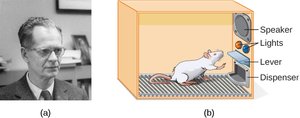
Behaviorism, prominent in the early to mid-1900s, focuses on observable behavior and the processes of conditioning. It emphasizes reinforcement and punishment as mechanisms for learning. The Skinner box is a classic experimental apparatus used to study operant conditioning in animals.
Conditioning: Learning through association (classical and operant).
Reinforcement: Increases likelihood of behavior.
Punishment: Decreases likelihood of behavior.
Humanism
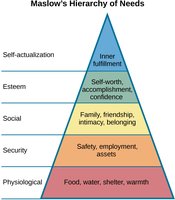
Humanistic psychology, developed in the 1950s, emphasizes the innate potential for good in all humans. It focuses on the whole person and self-directed growth, with Abraham Maslow and Carl Rogers as key figures. Maslow's Hierarchy of Needs illustrates the progression from basic physiological needs to self-actualization.
Self-actualization: Achieving one's fullest potential.
Hierarchy of Needs: Physiological, safety, social, esteem, self-actualization.
Cognitive Psychology
Cognitive psychology, emerging in the mid-1900s, accepts the scientific method and investigates internal mental states. It studies processes such as perception, memory, categorization, language, and thinking, moving beyond behaviorism's focus on observable actions.
Perception: How we interpret sensory information.
Memory: Encoding, storage, and retrieval of information.
Language: Acquisition and use of communication systems.

The Five Psychological Domains
Overview of Domains
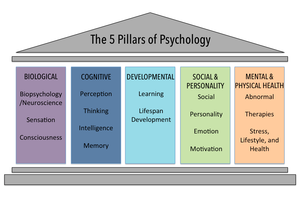
Contemporary psychology is organized into five major domains, each focusing on different aspects of mind and behavior. These domains provide a framework for understanding the breadth of psychological research and practice.
Biological Domain: Biopsychology, neuroscience, sensation, consciousness.
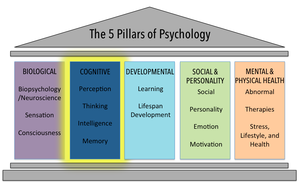
Cognitive Domain: Perception, thinking, intelligence, memory.
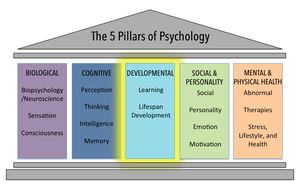
Developmental Domain: Learning, lifespan development.
Social & Personality Domain: Social behavior, personality, emotion, motivation.
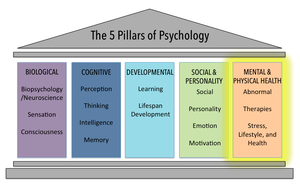
Mental & Physical Health Domain: Abnormal psychology, therapies, stress, health.
The Biological Domain
Biopsychology and Evolutionary Psychology
The biological domain explores how our biology influences behavior. Biopsychology, behavioral neuroscience, cognitive neuroscience, and neuropsychology are subfields that investigate the brain, nervous system, and physiological processes. Evolutionary psychology examines how human behavior evolved to solve adaptive problems.
Biopsychology: Studies the relationship between brain function and behavior.
Evolutionary psychology: Explores inherited behavioral traits.
Sensation and perception: Examines physiological and psychological aspects of sensory systems.
The Cognitive Domain
Thoughts, Experiences, and Actions
The cognitive domain focuses on mental processes such as perception, memory, intelligence, and language. It investigates how people acquire, process, and store information, and how these processes influence behavior.
Perception: Interpretation of sensory input.
Memory: Retention and recall of information.
Intelligence: Problem-solving and reasoning abilities.
Language: Communication and symbolic representation.
The Developmental Domain
Learning and Lifespan Development
The developmental domain includes behavioral psychology and the study of learning and conditioning. It also encompasses developmental psychology, which investigates the stages and milestones of development across the lifespan, from infancy to old age.
Classical conditioning: Learning through association.
Operant conditioning: Learning through consequences.
Lifespan development: Physical, cognitive, and social changes over time.
The Social and Personality Psychology Domain
Social Influence and Personality Traits
Social psychology studies how people's thoughts, feelings, and behaviors are influenced by the presence of others. Personality psychology examines patterns of thoughts and behaviors that make individuals unique, including the study of personality traits such as those in the Five Factor Model.
Social influence: Effects of others on individual behavior.
Personality traits: Consistent patterns of thought and behavior.
The Mental and Physical Health Domain
Abnormal Psychology, Clinical Psychology, and Health Psychology
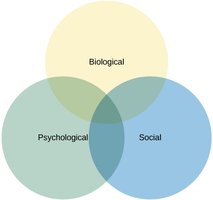
This domain focuses on abnormal thoughts and behaviors, diagnosis and treatment of psychological disorders, and the interaction of biological, psychological, and sociocultural factors in health. Clinical psychology addresses mental health issues, while health psychology explores how lifestyle and stress affect well-being.
Abnormal psychology: Study of atypical thoughts and behaviors.
Clinical psychology: Diagnosis and treatment of disorders.
Health psychology: Effects of health behaviors and stress.
Other Sub-fields in Psychology
Applied Psychology
Psychology is applied in various settings, including industrial-organizational psychology (workplace behavior), forensic psychology (legal system), and sport and exercise psychology (mental factors in physical performance).
Industrial-Organizational psychology: Application in workplace settings.
Forensic psychology: Application in justice system.
Sport and exercise psychology: Mental and emotional factors in physical activity.
Why Study Psychology?
Benefits and Career Paths
Studying psychology develops critical thinking and communication skills, and provides insight into the complex factors shaping human behavior. Psychology graduates pursue diverse careers in education, health, business, and more.
Critical thinking: Analyzing and evaluating information.
Communication: Effective interaction and expression.
Career opportunities: Wide range of fields, including healthcare, education, and business.
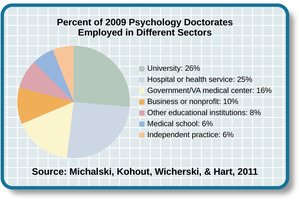
Table: Top Occupations Employing Graduates with a BA in Psychology
This table summarizes the main career paths for psychology graduates, illustrating the versatility of the degree.
Occupation | Sector |
|---|---|
University | Education/Research |
Hospital or Health Service | Healthcare |
Government/VA Medical Center | Public Service |
Business or Nonprofit | Corporate/NGO |
Other Educational Institutions | Education |
Medical School | Healthcare |
Independent Practice | Private Sector |
Quick Review
What is psychology? The scientific study of mind and behavior.
History of psychology: Includes psychoanalytic, gestalt, behaviorist, humanistic, and cognitive schools.
Early schools: Focused on different aspects of mind and behavior.
Contemporary fields: Biological, cognitive, developmental, social/personality, mental/physical health.
Major concepts: Conditioning, perception, memory, personality, health.
Value of psychology: Critical thinking, communication, career opportunities.
