 Back
BackLearning: mod 7 Classical Conditioning, Operant Conditioning, and Observational Learning
Study Guide - Smart Notes
 Tailored notes based on your materials, expanded with key definitions, examples, and context.
Learning: An Overview
Learning is defined as a change in an organism’s behaviour or thoughts as a result of experience. It is a fundamental process that occurs across the lifespan and is not limited to formal education. Learning can begin prenatally, as evidenced by research showing that fetuses can recognize sounds and tastes experienced in the womb. Both humans and animals are capable of learning, and psychologists have identified several major forms of learning: classical conditioning, operant conditioning, and observational learning.
What Is Learning?
Learning involves acquiring new behaviours or modifying existing ones in response to environmental experiences. It is broader than education and encompasses all changes in behaviour or thought due to experience.
Definition: A relatively permanent change in behaviour or knowledge due to experience.
Examples: Learning to walk, speak, or solve problems; animals learning to find food or avoid danger.
Key Point: Learning can occur at any age, including prenatally.

Classical Conditioning
Definition and Historical Context
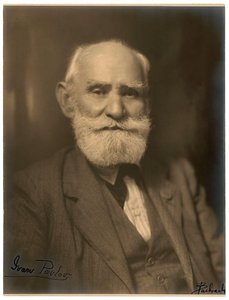
Classical conditioning, also known as Pavlovian conditioning, is a learning process in which an organism learns to associate two stimuli, resulting in a change in behaviour. Ivan Pavlov is the most well-known figure associated with this form of learning.
Phases of Classical Conditioning
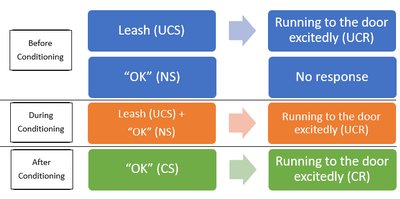
Phase 1: Before Conditioning
Unconditioned Stimulus (UCS): A stimulus that naturally elicits a response (e.g., food).
Unconditioned Response (UCR): The natural response to the UCS (e.g., salivation).
Neutral Stimulus (NS): A stimulus that does not elicit the UCR (e.g., a bell before conditioning).
Phase 2: During Conditioning
The UCS and NS are presented together repeatedly, creating an association.
Phase 3: After Conditioning
The NS becomes a Conditioned Stimulus (CS) and elicits a Conditioned Response (CR) similar to the UCR.
Example: Classical Conditioning in Everyday Life
Suppose a dog gets excited (UCR) when its owner grabs the leash (UCS) for a walk. If the owner says "OK" (NS) every time they grab the leash, eventually the dog will get excited (CR) just by hearing "OK" (CS), even without seeing the leash.
Operant Conditioning
Definition and Key Figures
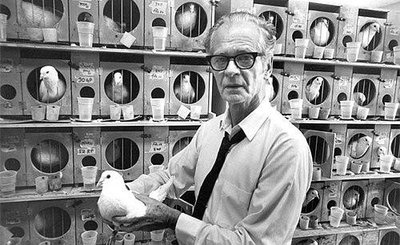
Operant conditioning, or instrumental conditioning, is a form of learning in which behaviour is shaped by its consequences. Edward Thorndike and B.F. Skinner are central figures in this area. Thorndike’s Law of Effect states that behaviours followed by satisfying consequences are more likely to be repeated, while those followed by unsatisfying consequences are less likely.
The ABCs of Operant Conditioning
Antecedents (A): Events or circumstances that occur before the behaviour.
Behaviour (B): The action performed by the individual.
Consequences (C): The outcomes that follow the behaviour, which can reinforce or punish it.

Types of Consequences
Type | Definition | Example |
|---|---|---|
Positive Reinforcement | Giving something desirable to increase behaviour | Giving a child an allowance for chores |
Negative Reinforcement | Removing something aversive to increase behaviour | Taking pain medication to remove a headache |
Positive Punishment | Giving something aversive to decrease behaviour | Scolding a child for misbehaviour |
Negative Punishment | Taking away something desirable to decrease behaviour | Taking away Wi-Fi access for breaking rules |
Examples of Consequences
Positive Reinforcement: Giving a dog a treat for performing a trick.

Negative Reinforcement: Taking pain pills to remove a headache.

Positive Punishment: Scolding a child for misbehaviour.

Negative Punishment: Taking away Wi-Fi access as a consequence for undesirable behaviour.

Schedules of Reinforcement
Reinforcement can be delivered according to different schedules, which affect how quickly learning occurs and how resistant the behaviour is to extinction.
Continuous Reinforcement: The behaviour is reinforced every time it occurs. Leads to rapid learning but also rapid extinction.
Partial Reinforcement Schedules:
Fixed Interval: Reinforcement after a set period of time (e.g., paycheck every two weeks).
Fixed Ratio: Reinforcement after a set number of responses (e.g., loyalty cards: buy 9, get 1 free).
Variable Interval: Reinforcement after varying time intervals (e.g., checking for emails).
Variable Ratio: Reinforcement after a variable number of responses (e.g., slot machines). Most resistant to extinction.
Classical Conditioning vs. Operant Conditioning
While both forms of conditioning aim to change behaviour, they differ in their mechanisms:
Classical Conditioning: Behaviour changes due to the association of two stimuli presented before the response (elicited behaviour).
Operant Conditioning: Behaviour changes due to the consequences that follow the behaviour (emitted behaviour).
Observational Learning
Definition and Key Figure
Observational learning, as proposed by Albert Bandura, is learning that occurs by watching others and imitating their behaviour. This process is also known as social learning or modeling.

Classic Example: The Bobo Doll Experiment
Bandura’s Bobo Doll Experiment demonstrated that children who observed adults behaving aggressively toward a Bobo doll were more likely to imitate that aggressive behaviour themselves, compared to children who did not observe such behaviour.
Factors Influencing Observational Learning
Attributes of the Model: Similarity, familiarity, status, and success of the model increase likelihood of imitation.
Attributes of the Observer: Age, self-confidence, dependency, and prior reinforcement for imitation affect likelihood of observational learning.
Reward Consequences: Observing the model being rewarded increases imitation; observing punishment decreases it. The meaningfulness of the consequence also matters.
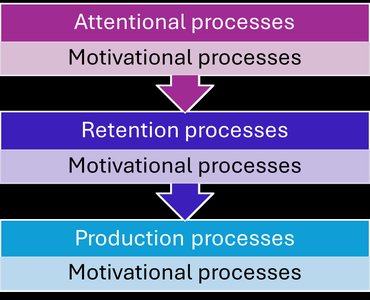
Processes of Observational Learning
Attentional Processes: Observer must pay attention to the model’s behaviour.
Retention Processes: Observer must remember the behaviour.
Production Processes: Observer must be able to reproduce the behaviour.
Motivational Processes: Observer must be motivated to imitate the behaviour, often influenced by observed consequences.
Learning Styles: Myth vs. Evidence
The concept of learning styles suggests that individuals learn best when taught in their preferred style (visual, auditory, kinesthetic, reading/writing). However, research does not support the effectiveness of matching teaching to learning styles. Effective learning typically involves a combination of methods, and the brain is flexible in processing information.
Key Point: Preference for a learning style does not equate to improved learning outcomes.
Summary Table: Types of Learning
Type of Learning | Key Mechanism | Key Figures | Example |
|---|---|---|---|
Classical Conditioning | Association of stimuli | Ivan Pavlov | Dog salivates at bell |
Operant Conditioning | Consequences (reinforcement/punishment) | B.F. Skinner, E.L. Thorndike | Child receives allowance for chores |
Observational Learning | Imitation of others | Albert Bandura | Child imitates aggressive behaviour |
Key Takeaways
Learning starts prenatally and continues throughout life.
Classical conditioning involves learning through association of stimuli.
Operant conditioning involves learning through consequences (reinforcement and punishment).
Observational learning involves learning by watching and imitating others.
The concept of learning styles is not supported by empirical evidence.
