 Back
BackPersonality Psychology II: Behaviorism, Social-Cognitive, and Trait Approaches
Study Guide - Smart Notes
 Tailored notes based on your materials, expanded with key definitions, examples, and context.
Behaviorism and Personality
Introduction to Behaviorism
Behaviorism is a major school of thought in psychology that emphasizes the study of observable behaviors over internal mental processes. It posits that much of human behavior, including personality, is learned through interactions with the environment via conditioning.
Classical Conditioning: Ivan Pavlov demonstrated that animals could learn to associate a neutral stimulus (e.g., a bell) with a meaningful one (e.g., food), resulting in a conditioned response (e.g., salivation).
John Watson's Human Experiments: Watson extended these findings to humans, showing that emotional responses could be conditioned. In the "Little Albert" experiment, a child was conditioned to fear a white rat by pairing it with a loud noise. The fear generalized to similar stimuli, such as rabbits and white toys.
Generalization: Conditioned responses can transfer to stimuli that are similar to the original conditioned stimulus.
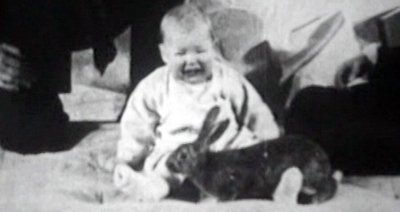
Key Point: Behaviorism asserts that personality is shaped by learned behaviors, not innate drives or unconscious processes.
Behaviorism in Practice: Advertising
Watson applied behaviorist principles to advertising, creating associations between products and positive sensations or activities, rather than relying on detailed product descriptions.

Example: Modern advertisements often use imagery and branding to evoke emotional or aspirational associations, such as linking athletic brands with exercise and health.
B.F. Skinner and Operant Conditioning
B.F. Skinner expanded behaviorism by introducing operant conditioning, which focuses on how consequences shape voluntary behaviors. Skinner used devices known as "Skinner boxes" to study how animals learn to perform actions for rewards or to avoid punishments.
Operant Behavior: Actions that produce effects or outcomes, which in turn influence the likelihood of the behavior being repeated.
Reinforcement: Any consequence that increases the likelihood of a behavior recurring. Can be positive (adding something pleasant) or negative (removing something unpleasant).
Extinction: The reduction of a behavior when reinforcement is removed or when punishment is applied.
Reinforcement Schedules: Behaviors are more persistent when reinforcement is given intermittently or randomly, explaining phenomena like gambling addiction.
Generalization and Specification: Learned behaviors can generalize to similar situations or be specified to distinct stimuli.
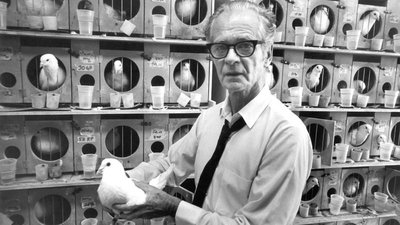
Example: A child who is rewarded for sharing may generalize this behavior to other social situations, but can also learn to specify sharing only with certain people.
Implications: According to Skinner, personality is a collection of learned behaviors shaped by reinforcement histories. Behavior can be modified through deliberate use of reinforcement and extinction.
Critiques of Behaviorism
Neglects internal mental processes, which many psychologists argue are essential for understanding behavior.
Behavioral changes from reinforcement and extinction are often temporary; innate traits may re-emerge ("instinct drift").
Modern research supports the inclusion of cognitive factors for more accurate predictions of behavior.
Social and Cognitive Learning Theory
Expectancies and Self-Efficacy
Social and cognitive learning theories build on behaviorism by incorporating mental processes. Jullian Rotter introduced the concept of expectancies—subjective beliefs about the likelihood of rewards or punishments—which influence decision-making and behavior. These can be measured through self-report and are highly valid.
Albert Bandura: Observational Learning
Albert Bandura argued that people learn not only through direct experience but also by observing others. His "Bobo doll" experiments demonstrated that children imitate behaviors they observe in adults, especially when those behaviors are rewarded.
Observational Learning: Learning by watching others and modeling their behavior.
Vicarious Reinforcement: Observing someone else being rewarded or punished influences the observer's likelihood of imitating the behavior.
Role of Gender and Media: Children are influenced by the gender of the model and can learn behaviors from both live and televised models.
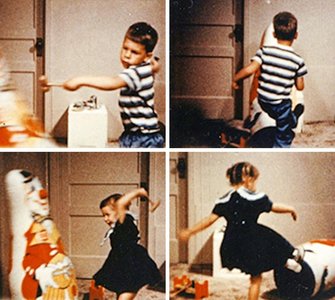
Example: Children who observe adults acting aggressively toward a toy are more likely to imitate that aggression, especially if the adult is praised.
Walter Mischel: Delay of Gratification
Walter Mischel's "marshmallow test" explored the ability to delay gratification as a personality trait. Children were given the choice to receive a small reward immediately or wait for a larger reward. The experiment showed that environmental factors and learned strategies (like distraction) can improve self-control.
Delay of Gratification: The ability to resist immediate temptation for a greater future reward.
Environmental Influence: The proximity and visibility of the reward, as well as learned self-control techniques, affect delay of gratification.
Socioeconomic Factors: Children from lower socioeconomic backgrounds were less likely to delay gratification, possibly due to learned expectations about the reliability of future rewards.
Long-term Outcomes: Higher delay of gratification is correlated with better academic and occupational outcomes, and lower rates of substance abuse.
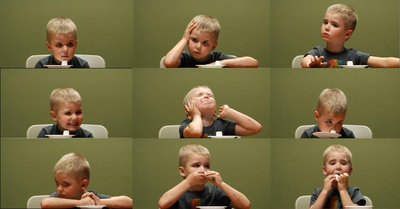
Example: Teaching children distraction techniques can improve their ability to delay gratification, suggesting self-control is a learned skill.
Trait Psychology
Personality Testing
Trait psychology seeks to identify and measure stable characteristics (traits) that define personality. Personality tests, such as self-report questionnaires and interviews, are commonly used, but their validity is often questioned.
The Forer (Barnum) Effect: People tend to accept vague, general personality descriptions as highly accurate for themselves, which undermines the validity of many personality tests.
Face Validity and Test Gaming: Tests with obvious questions are easy to manipulate, reducing their reliability. The MMPI uses indirect questions and validity checks to counteract this.
Predictive Validity: Most personality tests have limited ability to predict actual behavior, which is a major challenge for trait theories.
Core Trait Theories
Hans Eysenck and W.B. Cattell: Used factor analysis to identify core traits, such as extroversion-introversion and neuroticism. These traits have physiological correlates, such as baseline arousal levels.
Biological Links: Extroverts have lower baseline arousal and seek stimulation; introverts have higher arousal and avoid overstimulation. Neuroticism is linked to anxiety sensitivity.
The Big Five Model
The "Big Five" model, developed by Robert McCrae and Paul Costa, identifies five broad dimensions of personality, each measured on a continuum:
Openness to Experience
Conscientiousness
Extraversion
Agreeableness
Neuroticism
Most people fall within the typical range for each trait, with few at the extremes. The Big Five model is supported by extensive research and is compatible with both genetic and learning explanations of personality. However, it relies on the validity of personality tests and may be influenced by cultural and linguistic factors.
Genetic Psychology and Personality
Genetic Influences on Personality
Genetic research, including twin studies, suggests that personality traits are influenced by both heredity and environment. Monozygotic (identical) twins raised apart show significant similarities in personality, but environmental factors also play a substantial role.
Heritability: About 45-50% of personality trait variance is shared among identical twins, but this is not a perfect match.
Gene-Environment Interaction: The expression of genetic traits is influenced by environmental conditions, making it difficult to separate genetic and environmental effects.
Limitations: Twin studies are rare and often confounded by similarities in adoptive environments. Personality tests used in these studies also have validity issues.
Conclusion: While genetics contribute to personality, environmental and learning factors are equally important, and the precise balance remains unresolved.
