 Back
BackPhysical and Cognitive Development in Middle Childhood
Study Guide - Smart Notes
 Tailored notes based on your materials, expanded with key definitions, examples, and context.
Physical and Cognitive Development in Middle Childhood
Overview
This chapter explores the physical and cognitive changes that occur in children between the ages of 6 and 12, a period known as middle childhood. It covers physical growth, brain development, health and wellness, and advances in cognitive abilities, including language and logical thinking.
Physical Changes in Middle Childhood
Growth and Motor Development
Physical Growth: Children typically grow 2–3 inches in height and gain about 6 pounds each year during middle childhood.
Motor Skills: Large muscle coordination, strength, speed, and hand-eye coordination all improve. Fine motor skills also become more refined.
Sex Differences: On average, girls are better coordinated but somewhat slower and weaker than boys at this stage.

The Brain and Nervous System
Adrenarche: A surge in adrenal hormones, sometimes called "mini puberty," occurs during middle childhood and contributes to neurocognitive development.
Growth and Myelination: The brain undergoes synaptic pruning, making neural connections more efficient. Myelination increases, especially in the frontal lobes and reticular formation, enhancing cognitive abilities.
Frontal Lobes and Association Areas: Maturation of these areas allows for improved selective attention, enabling children to concentrate even with distractions.
Lateralization: Spatial perception becomes more lateralized around age 8. Boys often outperform girls on spatial tasks, possibly due to differences in play preferences.
Health and Wellness in Middle Childhood
General Health: Most school-age children are healthy and benefit from regular medical care.
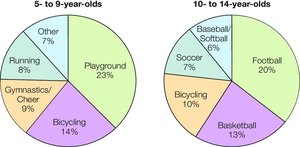
Injuries: Accidental injuries, especially bicycle accidents, are common. Helmet laws have significantly reduced death rates from such injuries.
Asthma: The most frequent cause of school absence and hospital admissions. About 9% of school-aged children are diagnosed with asthma, which is often triggered by allergens and environmental irritants.
Excessive Weight Gain: The most serious long-term health risk. BMI-for-age is used to assess obesity, with children above the 95th percentile considered obese and those above the 99th percentile severely obese. Over 20% of children ages 6–11 are obese.
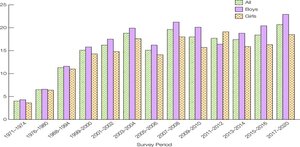
Causes of Obesity: Overeating, genetic predisposition, decreased physical activity, and increased consumption of high-calorie foods all contribute.

Risks of Obesity: Obesity can lead to early puberty, social challenges, and increased risk of adult obesity and heart disease.
Reducing Obesity: Strategies include providing healthy foods, limiting sugar and fat, encouraging physical activity, and involving the whole family in healthy habits.
Cognitive Changes in Middle Childhood
Language Development
Grammar and Pronunciation: By age 5 or 6, children are proficient in basic grammar and pronunciation. They continue to refine their use of grammar, tenses, and vocabulary.
Communication Skills: Children learn to maintain conversations, create clear sentences, and use polite language. They also understand relationships between categories of words.
Piaget’s Concrete Operational Stage
Logical Thinking: Children develop the ability to solve problems and analyze situations logically. They understand that appearances can be deceiving (e.g., magic tricks become interesting).
Conservation: The understanding that matter can change in appearance without changing in quantity.
Decentration: The ability to consider multiple variables at once.
Reversibility: The ability to mentally reverse physical or mental transformations, a critical aspect of concrete operations.
Additional info: These cognitive advances lay the foundation for more complex reasoning and academic achievement in later childhood and adolescence.
