Back
BackPsychology 1001 – Introduction to Psychology (Section 003) – Syllabus and Study Guide
Study Guide - Smart Notes
 Tailored notes based on your materials, expanded with key definitions, examples, and context.
Course Overview
Introduction to Psychology
This course provides a comprehensive introduction to psychology as both a biological and social science. It covers foundational topics such as research methodology, physiological processes, perception, learning, memory, cognition, human development, animal behaviour, emotion, motivation, consciousness, personality, psychological disorders, treatment, and social psychology. The course is designed for students who have completed Psychology 1000 and aims to build a broad understanding of psychological principles and their applications.
Course Structure and Evaluation
Course Delivery
Lecture Schedule: In-person classes on Tuesdays and Thursdays, with traditional lectures and in-class activities.
Attendance: Not mandatory but highly recommended for optimal learning and performance.
Course Materials: All textbook, lecture, and slide content is examinable.
Evaluation Methods
Students can choose between two grading paths, each with different weightings for quizzes, activities, midterm, and final exams. This flexibility allows students to select the path that best matches their learning style and academic goals.
Component | Path 1 | Path 2 |
|---|---|---|
Online Quizzes (Best 6 of 8) | 20% | 20% |
In-Class Activities | 20% | — |
Midterm (Ch. 9-11) | 25% | 35% |
Final Exam (Ch. 12-15) | 35% | 45% |
Bonus (PREP) | 3% | 3% |
Additional info: Path 1 is recommended for students seeking hands-on experience in psychological sub-fields, while Path 2 is suitable for those who prefer traditional exam-based assessment.
Assessment Details
Online Quizzes: Eight weekly quizzes (20 multiple-choice questions each), with the top six scores counted. Strict deadlines apply; no deferrals are allowed.
In-Class Activities: Group-based but individually submitted activities, with the lowest two grades dropped. Only Path 1 students are graded, but all are encouraged to participate.
Midterm Exam: Covers Chapters 9-11, includes multiple-choice and matching questions. Scheduled for February 12th, 2026.
Final Exam: Non-cumulative, covers Chapters 12-15. Scheduled by the registrar during the official exam period.
Course Content and Schedule
Weekly Topics and Readings
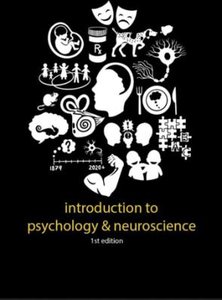
The course follows a structured schedule, with each week dedicated to a major area of psychology. The readings correspond to chapters in the open-access textbook "Introduction to Psychology and Neuroscience" (MUN Edition).
Date | Topic | Textbook Chapter |
|---|---|---|
Jan 6 | Introduction | — |
Jan 8-15 | Language and Intelligence | Chapter 9 |
Jan 20-27 | Emotion and Motivation | Chapter 10 |
Jan 29-Feb 10 | Personality | Chapter 11 |
Feb 12 | Midterm | Chapters 9-11 |
Feb 17-Mar 3 | Social Psychology | Chapter 12 |
Mar 5-12 | Stress and Health | Chapter 13 |
Mar 17-24 | Psychological Disorders | Chapter 14 |
Mar 26-Apr 5 | Psychological Therapies | Chapter 15 |
TBD | Final Exam | Chapters 12-15 |
Additional info: The schedule includes important academic dates such as midterm break, last day to drop courses, and exam period.
Academic Policies and Resources
Student Accommodations
Memorial University supports inclusive education and provides accommodations for students with disabilities. Students must initiate accommodation requests as per university policy.
Academic Integrity
Students are expected to adhere to university regulations regarding academic conduct. Academic offenses may result in penalties such as grade reduction, probation, suspension, or expulsion.
Resources on plagiarism and academic misconduct are available on the university website.
Support Services
Writing Centre
Student Wellness and Counselling Centre
Blundon Centre
Centre for Innovation and Teaching
Study Strategies
Effective Study Habits
Read each chapter before class and use audio tools for review.
Maintain a consistent study schedule and actively participate in lectures.
Take detailed notes and revisit material after each lecture.
Use flashcards and self-testing to reinforce learning.
Avoid cramming and media multitasking to improve attention and retention.
Additional info: Teaching others and spaced repetition are evidence-based strategies for enhancing memory and understanding.
Research Participation (PREP)
Bonus Credit for Research Experience
Students may earn up to 3% bonus credit by participating in psychology research studies through the PREP system.
Participation can be in-person or online, with a maximum of two points from online studies and at least one from in-person experience.
Alternative written assignments are available for those who do not wish to participate in studies.
Instructors only see the total credit points earned, not the specific studies or assignments completed.
Contact Information
Key Contacts
Instructor: Dr. Laura Fallon (lfallon@mun.ca)
Teaching Assistants: Kathryn Danyk, Julien Relente, Matthew Wheeler
Course Manager: Adam Brown
Department Secretary: Marilyn Simms
Department Head: Dr. Christina Thorpe
Mediator: Dr. Darlene Skinner
First-Year Coordinator: Dr. Felix Aseyu
Textbook Information
Required Text
Title: Introduction to Psychology and Neuroscience, MUN Edition
Editors: Fitzpatrick, C., & Thorpe, C. (2022)
eISBN: 978-1-7781696-3-2
Access: Open Access Textbook