 Back
BackSensation and Perception:mod 5 Psychophysics and the Senses
Study Guide - Smart Notes
 Tailored notes based on your materials, expanded with key definitions, examples, and context.
Sensation and Perception
Introduction to Sensation and Perception
Sensation and perception are fundamental processes in psychology that allow us to detect and interpret information from our environment. Sensation refers to the process by which our sensory organs detect physical stimuli and transmit this information to the brain. Perception is the process by which the brain organizes and interprets these sensory signals, giving them meaning.
Sensation: The detection of physical energy (stimuli) by sense organs, which then send information to the brain.
Perception: The brain's interpretation and organization of sensory input, allowing us to understand our environment.
Example: Two people may look at the same ambiguous image but perceive different things due to individual differences in perception.
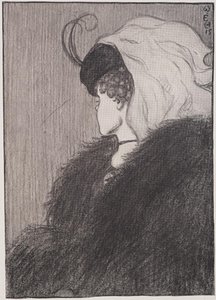

These classic illusions demonstrate how the same sensory input can lead to different perceptual experiences.
Top-Down and Bottom-Up Processing
There are two main ways that sensation and perception interact:
Bottom-Up Processing: Begins with raw sensory input and builds up to perception from these basic features.
Top-Down Processing: Uses prior knowledge, expectations, and experiences to interpret sensory information.
Example: Hearing ambiguous lyrics in a song differently based on what you expect to hear.
Psychophysics
Definition and Key Questions
Psychophysics is the study of how physical characteristics of stimuli are translated into psychological experiences. It addresses questions such as:
How do we detect stimuli?
How intense must a stimulus be to be detected?
How much must a stimulus change for us to notice the difference?
Thresholds
Absolute Threshold: The minimum intensity of a stimulus that can be detected 50% of the time. For example, the faintest sound you can hear or the dimmest light you can see.
Just Noticeable Difference (JND): The smallest change in the intensity of a stimulus that can be detected 50% of the time.
Weber’s Law: The JND is proportional to the magnitude of the original stimulus. Mathematically, this is expressed as:
Where is the change in stimulus intensity, is the original intensity, and is a constant.

Example: Adding a small weight to a light bag is more noticeable than adding the same weight to a heavy bag.
Signal Detection Theory
Signal Detection Theory explains how we distinguish between true signals and background noise. It is used to measure sensitivity to stimuli and involves four possible outcomes:
Respond “Yes” | Respond “No” | |
|---|---|---|
Stimulus Present | True Positive (Hit) | False Negative (Miss) |
Stimulus Absent | False Positive (False Alarm) | True Negative (Correct Rejection) |

Example: Detecting a faint sound in headphones or deciding if your car made a noise.
Sensory Adaptation
Sensory adaptation is the process by which sensitivity to unchanging stimuli decreases over time. This allows us to focus on changes in our environment, which may be more important for survival.
Example: Becoming less aware of a strong perfume after being exposed to it for a while.
The Visual System
Light and the Spectrum
Vision depends on light, which varies in wavelength. Humans can detect wavelengths from approximately 400 to 700 nanometers, which we perceive as different colors.

The visible spectrum for humans ranges from violet (short wavelengths) to red (long wavelengths).
Structures of the Eye
The eye is a complex organ with several key structures:
Sclera: The white part of the eye.
Iris: The colored part that controls the size of the pupil.
Pupil: The black opening that lets light in.
Cornea: The transparent outer layer that protects the eye and helps focus light.
Lens: Focuses light onto the retina.
Retina: Contains photoreceptors (rods and cones) that detect light.
Fovea: The center of the retina, responsible for sharp vision.
Optic Nerve: Transmits visual information from the retina to the brain.
Theories of Colour Vision
Trichromatic Theory: There are three types of cones in the retina, each sensitive to blue, green, or red light. Other colors are perceived by mixing signals from these cones.
Opponent Process Theory: Cones are paired to detect opposing colors: blue-yellow, red-green, and black-white.
Dual Process Theory: Combines both theories. Cones respond as in the trichromatic theory, and ganglion cells process signals in opponent pairs.
Colour Vision Deficiency
Trichromat: Typical color vision (all three cone types function).
Dichromat: Deficiency in one cone system (e.g., red-green or blue-yellow).
Monochromat: Only sees shades of gray (rare, true color blindness).
Colour vision deficiency is more common in males due to genetic factors.
Common Visual Conditions (Refractive Errors)
Myopia (Nearsightedness): Difficulty seeing distant objects; lens focuses light in front of the retina.
Hyperopia (Farsightedness): Difficulty seeing close objects; lens focuses light behind the retina.
Presbyopia: Age-related difficulty focusing on close objects due to loss of lens flexibility.
Astigmatism: Irregular shape of the cornea or lens causes blurred vision at all distances.
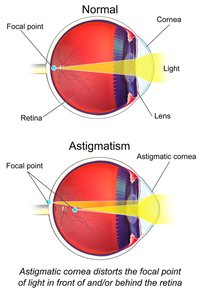
Astigmatism distorts the focal point of light, leading to blurry vision.
The Other Senses
Hearing (Audition)
Hearing develops prenatally and is nearly fully developed at birth. Binaural hearing allows us to localize sounds by comparing the timing and intensity of sounds arriving at each ear.
Touch
Touch is fully developed at birth and involves receptors for pressure, pain, and temperature. It is essential for detecting environmental dangers and maintaining health.
Smell (Olfaction) and Taste (Gustation)
Both senses are chemical senses, detecting molecules in the environment. Taste buds detect five basic tastes: sweet, salty, bitter, sour, and umami. Smell and taste work together to influence flavor perception.
Synesthesia
Definition and Types
Synesthesia is a rare condition where stimulation of one sensory pathway leads to automatic experiences in another. Individuals with synesthesia often do not realize their experiences are unusual.
Grapheme-Colour Synesthesia: Letters or numbers are perceived as inherently colored.
Sound-Colour Synesthesia: Sounds evoke the perception of colors.
Lexical-Gustatory Synesthesia: Words evoke specific tastes.
Associations are unique to each individual and are consistent over time.
Summary Table: Key Concepts in Sensation and Perception
Concept | Definition | Example |
|---|---|---|
Sensation | Detection of physical stimuli | Light hitting the retina |
Perception | Interpretation of sensory input | Seeing a rabbit or a duck in an ambiguous image |
Absolute Threshold | Minimum detectable stimulus | Faintest sound you can hear |
JND | Smallest detectable change | Noticing a weight change in a bag |
Sensory Adaptation | Decreased sensitivity to constant stimulus | Getting used to a strong smell |
Signal Detection Theory | Distinguishing signal from noise | Detecting a faint tone in headphones |
Synesthesia | Cross-modal sensory experiences | Seeing colors when hearing music |
Key Takeaways
Psychophysics explores the relationship between physical stimuli and perception.
Vision is the most complex sense and relies on light and specialized eye structures.
Hearing, touch, taste, and smell are essential for interacting with the environment.
Synesthesia illustrates the diversity of perceptual experiences.
