 Back
BackSocial Psychology: Conformity, Obedience, Attribution, and Bystander Intervention
Study Guide - Smart Notes
 Tailored notes based on your materials, expanded with key definitions, examples, and context.
Social Psychology: The Study of Social Influence
Defining Social Psychology
Social psychology is the branch of psychology that investigates how the real, implied, or imagined presence of others influences individual behavior. Unlike other branches of psychology that often study individuals in isolation, social psychology emphasizes the powerful effects of situational factors and social contexts on behavior.
Situational factors are often stronger predictors of behavior than dispositional (personality) factors.
Social psychology is known for dramatic, real-world studies that often use deception to create realistic social situations.
Classic studies include those by Solomon Asch (conformity) and Stanley Milgram (obedience).
Conformity: Asch's Line Judgment Studies
Solomon Asch and the Study of Conformity
Asch's experiments in the 1950s explored how individuals yield to or defy a majority group and the effect of such influences on beliefs and opinions. Participants believed they were in a study of visual perception, where they compared the length of lines.
Participants were asked to match the length of a line to one of three comparison lines.
Other group members (actually actors) gave scripted, often incorrect answers to see if the participant would conform.
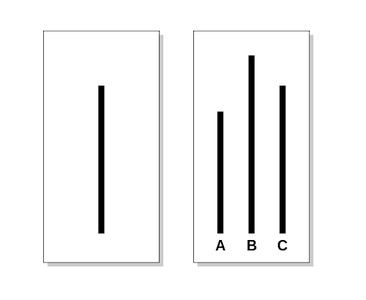
Results: 75% of participants conformed to the group's incorrect answer at least once; overall, conformity occurred 37% of the time.
Only 25% of participants consistently resisted group pressure.
Conformity was often accompanied by hesitation and confusion, indicating deliberation.
Explanations for Conformity:
Informational influence: In ambiguous situations, people look to others for guidance, doubting their own perceptions.
Normative influence (Group acceptance): People conform to be accepted by the group, even if they believe the group is wrong.
Variations and Findings:
Presence of an "ally" (another person giving a different answer) reduced conformity.
Writing answers privately (instead of aloud) eliminated conformity.
Deception was essential for the effect; awareness of the true purpose eliminated conformity.
Implications: Conformity is common, even when the group is clearly wrong. Situational influences often override personal dispositions.
Obedience: The Milgram Experiment
Stanley Milgram's Study of Obedience to Authority
Inspired by the Nuremberg Trials and the "Eichmann defense" ("just following orders"), Milgram investigated the extent to which ordinary people would obey authority figures, even when asked to harm another person.
Participants ("teachers") were instructed to administer increasingly severe electric shocks to a "learner" (an actor) for incorrect answers.
Shocks ranged from 15 to 450 volts, with labels from "Slight Shock" to "Danger: Severe Shock" and ambiguous markings at the highest levels.
The learner's responses (grunts, pleas, silence) were pre-recorded and standardized.
Predictions vs. Results:
Experts predicted less than 1% would go to the maximum voltage.
Actual result: 65% of participants administered the maximum shock (450 volts).
Nearly all went to at least 75 volts; 75% went to at least 315 volts (after which the learner stopped responding).
Variations and Their Effects:
Proximity to the victim (same room, physical contact) reduced obedience (down to 30%).
Absence of the authority figure (experimenter not present) reduced obedience (down to 30%).
Disagreement between two authority figures (experimenters) led to 0% obedience to the maximum shock.
Delegating the act (ordering someone else to administer the shock) increased obedience (up to 98%).
Less prestigious setting (not Yale) reduced obedience (to 48%).
Implications: The Milgram experiment demonstrates the power of situational factors and authority in shaping behavior, often overriding personal morals or dispositions. It challenges explanations based solely on personality or national character.
Attribution Theory and Biases
Understanding How We Explain Behavior
Attribution theory explores how people infer the causes of their own and others' behavior. We often act as "naïve scientists," seeking explanations but prone to systematic errors.
Fundamental Attribution Error (FAE): The tendency to overestimate personal (dispositional) factors and underestimate situational influences when explaining others' behavior.
Actor-Observer Bias: We attribute our own actions to situational factors but others' actions to their dispositions.
Self-Serving Bias: We attribute our successes to internal factors and our failures to external circumstances; the reverse is often true for others.
Defensive Attributions: We blame victims for their misfortune, especially when the consequences are severe, the situation is familiar, or the victim is similar to us. This serves to protect our belief in a just world and our sense of control.
Illusion of Self-Control and Belief in a Just World: We overestimate our control over events and believe people get what they deserve, which can lead to victim-blaming.
Bystander Intervention and Altruism
The Kitty Genovese Case and the Study of Helping Behavior
The 1964 murder of Kitty Genovese, witnessed by 39 bystanders who did not intervene, sparked research into why people sometimes fail to help in emergencies. Latané and Darley investigated the situational factors influencing bystander inaction.
Decision-making process in emergencies:
Notice the event
Interpret it as an emergency
Assume personal responsibility
Know how to help
Decide to act
Ambiguity, uncertainty, and the presence of others can disrupt this process at any stage.
Diffusion of Responsibility: In groups, individuals feel less personal responsibility to act (e.g., with 39 bystanders, each feels only 1/39th responsible).
Other factors: fear of embarrassment, assumption that someone else will help, or that someone more qualified should intervene.
Applications and Interventions:
Public awareness campaigns (e.g., signs of medical emergencies) reduce uncertainty and increase intervention.
Clear instructions (e.g., emergency procedures in public places) and training (e.g., CPR, first aid) increase the likelihood of helping.
Encouraging individuals to take responsibility can counteract bystander apathy.
Optimistic finding: Under the right circumstances, most people will help others in need.
