 Back
BackSocial Psychology: Influence, Attribution, and Group Dynamics
Study Guide - Smart Notes
 Tailored notes based on your materials, expanded with key definitions, examples, and context.
Social Psychology: The Study of Social Influence
Introduction to Social Psychology
Social psychology examines how the presence, thoughts, and actions of others influence individual and group behavior. It explores the mechanisms behind conformity, obedience, group dynamics, and the attribution of causes to behavior.
Definition: Social psychology is the scientific study of how people’s thoughts, feelings, and behaviors are influenced by the actual, imagined, or implied presence of others.
Applications: Understanding phenomena such as prejudice, group polarization, compliance with social norms, and the impact of social roles.
Humans as a Social Species
Humans have a fundamental need to belong, which shapes much of our social behavior and psychological well-being.
Need-to-belong theory: Proposes that humans are biologically driven to form and maintain interpersonal connections.
Effects of isolation: Social isolation can lead to increased anxiety, abnormal eating, and reduced cognitive functioning.
Ostracism: Being ignored or excluded from social contact is a powerful social regulator, often increasing aggression and distress.
Situational Influences on Behavior
Mimicry, Social Norms, and Social Roles
Our behavior is shaped by the social context, including the roles we occupy and the norms we follow.
Mimicry: Unconsciously imitating the behaviors, emotional displays, and expressions of others, which acts as social glue.
Social norms: Unwritten rules for behavior in social contexts, which are implicit and emerge naturally.
Social roles: Expectations attached to particular positions within a group (e.g., student, teacher, prisoner).

Example: The Stanford Prison Experiment demonstrated how quickly individuals conform to assigned social roles, leading to extreme behaviors.
Social Comparison Theory
People evaluate their abilities and beliefs by comparing themselves to others, which can influence motivation and self-esteem.
Upward comparison: Comparing oneself to someone perceived as better, which can inspire motivation or trigger envy.
Downward comparison: Comparing oneself to someone perceived as worse off, which can boost self-esteem or create complacency.


Attribution: Explaining Behavior
Internal vs. External Attributions
Attribution theory explores how people explain the causes of behavior, distinguishing between internal (dispositional) and external (situational) factors.
Internal attributions: Assigning behavior to personal traits or abilities (e.g., intelligence, personality).
External attributions: Assigning behavior to situational factors (e.g., environment, timing).
Fundamental Attribution Error and Actor-Observer Bias
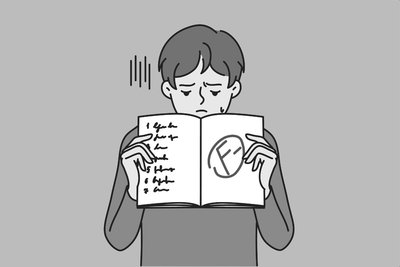
People tend to overemphasize internal explanations for others’ behavior while underestimating situational influences, a phenomenon known as the fundamental attribution error.
Fundamental Attribution Error: The tendency to attribute others’ actions to their character rather than to situational factors.
Actor-observer bias: Attributing our own actions to external factors but others’ actions to internal factors.



Why Attribution Errors Occur
We often lack information about others’ situations.
People are more noticeable than contexts.
It is cognitively easier to judge people than to consider context.
Just World Hypothesis and Victim Blaming
The just world hypothesis is the belief that people get what they deserve, which can lead to victim blaming.
Just world hypothesis: The belief that the world is fair and people’s outcomes are deserved.
Victim blaming: Attributing negative outcomes to the victim’s character rather than situational factors.
Social Influence: Conformity, Groupthink, and Obedience
Conformity
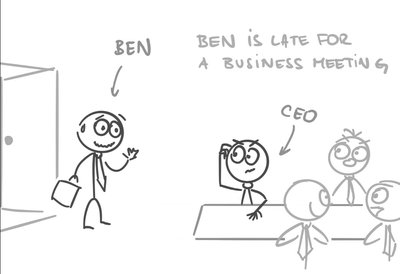
Conformity is the tendency to change one’s behavior to align with group norms or expectations.
Normative influence: Conforming to be accepted by others.
Informational influence: Conforming because others are perceived as correct.
Conformity increases with group size, presence of friends/family, task ambiguity, and public responses.

Groupthink
Groupthink is a flawed group decision-making process where the desire for unanimity overrides critical thinking.
More likely with strong leaders, homogenous groups, and discouragement of dissent.
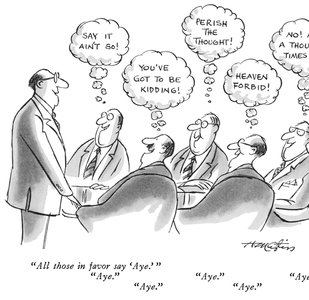
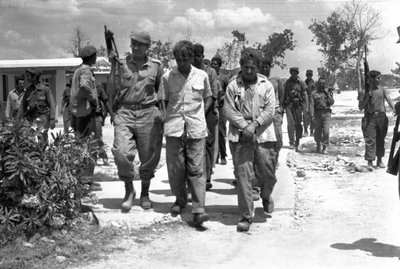
Historical examples: The Bay of Pigs invasion and the Challenger disaster are classic cases of groupthink.

Deindividuation
Deindividuation refers to the loss of self-awareness and individual accountability in groups, often leading to deviant behavior (“mob mentality”).
Occurs in situations where individuals feel anonymous or less identifiable.
Can lead to both prosocial and antisocial behaviors.
Obedience
Obedience is following direct orders from an authority figure. While essential for societal functioning, it can lead to harmful outcomes if individuals stop questioning authority.
Milgram Paradigm: Demonstrated that ordinary people can commit harmful acts under authority pressure.
Obedience decreases with greater distance from authority and increases with greater distance from the victim.
Helping and Harming Others
Prosocial Behavior
Prosocial behavior includes actions intended to benefit others, such as helping, sharing, and cooperating.
Influenced by situational factors (e.g., mood, victim characteristics, presence of role models).
Conformity can increase prosocial actions (e.g., charity drives).
Bystander Effect
The bystander effect is the phenomenon where individuals are less likely to help in an emergency when others are present, due to diffusion of responsibility.
Helping requires noticing the event, interpreting it as an emergency, taking responsibility, knowing how to help, and deciding to help.
Why Do We Help?
Kin selection: More likely to help those genetically related to us.
Norms of reciprocity: Helping others with the expectation of future help in return.
Altruism: Helping others with no expectation of personal gain.
Aggression, Attitudes, and Prejudice
Aggression
Aggression is any behavior intended to harm another person, either physically or verbally.
Hostile aggression: Motivated by anger and intended to cause pain.
Instrumental aggression: Used as a means to achieve a goal.
Situational influences include frustration, media exposure, aggressive cues, arousal, substances, and temperature.
Culture of Honour
Some cultures encourage individuals to defend their honor, which can increase aggressive responses to perceived slights.
Gender and Aggression
Research explores whether men or women are more aggressive and how anonymity (e.g., online) affects both prosocial and aggressive behaviors.
Additional info: These notes synthesize key concepts from social psychology, including classic studies and real-world applications, to provide a comprehensive overview for exam preparation.
