 Back
BackSocial Psychology: Influence, Attribution, and Group Dynamics
Study Guide - Smart Notes
 Tailored notes based on your materials, expanded with key definitions, examples, and context.
Social Psychology
Introduction to Social Psychology
Social psychology examines how the presence, actions, and perceptions of others influence individual and group behavior. It explores the interplay between personal characteristics and situational factors, providing insight into why people behave the way they do in social contexts.
Key Question: How does the presence of other people (perceived or actual) influence the behavior of individuals and groups?
Applications: WWII & Holocaust (obedience, prejudice), COVID-19 (compliance, stigma, trust, group identification, racial bias).
Humans as a Social Species
Humans have a fundamental need to belong, which is rooted in biology. Social isolation can lead to negative psychological and physical outcomes, highlighting the importance of interpersonal connections.
Need-to-belong theory: Biologically based need for interpersonal connection.
Effects of isolation: Increased anxiety, abnormal eating, reduced intelligence.
Example: Solitary confinement and its psychological impact.
Situational Influences on Behavior
Mimicry, Social Norms, and Social Roles
Social behavior is shaped by situational influences such as mimicry, social norms, and social roles. These factors guide how individuals act within groups and regulate social conduct.
Mimicry: Adopting behaviors, emotional displays, and facial expressions of others; acts as social glue.
Social norms: Unwritten guidelines for behavior in social contexts; implicit and naturally emerging.
Social roles: Guidelines for specific positions within a group (e.g., professor, student, prisoner).
Ostracism: Being ignored or excluded; increases aggression and distress.

The Power of Social Roles: The Stanford Prison Experiment
The Stanford Prison Experiment demonstrated how quickly individuals adopt social roles and how these roles can influence behavior, often leading to extreme actions.
Example: Participants assigned as guards or prisoners quickly conformed to their roles, resulting in abusive behavior.
Social Comparison Theory
Upward and Downward Comparison
Social comparison theory posits that individuals evaluate their abilities and beliefs by comparing themselves to others. This can motivate or discourage, depending on the direction of comparison.
Upward Comparison: Comparing oneself to someone "better"; can inspire motivation or trigger envy.
Downward Comparison: Comparing oneself to someone "worse off"; can boost self-esteem or create complacency.


Attribution Theory
Internal vs. External Attributions
Attribution theory explains how people interpret the causes of behavior. Internal attributions focus on personal qualities, while external attributions emphasize situational factors.
Internal (dispositional) attribution: Behavior explained by personal traits (e.g., intelligence, personality).
External (situational) attribution: Behavior explained by context (e.g., environment, time, experiences).
Example: "He’s reckless" (internal) vs. "My GPS told me to merge last second" (external).
Fundamental Attribution Error
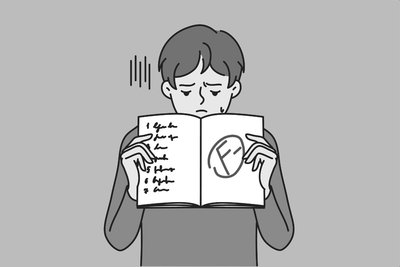
The fundamental attribution error is the tendency to attribute others' actions to their character while underestimating situational influences.
Example: Assuming a student failed a test due to laziness, ignoring external factors like illness or family obligations.
Actor-Observer Bias
Actor-observer bias describes the tendency to attribute one's own actions to external factors, while attributing others' actions to internal traits.
Example: "I was sick" (external) vs. "They’re irresponsible" (internal).



Why Attribution Errors Occur
We don’t see the situation: Focus is on the person, not the unseen context.
People are more noticeable than contexts: Attention is drawn to individuals.
It’s cognitively easy: Judging people is faster than considering context; brains prefer shortcuts.


Just-World Hypothesis
The just-world hypothesis is the belief that people get what they deserve, leading to victim blaming and the assumption that the world is fair.
Consequence: Victim blaming in cases of crime, poverty, illness, and disasters.
Purpose: Helps people feel safe by rationalizing outcomes.

Social Influence
Conformity
Conformity is the tendency to alter behavior due to group pressure. It can be driven by normative influence (desire to be accepted) or informational influence (belief others are correct).
Factors increasing conformity: Larger group, presence of friends/family, ambiguous tasks, public responses.
Example: Asch (1955) Conformity Study.

Groupthink
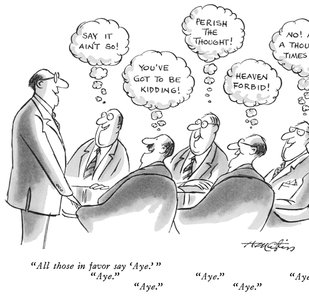
Groupthink is a decision-making style where group members prioritize unanimity over critical thinking, often leading to poor decisions.
More likely: Strong leader discourages dissent, group members are similar.
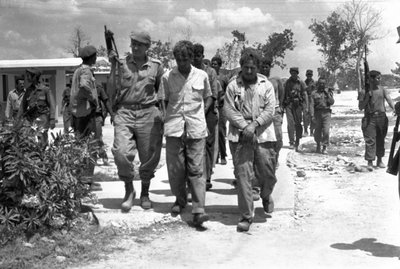
Historical examples: Bay of Pigs invasion, Challenger disaster, Walkerton E. coli contamination.


Deindividuation
Deindividuation is the loss of individuality and reduction of normal constraints against deviant behavior, often seen in "mob mentality."
Example: Abu Ghraib prison abuse, riots, online anonymity.
Compliance and Obedience
Compliance Techniques
Compliance involves submitting to direct social pressure. Common techniques include:
Foot-in-the-door: Start with a small request, then move to a larger one.
Door-in-the-face: Start with a big request, then back off to a smaller one.
Low-ball technique: Start with a low price, then add desirable extras.
Applications: Sales, charity donations, fundraising, parenting requests.
Obedience
Obedience is adherence to instructions from those of higher authority. It is essential for societal functioning but can be problematic when individuals stop questioning authority.
Example: Milgram Paradigm – participants followed orders to administer shocks, even when uncomfortable.
Factors affecting obedience: Distance between teacher and experimenter/learner, moral advancement, authoritarianism.
Summary Table: Attribution Types
Type of Attribution | Definition | Example |
|---|---|---|
Internal (Dispositional) | Behavior explained by personal traits | "He’s reckless" |
External (Situational) | Behavior explained by context | "My GPS told me to merge last second" |
Summary Table: Compliance Techniques
Technique | Description | Example |
|---|---|---|
Foot-in-the-door | Small request followed by larger request | Charity donation, then request for volunteering |
Door-in-the-face | Large request followed by smaller request | Ask for $100, then $10 |
Low-ball | Low price, then add extras | Subscription plan with add-ons |
Additional info: Academic context was added to clarify examples, historical cases, and psychological mechanisms. Images were included only when directly relevant to the explanation of the paragraph.
