Back
BackAfrican Americans: History, Challenges, and Social Change
Study Guide - Smart Notes
 Tailored notes based on your materials, expanded with key definitions, examples, and context.
African Americans: History, Challenges, and Social Change
Slavery in the United States
The institution of slavery profoundly shaped the social, economic, and political landscape of the United States. Its legacy continues to influence American society today.
Legal Protection of Slavery: For nearly half of U.S. history, slavery was not only tolerated but also legally protected by the Constitution and Supreme Court interpretations.
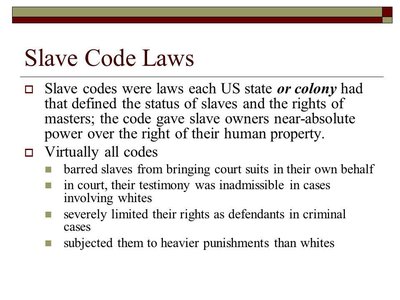
Slave Codes: These were laws that defined the low status of enslaved people and granted slave owners near-absolute power over their human property.
Racial Formation: The process by which racial categories are created, inhabited, transformed, and destroyed over time.
Critical Race Theory: Argues that historical and contemporary racism perpetuates the social construction of race and systemic inequality.
Abolitionists: Both White and free Black individuals who advocated for the end of slavery.
Slave Resistance: Enslaved people revolted and escaped, with the Underground Railroad helping between 40,000 and 100,000 escape to the North and Canada.
Jim Crow Laws: Enforced racial segregation and maintained African Americans in an inferior position after slavery's abolition.
White Primary: Laws that forbade Black voting in election primaries, further disenfranchising African Americans.
Slavery Reparations: The act of making amends for the injustice of slavery remains a topic of debate.
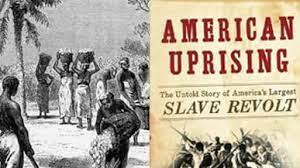
The Legacy of Slavery
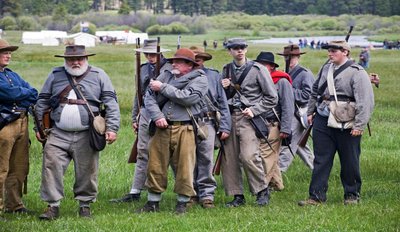
The United States continues to grapple with the enduring effects of slavery, as seen in cultural memory and ongoing social divisions.
Accomplishments of Black Leaders in the Early Twentieth Century
Black leaders played pivotal roles in advocating for civil rights and shaping strategies for social advancement.
Booker T. Washington: Advocated for the "politics of accommodation," urging Black Americans to forgo immediate social equality in favor of economic progress and self-improvement.
W.E.B. Du Bois and the Niagara Movement: Promoted the "talented tenth" theory, emphasizing the responsibility of privileged Blacks to lead the community. The Niagara Movement led to the founding of the NAACP in 1909, which included both Black and White members and demanded accountability from White society for racial problems.
Reemergence of Black Protests
Mid-twentieth-century protests marked a renewed push for civil rights, using nonviolent direct action and civil disobedience.
A. Philip Randolph: Threatened mass marches on Washington to demand fair employment and desegregation, influencing Presidents Roosevelt and Truman to issue executive orders against discrimination and segregation in the military.
Congress of Racial Equality (CORE): Founded in 1942 to combat discrimination through nonviolent action.
The Civil Rights Movement
The Civil Rights Movement was a transformative era that sought to end segregation and secure equal rights for African Americans.
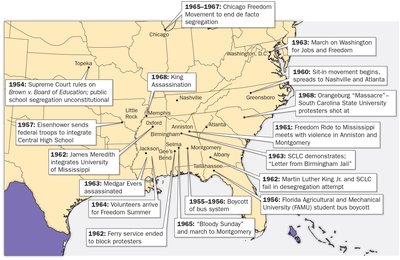
Desegregation of Public Schools: De jure segregation was challenged, most notably in Brown v. Board of Education (1954).
Civil Disobedience: Advocated by Martin Luther King, Jr., this strategy involved nonviolent resistance to unjust laws.
Key Principles of King's Strategy:
Active, nonviolent resistance to evil
Seeking understanding, not humiliation, of opponents
Attacking unjust systems, not individuals
Willingness to accept suffering without retaliation
Refusal to hate opponents
Faith in the justice of the universe
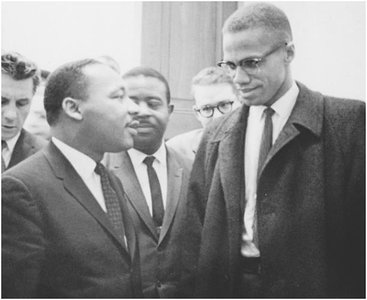
The Urban Stage: Black-White Relations in the 1960s and 1970s
Urbanization and social movements in the 1960s and 1970s shifted the dynamics of Black-White relations in the United States.
Relative Deprivation: The perception of a gap between legitimate expectations and actual conditions, fueling frustration and unrest.
Rising Expectations: The Civil Rights Movement raised hopes, but many Black Americans saw little change in daily life.
Black Power and #BlackLivesMatter: Black Power emphasized restructuring society, while #BlackLivesMatter has become a significant force in national politics.
The Role of Religion in the African American Community
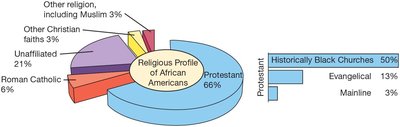
Religion has historically been a source of leadership, community, and activism among African Americans.
Origins: Enslaved Africans were originally non-Christian, but Christianity became central to Black communities.
Black Churches: Served as centers for social involvement and civil rights leadership.
Religious Diversity: While most African Americans are Christian, a growing number are unaffiliated with any faith.
Recent Immigration and the Black Community
Recent decades have seen significant immigration from Africa and the Caribbean, diversifying the Black population in the United States.
Demographic Change: The number of Black immigrants rose from about 800,000 in 1980 to 4.6 million in 2019.
Diversity of Immigrants: Includes students, family members, and refugees.
Integration Challenges: Black immigrants face typical immigrant challenges, but are more likely to be legal and English-speaking than other groups. They also confront persistent racial divisions in U.S. society.