 Back
BackEducation as a Social Determinant of Health: Early Childhood Education and Care in Canada
Study Guide - Smart Notes
 Tailored notes based on your materials, expanded with key definitions, examples, and context.
Education as a Social Determinant of Health
Introduction
Education is a key social determinant of health (SDH), influencing both individual and population health outcomes. Early childhood education and care (ECEC) is particularly critical, as it shapes cognitive, social, and emotional development, and sets the foundation for lifelong learning and well-being. In Canada, ECEC policy and access have evolved over time, reflecting broader social, economic, and political factors.
Early Child Development (ECD) and Social Determinants
Critical Factors Influencing ECD
Family Income: The most critical factor, shaped by employment, working conditions, and government benefits.
Other Determinants: Housing quality, food security, access to affordable child care and early education, and health/social services.
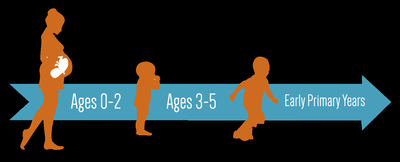
Additional info: Early childhood spans from prenatal development through the early primary years, with each stage presenting unique developmental needs and vulnerabilities.
Social Location & Equity in ECD
Access to ECD is shaped by class, gender, race, Indigenous ancestry, immigrant status, and disability status.
Inequities in these areas can limit opportunities for healthy development and educational attainment.
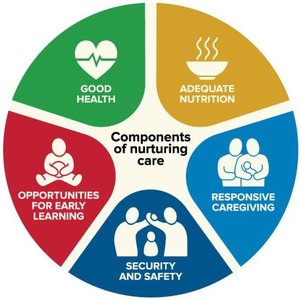
Additional info: Nurturing care is multidimensional, requiring coordinated support across health, nutrition, safety, and learning.
Early Childhood Education and Care (ECEC) in Canada
Historical Overview
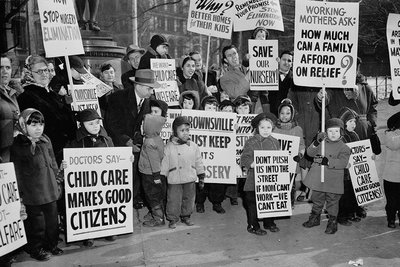
ECEC in Canada developed as a fragmented patchwork, with 'education' and 'care' treated separately across provinces.
No national policy existed for decades, causing Canada to lag behind other OECD countries.
Federalism means education and social programs are provincial/territorial responsibilities, leading to variation in access and quality.

Additional info: International comparisons highlight the potential for universal, rights-based approaches to child care.
Policy Evolution and Neoliberal Influence
"Open federalism" under Conservative governments led to decentralization and limited national ECEC policy (2006–2015).
The Canada-Wide Early Learning and Child Care (CWELCC) agreements (2021) marked a shift toward universal, publicly funded ECEC, with a $10/day goal.


Integrated Approach to ECEC
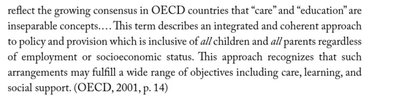
OECD countries increasingly view 'care' and 'education' as inseparable, advocating for integrated, inclusive policies that serve all children and families, regardless of socioeconomic status.
Benefits of Equitable ECEC Access
Strengthens foundations for lifelong learning.
Supports broad educational and social needs of families.

Key Policy Lessons from International Comparisons
OECD Policy Lessons for ECEC
Systematic & Integrated Policy Development
Strong Partnership with Education System
Universal Access
Substantial Public Investment
Participatory Quality Improvement
Appropriate Training and Working Conditions for Staff
Systematic Monitoring & Data Collection
Stable Framework for Research and Evaluation
Canada has historically underinvested in ECEC, spending only 0.2% of GDP on childcare in 2006, the lowest among OECD countries.
Universal Access and Equity
Universal ECEC should be affordable, available, and equitably distributed.
Coverage for children aged 0–5 increased from 7.5% (1992) to 26.7% (2021).
Public funding improves access and equity compared to market-based systems.
Measuring Child Well-Being
Dimensions and Indicators
Child well-being is measured across multiple dimensions, including material well-being, health and safety, education, behaviours and risks, and housing/environment.
Dimension | Component | Indicator |
|---|---|---|
Material well-being | Material deprivation | Relative child poverty rate, child deprivation rate |
Health and safety | Preventive health services | Childhood mortality, immunization rate |
Education | Participation, achievement | Preschool participation, PISA scores |
Behaviours and risks | Health behaviours, risk behaviours | Eating habits, smoking, cannabis use |
Housing and environment | Housing, environmental safety | Housing problems, exposure to violence |
International Rankings
Canada's ranking in child well-being has declined over time, reflecting challenges in material well-being, education, and health outcomes compared to other wealthy nations.

Education as a Social Determinant of Health (SDH)
Direct and Indirect Impacts on Health
Direct: Education increases health literacy and promotes healthy behaviours.
Indirect: Education influences socioeconomic status (SES) and employment opportunities, which in turn affect health.
Education acts at individual, familial, and community levels.
Purposes of Education in a Democratic Society
Intellectual Development: Fosters critical thinking, problem-solving, and informed citizenship.
Social Development: Encourages collaboration, empathy, and civic responsibility.
Economic Development: Prepares individuals for the workforce, drives innovation, and supports economic stability.
Factors Affecting Educational Achievement
Types of Capital
Educational Capital: Family and community knowledge/resources, parental education, and support for learning.
Social Capital: Relationships, networks, and norms that support cooperation and engagement.
Economic Capital: Financial resources that affect access to educational tools and environments. SES is a strong predictor of academic performance.
Political Capital: Ability to influence educational policy and secure resources.
Intersectionality and privilege shape educational outcomes, with systemic inequalities affecting teacher quality, school resources, and opportunities.
Family Composition and Cultural Diversity
Family structure (e.g., lone-parent, stepfamilies) and cultural background influence educational support and outcomes.
Immigrant students in Canada often outperform non-immigrant peers, but language and integration challenges persist.
Schooling, Socialization, and Well-Being
Hidden Curriculum and Socialization
Schools socialize students into societal norms and values through the 'hidden curriculum.'
Teachers and peers play key roles in shaping identity and social expectations.
Teacher Quality and Peer Effects
High-quality teachers improve long-term educational and economic outcomes.
Peer relationships influence academic performance and sense of belonging.
Student Well-Being and Bullying
Chronic loneliness and bullying are linked to lower academic performance and mental health issues.
Cyberbullying is a growing concern, prompting policy responses focused on digital citizenship and mental health.
Challenges and Policy Directions
Current Challenges
Declining achievement in Canadian schools.
Recruitment and retention of skilled educators.
Persistent inequities in access and outcomes.
Policy Recommendations
Improve services and environments through community development and healthy public policy.
Invest in early childhood education to promote equity and long-term well-being.
