 Back
BackLatinos: Growth and Diversity in the United States
Study Guide - Smart Notes
 Tailored notes based on your materials, expanded with key definitions, examples, and context.
Latinos: Growth and Diversity
Latino Identity and Panethnicity
Latino identity in the United States is complex and multifaceted, shaped by a variety of cultural, linguistic, and historical factors. Panethnicity refers to the development of solidarity among different ethnic subgroups, such as Mexican Americans, Puerto Ricans, Cubans, and others, under a broader Latino or Hispanic identity. However, many individuals prefer to identify with their specific country of origin rather than a panethnic label. Additionally, colorism and the color gradient—the ranking of individuals along a continuum from light to dark skin—play significant roles in shaping social experiences within Latino communities.
Panethnicity: Solidarity among diverse Latino subgroups.
Colorism: Social ranking based on skin color.
Color Gradient: Continuum of skin color distinctions, as seen in groups like Mestizo Hondurans and Mulatto Colombians.
Self-Identification: About half of Latinos prefer to use their country of origin for identification.
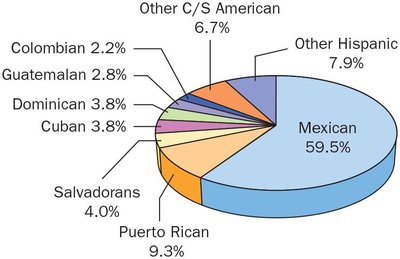
Example: The largest subgroup is Mexican Americans, followed by Puerto Ricans, Salvadorans, and others.
Demographic Distribution
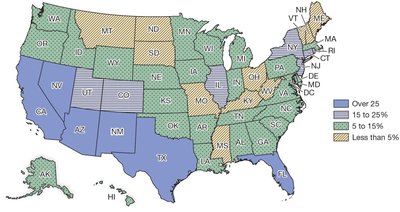
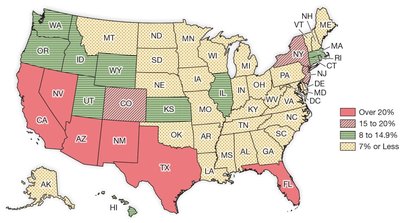
Latinos are the largest ethnic minority in the United States, with significant populations concentrated in specific states. The majority reside in California, Texas, and Florida, but Latino communities are present throughout the country.
Population Concentration: Over half of the Latino population lives in three states: California, Texas, and Florida.
National Proportion: Latinos make up approximately 19.5% of the U.S. population as of the 2020 Census.
The Economic Picture
Latinos in the United States face significant economic challenges, including lower income and wealth levels compared to non-Hispanic Whites, higher poverty rates, and barriers to upward mobility in the workforce.
Income: Median Latino household income is substantially lower than that of White non-Hispanic households.
Wealth: Median net worth for Hispanic households is much lower than for non-Hispanic households.
Poverty: Latino households have double the poverty rate of White non-Hispanic households.
Blue Collar Ceiling: Difficulty in accessing higher-paying jobs with benefits.
Remittances: Money sent to home countries is a crucial income source for families in Central America, Panama, the Dominican Republic, and Mexico.
Consumption Patterns: Higher household spending compared to other groups at similar income levels, but preferences are often underrepresented in the market.
Education and English-Language Attainment
Educational attainment among Latinos has improved, but challenges remain, particularly in college completion rates and English-language acquisition. Historical segregation and ongoing stigmatization have impacted educational outcomes.
Segregation: Latino students were historically assigned to separate schools (de jure segregation).
High School Graduation: Rates of high school graduation and college entry have become comparable to White students, but college completion lags behind.
Bachelor’s Degree: Only 21% of Latinos aged 25+ have a bachelor’s degree, compared to 41% of Whites.
English Acquisition: Key to educational and economic advancement.
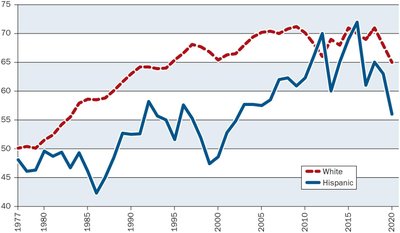
Example: The COVID-19 pandemic caused a decline in college enrollment among Latino students in 2020.
Political Presence
Latinos have become an increasingly important force in U.S. politics, with both major parties seeking their support. Political engagement has grown, and Latino candidates are more visible in elections.
Historical Participation: Traditionally, Latino political activity was outside mainstream electoral politics.
Recent Trends: Increased recognition by political parties; more Hispanic candidates.
Fiesta Politics/Hispandering: Efforts to appeal to Latino voters, sometimes superficially.
Notable Events: Election of the first Latina to the Senate (Catherine Cortez Masto, Nevada).
Voter Support: Growing support for both liberal and conservative candidates, depending on values and issues.
Religion in Latino Communities
Religion, particularly the Roman Catholic Church, plays a central role in Latino communities. There is also a growing presence of Protestant and evangelical Christian faiths, such as Pentecostalism.
Community Role: The church is the most important formal organization for many Latinos.
Religious Diversity: While predominantly Catholic, Latino communities are increasingly diverse in religious affiliation.
Church Adaptation: Efforts to provide Spanish-speaking clergy and culturally relevant services.
Cuban Americans
Cuban Americans have a unique immigration history and cultural presence in the United States, especially in Miami. Their experiences are shaped by waves of migration, U.S. immigration policies, and ongoing ties to Cuba.
Immigration Waves: Major waves occurred after Castro’s rise to power, with significant migration through the 1980s.
Dry Foot/Wet Foot Policy: Allowed Cubans who reached U.S. soil to stay; ended in 2017.
Recent Changes: New rules in 2023 allow for legal entry under certain conditions.
Community Diversity: Differences in ties to Cuba, social class, and age; no single Cuban American lifestyle.
Cultural Retention: Cuban Americans maintain their culture and language while integrating into U.S. society.
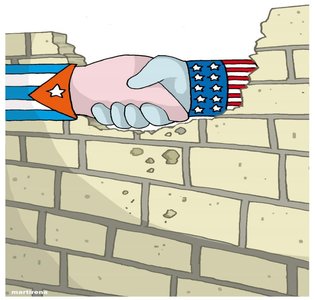
Example: The renewal of U.S.-Cuba diplomatic relations in 2014 changed immigration policies for Cubans.
Central and South Americans
Central and South American immigrants in the United States are a highly diverse group, varying in language, social class, religion, and urban or rural backgrounds. Many are undocumented, and the phenomenon of "brain drain" affects their home countries.
Diversity: Wide range of languages, dialects, and cultural backgrounds.
Immigration Drivers: Economic opportunities and unrest in home countries.
Undocumented Status: Many lack legal documentation.
Brain Drain: Emigration of skilled professionals leaves home countries in need.
Future Trends: Dependent on U.S. immigration policy and conditions in home countries.
