 Back
BackRace, Racism, and Colonialism: Sociological Perspectives and Core Concepts
Study Guide - Smart Notes
 Tailored notes based on your materials, expanded with key definitions, examples, and context.
Race, Racism, and Colonialism in Sociology
Core Concepts and Sociological Approaches
This section introduces how sociologists conceptualize race, racism, and colonialism, emphasizing the importance of social construction and the multi-level analysis of these phenomena.
Race: A social distinction based on perceived physical or biological characteristics. Sociologists argue that race is not a biological reality but a social construct shaped by historical and social processes.
Ethnicity: Refers to shared cultural practices, perspectives, and distinctions that set apart one group of people from another.
Indigenous Peoples: Includes First Nations, Métis, and Inuit in Canada, whose experiences are shaped by colonialism and ongoing systemic inequalities.
Immigration: Patterns of movement and settlement that intersect with race and ethnicity in shaping social hierarchies.
Social Construction: The process by which society collectively creates and maintains meanings, identities, and institutions. Race is a prime example of a socially constructed category.
Key Sociological Lenses:
Functionalist Perspective: Examines how race and ethnicity contribute to social stability or dysfunction.
Conflict Perspective: Focuses on power dynamics and the ways in which race and ethnicity are used to maintain social inequality.
Symbolic Interactionist Perspective: Investigates how everyday interactions and meanings shape racial and ethnic identities.

Levels of Analysis: Macro, Meso, Micro
Sociologists analyze race and racism at different levels:
Macro: Large-scale systems and structures (e.g., nations, laws, economies).
Meso: Groups, organizations, and subcultures (e.g., schools, workplaces).
Micro: Individual identities and interactions.
Challenging Essentialism and Understanding Social Construction
Essentialism vs. Social Construction
Essentialism assumes inherent, unchangeable qualities define racial or ethnic groups. Sociology rejects this, emphasizing that racial categories are socially constructed and vary across societies and historical periods.
Example: Racial classifications differ between countries and change over time, reflecting social, political, and economic interests rather than biological facts.
The Thomas Theorem
The Thomas Theorem states: "If people define situations as real, they are real in their consequences." This principle explains how socially constructed categories like race have tangible effects on people's lives.
Racism: Definitions and Systems
Racism and Systemic Racism
Racism is an organized system of race-based group privilege, maintained by ideologies of racial supremacy and embedded in social structures.
Not limited to individual prejudice, but includes institutional and structural dimensions.
Systemic Racism: Operates at macro and meso levels, reinforcing inequality through policies and norms.
Micro-Level Analysis: Everyday Racism and Privilege
Microaggressions and White Privilege
At the micro level, racism manifests in daily interactions, microaggressions, and the experience of privilege.
Microaggressions: Subtle, often unintentional, discriminatory comments or behaviors.
White Privilege: Unearned advantages enjoyed by white people, often invisible to those who benefit from them. Peggy McIntosh describes this as an "invisible knapsack" of resources and opportunities.
Example: The ability to move through life without being asked to speak for one's race or having one's qualifications questioned due to race.

Optional Ethnicities
White Americans often have the privilege of choosing whether to identify with an ethnic background, while visible minorities do not have this option. This affects understanding of affirmative action and solidarity among minority groups.
Meso-Level Analysis: Group Dynamics and Prejudice
Authoritarian Personality
The authoritarian personality theory suggests that certain individuals are more susceptible to prejudice due to underlying psychological traits, which can be activated by social circumstances such as violence or oppression.
Realistic Conflict Theory and Contact Theory
Realistic Conflict Theory: Competition over scarce resources leads to intergroup hostility and prejudice.
Contact Theory: Increased interaction between groups can reduce prejudice, but only under conditions of equal status and cooperation.
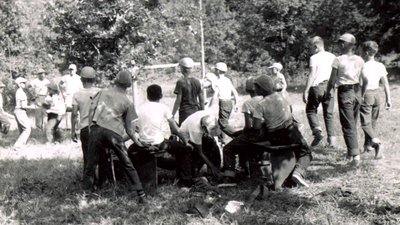
Example: The Robbers Cave Experiment demonstrated that competition fosters animosity, while cooperative goals can reduce prejudice.
Institutional Racism and Public Issues
Racism is perpetuated through institutional practices in education, healthcare, law, and other sectors, leading to public issues such as health and educational inequalities, hyper-visibility, and microaggressions.
Macro-Level Analysis: Structures, Colonialism, and Critical Race Theory
Critical Race Theory (CRT)
CRT examines how legal systems and policies reinforce racial inequalities. Key observations include:
Race is a social construct.
Racism is ordinary and embedded in society.
Racism serves to maintain the status quo.
Intersectionality is central to understanding overlapping systems of oppression.
Colonialism and Settler-Colonialism
Colonialism involves one group exerting control over another, often through settlement and economic exploitation. Settler-colonialism replaces Indigenous populations with settlers, leading to ongoing disconnection from land, culture, and community.
Example: The Indian Act in Canada, residential schools, and policies that sought to assimilate Indigenous Peoples.

Consequences of Colonialism
High poverty rates among Indigenous children.
Loss of language and culture.
Disproportionate violence against Indigenous women.
Ongoing effects of colonization, not just a legacy of the past.
Indigenous Resurgence
Efforts to move beyond a focus on damage include emphasizing renewal, resilience, cultural remembrance, and the revitalization of treaty and diplomatic mechanisms.

Key Theories and Concepts for Review
Authoritarian Personality
Contact Theory
Critical Race Theory
Discrimination
Essentialism
Ethnicity
Immigration
Invisible Knapsack
Thomas Principle
Prejudice
Race/Racism
Realistic Conflict Theory
Social Construction
Census, First Nations, Multiculturalism, Vertical Mosaic
Summary Table: Levels of Analysis in Race and Racism
Level | Focus | Examples |
|---|---|---|
Micro | Individual interactions, identity, microaggressions | White privilege, optional ethnicities, daily discrimination |
Meso | Groups, organizations, institutional practices | School policies, workplace discrimination, Robbers Cave Experiment |
Macro | Societal structures, laws, colonialism | Indian Act, residential schools, systemic racism, CRT |
Key Takeaways
Racism is both a personal trouble and a public issue, requiring structural analysis for effective change.
Recognizing privilege and understanding intersectionality are essential for addressing racial oppression.
Sociology provides tools to analyze and challenge the social construction of race and its consequences.
