 Back
BackSocial Determinants of Health: Early Life, Education, and Work
Study Guide - Smart Notes
 Tailored notes based on your materials, expanded with key definitions, examples, and context.
Social Determinants of Health: Early Life & Education
Introduction to Social Determinants of Health (SDH)
The social determinants of health are the non-medical factors that influence health outcomes. These include the conditions in which people are born, grow, live, work, and age, as well as the systems in place to deal with illness. Understanding SDH is crucial for addressing health inequities within and between populations.
Key determinants: Income, education, employment, social support, and early childhood development.
Health gradient: Health outcomes improve with higher socioeconomic status, not just among the poorest.

Work and Health
Pathways to Healthier Work
Work conditions are a major social determinant of health. Policies and power dynamics within the workplace can either promote or undermine health.
Policy options: Stronger enforcement of occupational health and safety (OHS) laws, worker-only safety committees, narrowing legal loopholes, and adopting the precautionary principle.
Shifting power: Expanding income supports, facilitating unionization, and supporting worker safety through education and civil society.
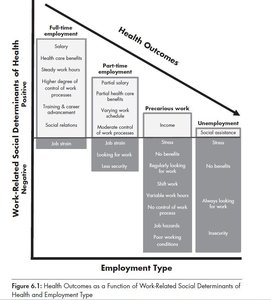
Types of Work and Health Outcomes
Employment type significantly affects health outcomes, with full-time, secure employment offering the best health prospects and unemployment the worst.
Full-time employment: Offers salary, health benefits, job security, and social advantages.
Part-time/precarious work: Associated with lower income, less security, and fewer benefits.
Unemployment: Linked to poor health outcomes due to insecurity and lack of resources.
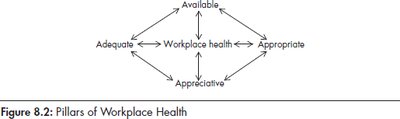
Pillars of Workplace Health
Healthy work environments are characterized by four pillars: availability, adequacy, appropriateness, and appreciation. The absence of these pillars leads to precarious work and negative health outcomes.
Available: Secure jobs are accessible.
Adequate: Jobs provide sufficient income and security.
Appropriate: Work is safe, stable, and health-promoting.
Appreciated: Work is meaningful and valued.
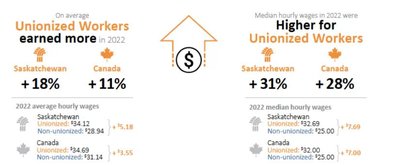
Unionization and Worker Benefits
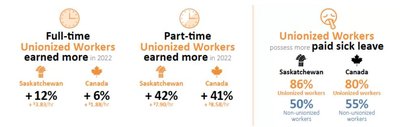
Unionized workers generally experience better wages, more paid leave, and greater job security compared to non-unionized workers. This contributes to improved health outcomes.
Union wage premium: Unionized workers earn more on average.
Paid leave: Higher rates of paid sick leave among unionized workers.
International Comparisons: Employment Protection and Paid Leave
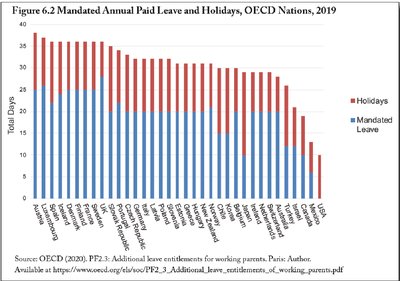
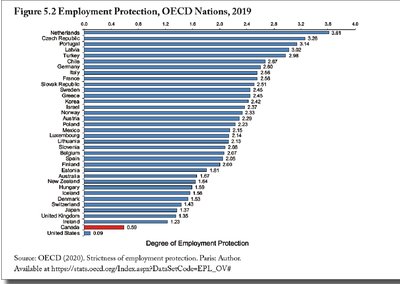
Countries vary in their employment protection and mandated paid leave, which impacts worker health and well-being. Canada and the U.S. have lower employment protection and paid leave compared to many European nations.
Employment protection: Stronger in European countries, weaker in North America.
Paid leave: More generous in Europe, limited in Canada and the U.S.
Early Child Development (ECD) and Health
What is Early Child Development?
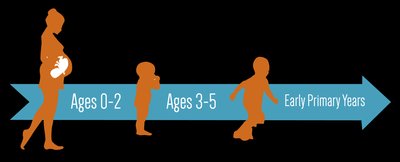
Early child development (ECD) refers to the period from conception through early childhood. ECD is a critical determinant of immediate and long-term health outcomes, influencing cognitive, emotional, social, and physical development.
Immediate outcomes: Childhood health and development.
Long-term outcomes: Health and well-being into adolescence and adulthood.

Theoretical Explanations for ECD’s Impact on Health
There are five main theoretical approaches to understanding how ECD affects health:
Explanation Type | Influences |
|---|---|
Cultural/Behavioural | Parental beliefs, norms, and values shape children's exposure to health-related behaviours (e.g., smoking, poor diet, inactivity). |
Psychosocial | Children’s perceived status, stress, control, and family/social support affect physiological systems and health. |
Materialist | Parental income and employment determine access to nutrition, housing, education, and recreation. |
Macro-Social | Public policy, political processes, and power distribution affect economic resources, citizen supports, and environments. |
Lifecourse | Events from before birth through childhood shape future health and chronic disease risk. |
Materialist & Lifecourse Approaches
Materialist and lifecourse approaches emphasize the role of socioeconomic position and early adversity in shaping health across the lifespan. Health follows a social gradient, and early disadvantage can lead to chronic disease in adulthood.
Family resources: Parenting, mental health, and opportunity structures are shaped by income.
Living conditions: Affect cognitive, emotional, social, and physical development.
Patterns of Long-Term Exposure
There are three main patterns by which early experiences affect long-term health:
Latency effects: Early experiences have lasting impacts (e.g., low birthweight linked to adult disease).
Pathways effects: Early disadvantage sets children on trajectories leading to poor health (e.g., poor school readiness leads to lower income and worse health).
Cumulative effects: Multiple adversities compound over time, leading to cognitive deficits and health-threatening behaviours.
Social Determinants Contributing to ECD
Family income, shaped by employment and government benefits, is the most critical factor for ECD. Other determinants include housing quality, food security, access to child care, and social services. Social location (class, gender, race, Indigenous ancestry, immigrant status, disability) also shapes access to ECD.
Early Child Education and Care (ECEC)
ECEC as a Social Determinant of Health
Early Child Education and Care (ECEC) includes licensed child care, kindergarten, and preschool programs. ECEC supports child development, maternal employment, and social inclusion, and is a key policy area for promoting health equity.
Child-focused: Promotes early learning and school readiness.
Family-focused: Supports maternal employment and economic security.
Society-focused: Fosters social inclusion and healthy communities.
Policy Evolution in Canada
Canada has shifted from a fragmented, market-driven system to a publicly funded, universal approach to ECEC. The goal is to provide high-quality, accessible, and inclusive child care for all families.
2004: Call for national vision and commitment.
2021: Shift toward universal, publicly funded ECEC.
Current: Early implementation phase with significant changes underway.
Rationales and Policy Goals for ECEC
Enhancing children’s well-being: Promotes cognitive and social development, especially for low-income children.
Supporting parents: Enables workforce participation and reduces poverty risk.
Building strong communities: Fosters diversity, equity, and civic engagement.
Advancing equity: Universal access supports women’s equality and inclusion of children with disabilities.
International Comparisons: Denmark’s ECEC Model
Denmark treats access to daycare as a basic right, with guaranteed spots, high subsidies, and a focus on quality and inclusion. This model contrasts with Canada’s more market-driven approach and highlights the potential for universal, equitable ECEC systems.

Conclusion: Ways Forward
Improve services and invest in early childhood education.
Strengthen environments through community development and healthy public policy.
Promote equity by addressing social determinants across the life course.
