 Back
BackSocial Determinants of Health: Food Insecurity, Housing, and Education in Canada
Study Guide - Smart Notes
 Tailored notes based on your materials, expanded with key definitions, examples, and context.
Social Determinants of Health
Introduction
The social determinants of health (SDH) are the non-medical factors that influence health outcomes. These include conditions in which people are born, grow, live, work, and age, and are shaped by the distribution of money, power, and resources. This study guide focuses on the intersection of education, food insecurity, and housing as key SDH in Canada, highlighting their impact on health and social inequality.
Factors Affecting Educational Achievement
Types of Capital
Educational achievement is influenced by various forms of capital within families and communities. These forms of capital interact to shape opportunities and outcomes for students.
Educational Capital: Refers to the knowledge and educational resources available within families and communities, such as parental education levels, access to learning materials, and community attitudes toward education. Higher parental education often leads to greater support for children's learning and higher student achievement.
Social Capital: Encompasses relationships, networks, and norms that support cooperation and engagement. Family involvement, peer support, and community participation foster student confidence and motivation.
Economic Capital: Involves financial resources such as income, wealth, and material assets. Socioeconomic status (SES) is a strong predictor of academic performance, affecting access to educational tools and conducive learning environments.
Political Capital: Relates to the ability to influence educational policy and decision-making. Communities with higher political capital can secure better resources and policies, improving educational outcomes.
Intersectionality and Privilege: Educational outcomes are shaped by the interaction of various forms of capital. Systemic inequalities, family composition, parenting style, language, and culture also play key roles.

Challenges Facing Canadian Schools
Canadian schools face challenges related to access, quality, and affordability. Gaps in access and quality are particularly concerning in areas with private or charter schools, and there are notable inequities between rural and urban schools, as well as differences in extra-curricular opportunities based on community income.
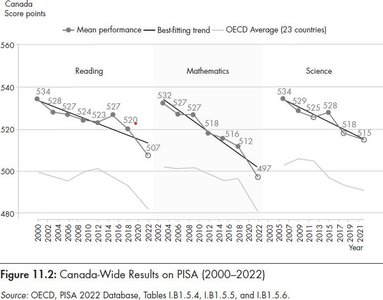
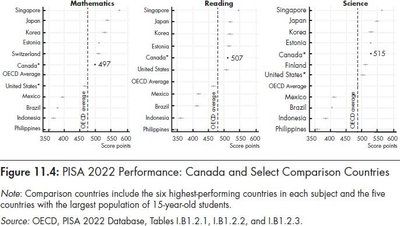
Education as an Equalizer?
While education is often seen as a means to reduce social inequality, its effectiveness depends on access, quality, and affordability. In Canada, public education is generally strong, but disparities persist, especially for marginalized groups.

Food Insecurity in Canada
Definition and Levels
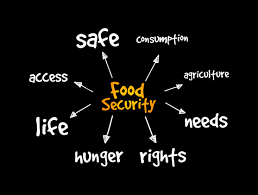
Food insecurity refers to the lack of consistent access to sufficient, safe, and nutritious food necessary for a healthy life. It is a major public health concern and is considered both a social determinant of health and a human right.
Food Security: All people at all times have access to sufficient, safe, nutritious food.
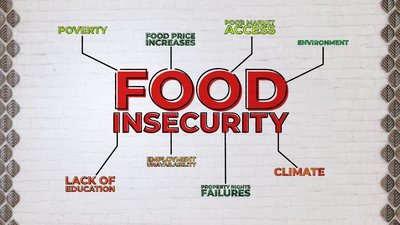
Food Insecurity: Caused by inadequate income, not by a lack of food supply. It is not solved by simply providing more food.
Human Rights Approach
Canada recognized the right to food as a human right in 1948. This approach emphasizes that all adults and children should have the right to adequate, nutritious food and to be free from hunger.

Social History and Policy Responses
Since the 1990s, reductions in federal spending have increased poverty and food insecurity. Policy responses have largely been community-driven, focusing on food banks and meal programs rather than addressing root causes like income inequality.

Evolution and Use of Food Banks
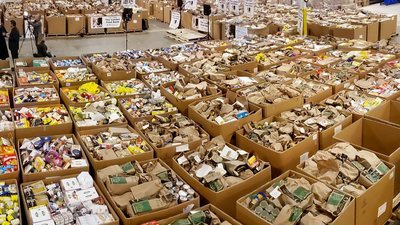
Food banks have become a primary response to food insecurity in Canada. The number of food bank visits has increased significantly in recent years, reflecting growing need.
Measuring Household Food Insecurity
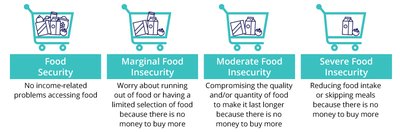
Food insecurity is measured at the household level and classified into different levels based on severity:
Marginal Food Insecurity: Worry about running out of food or limited selection due to lack of money.
Moderate Food Insecurity: Compromising quality or quantity of food to make it last longer.
Severe Food Insecurity: Reducing food intake or skipping meals due to lack of money.
Prevalence and At-Risk Populations
Food insecurity is a core indicator of material deprivation and is strongly linked to low socioeconomic status. In 2022, 18.4% of Canadians lived in food-insecure households. At-risk groups include those on social assistance, single parents, renters, racialized and immigrant families, Indigenous peoples, and the homeless.
Social assistance recipients: 69.9% food insecure
Single parents (especially lone mothers): 42.6% food insecure
Renters: 28.5% food insecure vs. Homeowners: 11.6%
Black Canadian workers: 49% food insecure
Indigenous (on-reserve): 47.1%, Inuit: 45%
Case Study: Northern Canada
Food insecurity is especially severe in Northern Canada, where high food prices and limited access to nutritious food are common. Indigenous and remote communities face the highest rates of food insecurity.
Food Insecurity Among Post-Secondary Students
Post-secondary students are also at risk, with many relying on campus food banks. Food insecurity among young adults increased during the COVID-19 pandemic, exacerbating pre-existing inequities.
Groups Least at Risk
Seniors (65+) have significantly lower rates of food insecurity compared to other age groups, likely due to stable income sources such as pensions.
Management Strategies for Food Insecurity
Household Coping Mechanisms
Households facing food insecurity often employ various strategies to manage limited resources, such as:
Purchasing food on credit
Sending children to relatives for meals
Selling possessions
Delaying bill payments
Using food banks and soup kitchens
Food insecurity in children is linked to lower academic achievement.
Food Deserts
Many low-income neighborhoods lack affordable, nutritious food options, known as "food deserts." These areas often have a high density of fast food and alcohol retailers, limited walkability, and poor transit, further restricting access to healthy food.
Impact on Health
Food insecurity has significant health consequences, affecting physical and mental health, nutritional intake, and increasing stress and deprivation. These effects persist even after controlling for income and other socio-demographic factors.
Recent Trends and Data
Food Bank Usage and Demographics
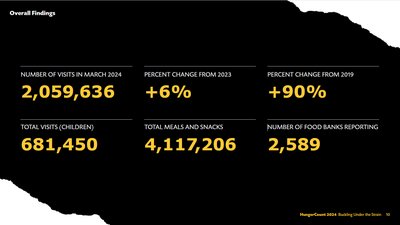
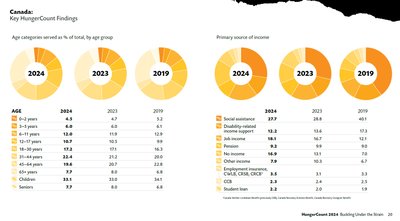
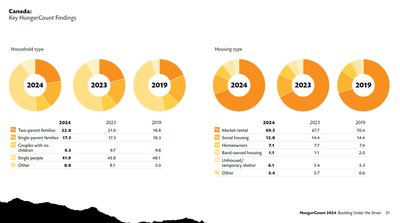
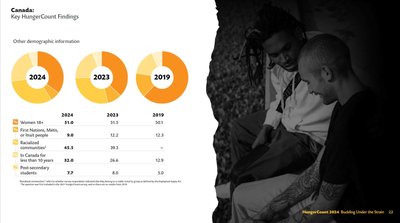
Recent data show a sharp increase in food bank usage, with over 2 million visits in March 2024 and a 90% increase since 2019. Children, single-parent families, and racialized communities are disproportionately represented among food bank users.
Impact of Inflation and Affordability Crisis
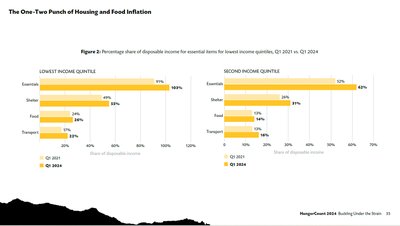
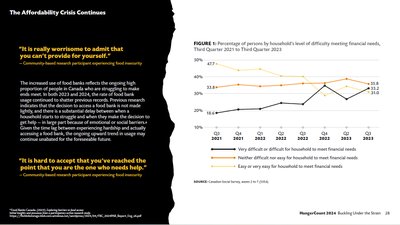
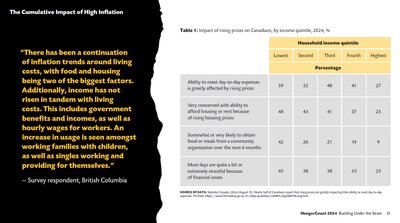
High inflation has increased the cost of living, especially for food and housing. Lower-income households are most affected, with a greater share of their income spent on essentials. Many report difficulty meeting daily expenses and obtaining food.
Poverty and Food Insecurity
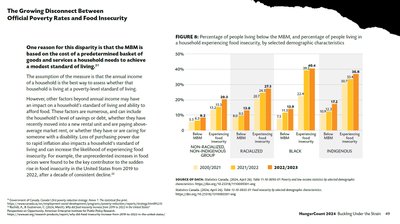
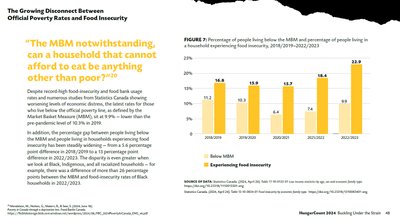
There is a growing disconnect between official poverty rates and food insecurity. Many households above the poverty line still experience food insecurity, especially among racialized and Indigenous populations.

Summary Table: Levels of Food Security
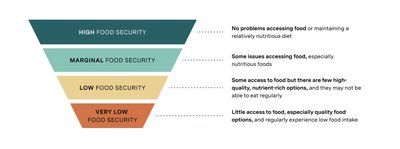
Level | Description |
|---|---|
High Food Security | No problems accessing food or maintaining a nutritious diet |
Marginal Food Security | Some issues accessing food, especially nutritious foods |
Low Food Security | Some access to food but few high-quality, nutrient-rich options |
Very Low Food Security | Little access to food, especially nutritious options; regular low food intake |
Key Equations and Concepts
Socioeconomic Status (SES): A composite measure that typically includes income, education, and occupation.
Food Insecurity Rate:
Conclusion
Food insecurity and educational inequality are deeply interconnected social determinants of health in Canada. Addressing these issues requires not only community-based responses but also systemic policy changes to reduce income inequality and improve access to essential resources.
