 Back
BackSocial Groups and Formal Organizations: Study Guide for Sociology Students
Study Guide - Smart Notes
 Tailored notes based on your materials, expanded with key definitions, examples, and context.
Social Groups and Formal Organizations
Introduction
This chapter explores the structure, dynamics, and significance of social groups and formal organizations in society. It covers the types of groups, their functions, the nature of bureaucracies, and the impact of group size and leadership on social behavior.
Groups within Society
Social groups are fundamental units of society, shaping individual identity and collective behavior. Sociologists classify groups based on their characteristics and functions.
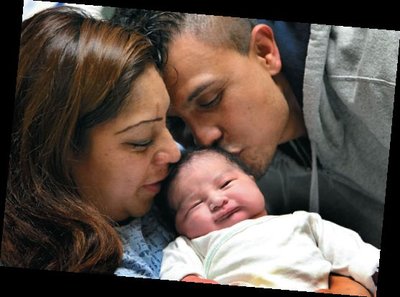
Primary Groups: Small, intimate, and enduring groups such as family and close friends. They provide emotional support and play a crucial role in the development of the self.
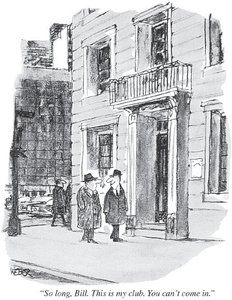
Secondary Groups: Larger, more formal, and impersonal groups, such as workplaces or clubs. These groups are organized around specific goals and may transform into primary groups over time.
In-Groups: Groups to which individuals feel loyalty and belonging. They shape perceptions of right and wrong and foster a sense of "us."
Out-Groups: Groups toward which individuals feel antagonism or opposition, often referred to as "them."
Reference Groups: Groups used as standards for self-evaluation, including family, neighbors, teachers, and classmates.
Social Networks: Webs of relationships linking people to one another, illustrating the concept of "six degrees of separation."






Characteristics of Bureaucracies
Bureaucracies are formal organizations characterized by hierarchical structures and standardized procedures. They are essential for organizing large-scale social activities but can also produce dysfunctions.
Separate Levels: Assignments flow downward, accountability flows upward.
Division of Labor: Tasks are divided among specialized positions.
Written Rules: Formal guidelines govern behavior and operations.
Written Communications and Records: Documentation is essential for accountability.
Impersonality and Replaceability: Positions are filled based on qualifications, not personal relationships.

Ideal vs. Real Bureaucracy
The ideal bureaucracy is efficient and rational, but real bureaucracies often deviate from this model due to human factors and organizational inertia.
Goal Displacement and Perpetuation
Bureaucracies may persist beyond their original purpose, adopting new goals to justify their existence. This process is known as goal displacement.
Example: The March of Dimes shifted its mission from fighting polio to promoting healthy babies after polio was eradicated.
Dysfunctions of Bureaucracies
Red Tape: Excessive adherence to rules can hinder efficiency.
Lack of Communication: Poor inter-unit communication can cause problems.
Bureaucratic Alienation: Workers may feel disconnected from their work.
Resisting Alienation: Efforts to humanize the workplace.
Bureaucratic Incompetence: The Peter Principle—employees rise to their level of incompetence.
Working for the Corporation
Corporate culture includes both visible and hidden aspects that influence employee behavior and opportunities.
Self-Fulfilling Stereotypes: Expectations about employees can influence promotions and workplace dynamics.
Diversity: Increasing cultural and racial diversity necessitates diversity training and awareness.
Technology and the Control of Workers
Technological advancements have enabled employers to monitor workers more closely, raising concerns about privacy and autonomy.
Surveillance: Technology allows for extensive monitoring of employee activities.
Social Media: Employers may use social media to screen candidates, sometimes rejecting applicants based on online content.
Group Dynamics
Group dynamics refer to the ways in which group size, leadership, and social influence affect individual and collective behavior.
Effects of Group Size: Larger groups are more stable but less intimate. As size increases, formality and diffusion of responsibility also increase.
Dyad: A group of two people, characterized by intimacy but instability.
Triad: A group of three people, more stable but can form coalitions.

Leadership
Instrumental Leaders: Focus on achieving goals.
Expressive Leaders: Focus on group harmony and emotional well-being.
Leadership Styles: Authoritarian, Democratic, Laissez-faire.
The Power of Peer Pressure: The Asch Experiment
The Asch experiment demonstrated that individuals often conform to group opinions, even when they contradict their own perceptions.
The Power of Authority: The Milgram Experiment
Milgram's experiment revealed that people are willing to follow authority figures, even to the extent of harming others.
Groupthink
Groupthink is a phenomenon where group members develop a collective tunnel vision, suppressing dissent and critical thinking in favor of consensus.
Summary Table: Types of Social Groups
Type of Group | Characteristics | Example |
|---|---|---|
Primary Group | Small, intimate, enduring | Family, close friends |
Secondary Group | Larger, formal, impersonal | Workplace, sports team |
In-Group | Loyalty, sense of belonging | Religious group, club |
Out-Group | Antagonism, opposition | Rival team, competing organization |
Reference Group | Standard for self-evaluation | Peers, professional group |
Social Network | Web of relationships | Friends, acquaintances |
Additional info: These notes expand on brief points from the slides and textbook images, providing definitions, examples, and academic context for each concept. The included images visually reinforce key sociological concepts such as group types, reference groups, and group dynamics.
