 Back
BackSocial Inequality and Education: A Sociological Perspective
Study Guide - Smart Notes
 Tailored notes based on your materials, expanded with key definitions, examples, and context.
Social Inequality
Defining Social Inequality
Social inequality refers to differences among individuals or groups that have significant effects on their rights, opportunities, privileges, and rewards. Sociologists distinguish between social differentiation (the attributes used to distinguish people) and social stratification (institutionalized systems of inequality that allocate individuals and groups according to hierarchies of status, power, or prestige).
Social differentiation: Attributes such as age, gender, or ethnicity that may or may not be consequential for social inequality.
Social stratification: Structured layers in society, similar to geological strata, that determine access to resources and opportunities.
Systems of Stratification
Stratification systems can be open (allowing mobility based on achievement) or closed (where status is ascribed at birth and mobility is limited).
Open system: Based on achieved status, such as education or occupation.
Closed system: Based on ascribed status, such as caste or race.
Caste system: An extreme form of closed stratification, as seen in India, where mobility is highly restricted.
Dimensions of Inequality: Class, Status, Power
Three major dimensions of social inequality are social class, status, and power.
Social class: Economic position, often measured by occupation and education.
Status group: Prestige or social honor, distinct from economic class.
Power: The ability to influence others, even against resistance.
Distribution of Income and Wealth in Canada
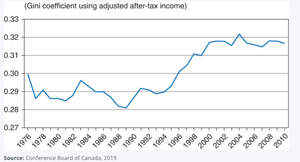
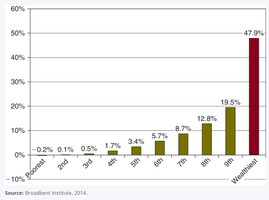
Economic inequality in Canada has increased over recent decades, with both income and wealth becoming more unequally distributed.
Income inequality: Measured by the Gini coefficient, which ranges from 0 (perfect equality) to 1 (total inequality).
Wealth inequality: Refers to the distribution of assets minus debts (net worth).
Global Commitment to Reducing Inequality
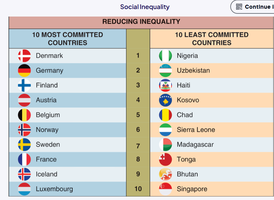
Countries vary in their commitment to reducing inequality, as measured by policy initiatives in education, health, tax policy, and labor rights.
Poverty: Types and Vulnerable Groups
Poverty is a multifaceted phenomenon, with both absolute and relative forms.
Absolute poverty: Inability to meet basic needs such as food, shelter, and healthcare.
Relative poverty: Living below the standard of living of the majority in a given society.
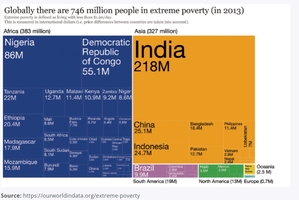
Certain groups are more vulnerable to poverty, including seniors (especially women), single-parent families (predominantly female-headed), racialized minorities, and Indigenous peoples.
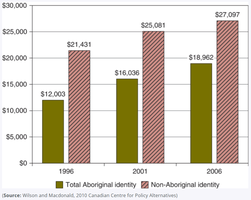
The Digital Divide
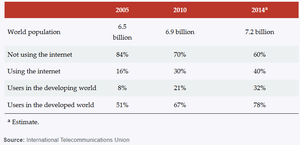
The global digital divide refers to disparities in access to technology and the internet between developed and developing countries. This divide is influenced by infrastructure, language, and education.
Year | World Population | Not using the internet | Using the internet | Users in the developing world | Users in the developed world |
|---|---|---|---|---|---|
2005 | 6.5 billion | 84% | 16% | 8% | 51% |
2010 | 6.9 billion | 70% | 30% | 21% | 67% |
2014* | 7.2 billion | 60% | 40% | 32% | 78% |
Education as a Social Institution
Historical Development of Education in Canada
Education in Canada evolved from informal, family-based learning to a formal, standardized system. The rise of compulsory education was influenced by changing perceptions of childhood, economic shifts (Industrial Revolution), and the expansion of government control.
Early education was informal and based on mastery, not age.
Industrialization required basic literacy and numeracy for the workforce.
Standardization and secularization, especially in Quebec, reduced inequalities between linguistic and religious groups.
Indian Residential Schools and Intergenerational Trauma
The Indian residential school system in Canada was a tool of forced assimilation, causing lasting trauma among Indigenous peoples. The Truth and Reconciliation Commission documented these impacts and issued Calls to Action for educational reform.
Theoretical Perspectives on Education
Functionalist: Education serves to transmit knowledge and social values, promoting social cohesion.
Weberian: Focuses on rationalization and standardization, with bureaucratic processes shaping curricula.
Conflict: Education reproduces social inequalities, with curricula reflecting the interests of dominant groups.
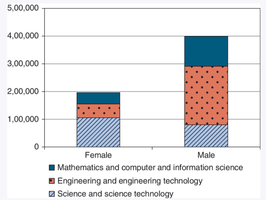
Feminist: Highlights gendered patterns in education, such as the underrepresentation of women in STEM fields.
Indigenous: Advocates for decolonizing education and incorporating Indigenous ways of knowing.
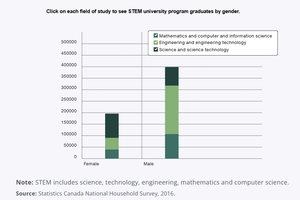
Socialization and Social Inequality in Schools
Schools are key sites of socialization, shaping identities along axes of gender, sexuality, class, and ethnicity.
Gender: Hidden curriculum and teacher-student interactions reinforce gender norms.
Sexuality: Heteronormativity is embedded in school policies and curricula, often marginalizing LGBTQ2SI+ students.
Class: Parenting styles and school engagement differ by class, perpetuating inequalities.
Ethnicity: Curriculum content and classroom interactions can reinforce or challenge racial and ethnic inequalities.
Selection, Stratification, and Diversification in Post-Secondary Education
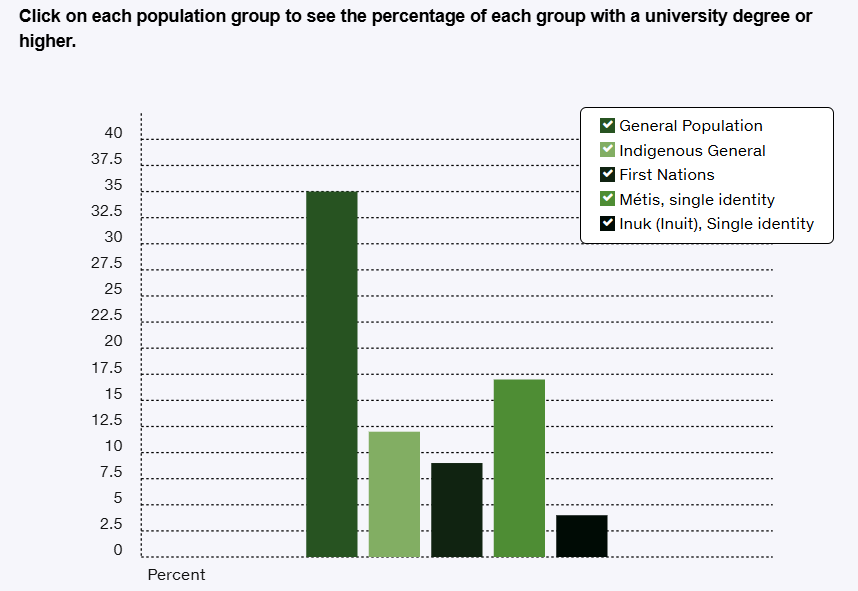
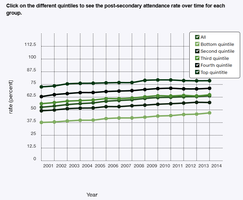
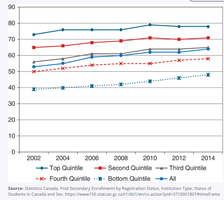
Canadian post-secondary education has become more diversified, with increased enrollment and a wider range of programs. However, selection and stratification persist, with access and outcomes varying by socioeconomic status and Indigenous identity.

Summary Table: Key Sociological Concepts in Social Inequality and Education
Concept | Definition | Example/Application |
|---|---|---|
Social Stratification | Structured ranking of groups by status, power, or prestige | Caste system in India, class system in Canada |
Gini Coefficient | Statistical measure of income inequality (0 = equality, 1 = inequality) | Canada's Gini coefficient rising from 0.281 to 0.32 (1989-2000s) |
Absolute Poverty | Inability to meet basic needs | Living on less than $1.90/day (World Bank) |
Relative Poverty | Poverty in relation to societal standards | Low income measure (LIM-AT) in Canada |
Credentialism | Emphasis on formal qualifications for employment | Rising university enrollment in Canada |
