 Back
BackWork, Precarity, and Health: The Social Determinants of Labour Market Insecurity
Study Guide - Smart Notes
 Tailored notes based on your materials, expanded with key definitions, examples, and context.
Work, Precarity, and Health
Introduction
Work is a fundamental social determinant of health, shaping individuals' well-being through employment conditions, income, and social status. Labour market insecurity, characterized by precarious work arrangements and job instability, has become increasingly prevalent in Canada and globally, with significant implications for health outcomes.
Labour Market Insecurity: Definitions and Trends
Types of Employment and Health Outcomes
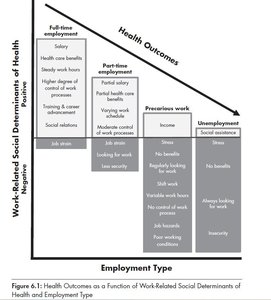
Employment type is closely linked to health outcomes. Secure, full-time employment is associated with the best health, while precarious and unemployed statuses are linked to the worst outcomes. There is a clear gradient, with increasing insecurity systematically harming health.
Secure jobs: Provide stability, benefits, and higher control, leading to positive health outcomes.
Precarious jobs: Include part-time, contract, and gig work, often lacking benefits and stability.
Unemployment: Associated with material and social deprivation, psychological stress, and adverse health behaviors.
Trends in Canadian Employment
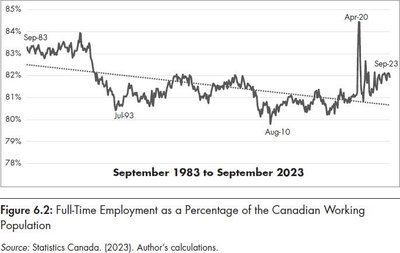
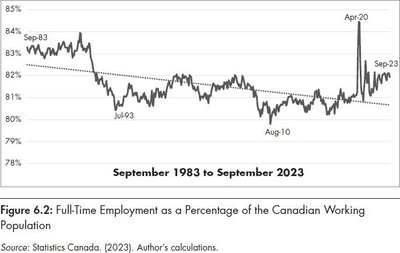
Since the 1980s, Canada has seen a decline in full-time, permanent jobs and a rise in part-time, temporary, and non-standard work. Youth and marginalized groups are disproportionately affected, and the COVID-19 pandemic caused temporary fluctuations in precarious employment.
Global Comparisons: Welfare State Regimes
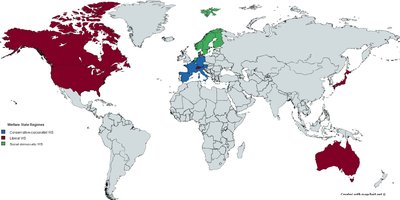
Different countries manage labour market insecurity in distinct ways. Nordic countries, for example, offer stronger social safety nets and labour protections compared to North America, resulting in better health outcomes for workers.
Dimensions of Labour Market Security
Forms of Security
Employment security: Stability in accessing paid work.
Job security: Protection from dismissal and stability in position.
Income security: Adequacy, predictability, and sufficiency of income.
Work security: Protection from unsafe or unhealthy conditions.
The decline in these securities since the 1980s has led to a rise in precarity and associated health risks.
Mechanisms Linking Precarious Work to Health
Pathways and Effects
Stress: High job insecurity, little control, and poor social interactions increase stress, which is the principal pathway to adverse health outcomes.
Financial strain: Inadequate and unreliable income leads to depression and anxiety, especially among women and racialized workers.
Workplace conditions: Precarious workers face worse working conditions and higher exposure to hazards.

Flexibilization and Flexicurity
Flexibilization
Flexibilization refers to the increase in flexible and precarious jobs at the expense of full-time employment with benefits. This trend has contributed to employment strain, including insecurity in employment, income, benefits, scheduling, and location.
Flexicurity
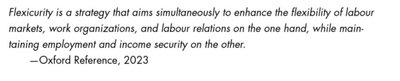
Flexicurity is a strategy that aims to balance labour market flexibility with employment and income security. The Danish model, for example, combines a flexible labour market, generous welfare systems, and active labour market policies (LMP) to support workers during transitions.
Workplace Health and Safety
Work as a Source of Harm
Workplace injuries and illnesses are systematic outcomes of work organization, conditions, and employment relationships. Vulnerable workers, such as those in precarious jobs, are more likely to experience harm. Official statistics often underestimate the true number of injuries due to underreporting and exclusion of certain worker groups.
Occupational Health and Safety (OHS) in Canada
Prevention principle: Employers are responsible for hazard identification and control.
Worker rights: Right to know about hazards, participate in safety committees, and refuse unsafe work.
Weak enforcement: Inspections are rare and sanctions are weak, leading to ongoing risks.
Precautionary Principle vs. Clear Evidence
The precautionary principle suggests that when harm is suspected, the burden of proof should be on those introducing the risk. In contrast, the 'clear evidence' standard delays action until harm is proven, often resulting in preventable injuries and deaths.
Theoretical Models Linking Work and Health
Job Strain Model (Karasek)
This model posits that job stress arises from the combination of high psychological demands and low decision latitude (control). High-strain jobs are associated with worse health outcomes.
High-strain jobs: High demand, low control (e.g., hospital janitor, waiter).
Active jobs: High demand, high control (e.g., office manager, engineer).
Effort–Reward Imbalance (ERI)
Health risks increase when the effort expended at work is not matched by adequate rewards (salary, recognition, security).
Organizational Justice
Perceived fairness in the workplace is a determinant of health, influencing stress and well-being.
Policy Options and Pathways to Healthier Work
Improving Labour Market Conditions
Stronger enforcement of OHS laws and worker-only safety committees with enforcement powers.
Narrowing loopholes in safety standards and adopting the precautionary principle.
Expanding income supports (e.g., EI, universal basic income) and facilitating unionization.
Promoting education and civil society support for worker safety.
Conclusion
Labour market insecurity is a core social determinant of health. Precarious work arrangements, income insecurity, and unsafe conditions disproportionately harm marginalized groups. Understanding the relationship between work and health requires attention to social position, labour market context, and policy interventions that promote secure, adequate, appropriate, and appreciated work.
