 Back
BackChapter 4: Introduction to Probability – Structured Study Notes
Study Guide - Smart Notes
 Tailored notes based on your materials, expanded with key definitions, examples, and context.
Introduction to Probability
Basic Concepts and Probability
Probability is a fundamental concept in statistics that quantifies the likelihood of events occurring. Probabilities are expressed as values between 0 and 1, where 0 indicates impossibility and 1 indicates certainty. Understanding probability is essential for interpreting statistical results and making informed decisions under uncertainty.
Event: Any collection of results or outcomes of a procedure.
Simple Event: An outcome that cannot be broken down into simpler components.
Sample Space: The set of all possible simple events (outcomes) of a probability experiment.
Examples of Sample Spaces:
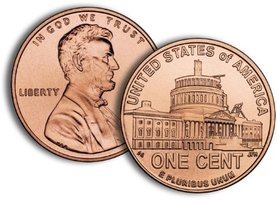
Tossing a coin: {Head, Tail}
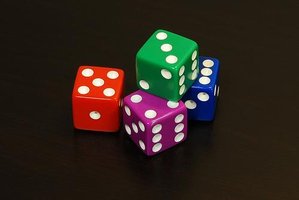
Rolling a die: {1, 2, 3, 4, 5, 6}
Answering a true/false question: {True, False}
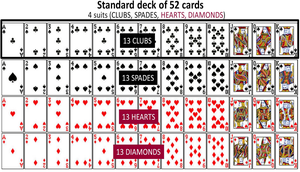
Selecting a card from a deck: {A, 2, 3, ..., J, Q, K} (52 cards)
Notation for Probabilities
Probability is denoted by P. For an event A, P(A) represents the probability that event A occurs.
Three Common Approaches to Finding Probability
There are three main approaches to determining the probability of an event:
Relative Frequency Approximation: Conduct or observe a procedure many times and count the number of times event A occurs. Probability is approximated as:
Classical Approach (Equally Likely Outcomes): If a procedure has n equally likely simple events and event A can occur in s ways, then:
Subjective Probability: Probability is estimated based on knowledge of relevant circumstances, often used when empirical or classical methods are not applicable.

Simulations
When classical or empirical approaches are not feasible, simulations can be used. A simulation is a process that mimics the behavior of a real-world procedure to estimate probabilities.
Rounding Probabilities
Probabilities should be expressed as exact fractions or decimals, or rounded to three significant digits for clarity.
Law of Large Numbers
The law of large numbers states that as a procedure is repeated many times, the relative frequency probability of an event tends to approach the actual probability. This law applies to large numbers of trials, not individual outcomes.
Odds
Odds are another way to express the likelihood of an event, commonly used in gambling and lotteries. Odds and probabilities are related but not identical.
Calculating Probabilities: Examples and Applications
Sample Space Construction
Constructing the sample space is a key step in probability problems. For example, if a family has three children, the sample space for the gender sequence (order matters) is:
BBB, BBG, BGB, BGG, GBB, GBG, GGB, GGG
Each sequence is a simple event.
Probability Calculation Examples
Probability of getting exactly two boys: Count the number of outcomes with exactly two boys and divide by the total number of outcomes.
Probability of getting at least one girl: Count all outcomes with at least one girl or use the complement rule.
Complementary Events
The probability of an event not occurring is called the complement. If A is an event, then:
Significant Results and the Rare Event Rule
The rare event rule states that if, under a given assumption, the probability of an observed event is very small (commonly ≤ 0.05), and the event occurs, the assumption is likely incorrect. This is foundational for inferential statistics and hypothesis testing.
Addition and Multiplication Rules
Addition Rule
The addition rule is used to find the probability that at least one of two events occurs. For any two events A and B:
If A and B are disjoint (mutually exclusive), then and:
Disjoint (Mutually Exclusive) Events
Events that cannot occur at the same time.
Example: Selecting a person who is male and selecting a person who is female are disjoint events.
Multiplication Rule
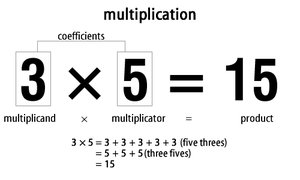
The multiplication rule is used to find the probability that two events both occur. For independent events A and B:
For dependent events, the probability is adjusted for the outcome of the first event.
Independent Events
Events where the occurrence of one does not affect the probability of the other.
Example: Rolling a die and flipping a coin.
Dependent Events
Events where the outcome of one affects the probability of the other.
Example: Drawing cards from a deck without replacement.
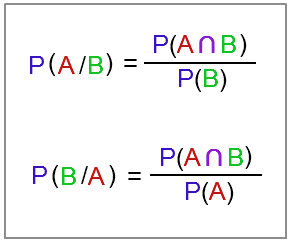
Conditional Probability
Definition and Notation
Conditional probability is the probability of event B occurring given that event A has already occurred. It is denoted as P(B | A):
Examples
Drawing cards from a deck without replacement.
Selecting marbles from an urn without replacement.
Counting Principles in Probability
Basic Principle of Counting
The fundamental counting principle states that if one event can occur in m ways and a second event can occur in n ways, the two events together can occur in m × n ways.
Factorial Notation
Factorial notation is used to count the number of ways to arrange n objects:
Permutations and Combinations
Permutation: An arrangement of objects in a specific order. The number of permutations of n objects taken r at a time is:
Combination: A selection of objects where order does not matter. The number of combinations of n objects taken r at a time is:
Applications
Counting possible outcomes in multi-step experiments (e.g., tossing coins, rolling dice, drawing cards).
Calculating probabilities in card games, lotteries, and selection problems.
Summary Table: Probability Approaches
Approach | Description | Formula | When to Use |
|---|---|---|---|
Relative Frequency | Based on experimental results | When data from repeated trials is available | |
Classical | Assumes equally likely outcomes | When all outcomes are equally likely | |
Subjective | Based on expert judgment or knowledge | N/A | When empirical or classical methods are not possible |
Key Formulas
Probability of an event:
Complement:
Addition Rule:
Multiplication Rule (Independent):
Conditional Probability:
Permutations:
Combinations:
Practice Problems and Applications
Find the probability of getting exactly two boys in a family with three children.
Calculate the probability of drawing a queen and then an ace from a deck of cards with replacement.
Determine the number of ways to arrange 4 books on a shelf from a collection of 10 books.
Find the probability of getting at least one defective item in a sample of 12 products with a 15% defect rate.
Additional info: These notes cover the foundational concepts of probability, including sample spaces, probability rules, counting principles, and practical applications, as outlined in a typical college statistics curriculum.
