 Back
BackIntroduction to Statistics: Key Concepts and Methods
Study Guide - Smart Notes
 Tailored notes based on your materials, expanded with key definitions, examples, and context.
Introduction to Statistics
Statistical and Critical Thinking
Statistics is the science of collecting, organizing, analyzing, and interpreting data to make decisions. Critical thinking is essential in statistics to ensure that data are collected and analyzed appropriately, and that conclusions are valid.
Key Point: The method of data collection is crucial. Poorly collected data can lead to invalid results, regardless of the analysis method.
Example: If a sample is not representative of the population, the results may be biased and misleading.
Types of Data
Understanding the types of data is fundamental in statistics, as it determines the appropriate methods for analysis.
Qualitative (Categorical) Data: Describes qualities or categories (e.g., gender, color).
Quantitative (Numerical) Data: Represents counts or measurements (e.g., height, age).
Collecting Sample Data
The Gold Standard in Experiments
Random assignment to placebo and treatment groups is considered the "gold standard" in experimental design. A placebo is an inactive treatment used to compare against the actual treatment to measure its true effect.
Randomization: Ensures groups are similar and results are unbiased.
Placebo Effect: Improvement due to the belief in treatment, not the treatment itself.
Sources of Data
Data can be collected through observational studies or experiments:
Observational Study: Observes and measures characteristics without intervention.
Experiment: Applies a treatment and observes its effects on subjects (experimental units).
Example: Ice Cream and Drownings
Observational Study: May falsely suggest causation due to lurking variables (e.g., temperature affects both ice cream sales and drownings).
Experiment: Controls variables to test causation directly.
Design of Experiments
Replication
Replication involves repeating an experiment on multiple subjects to ensure results are reliable and not due to chance.
Blinding and Double-Blind
Blinding: Subjects do not know if they receive treatment or placebo, reducing bias.
Double-Blind: Both subjects and experimenters are unaware of group assignments, further reducing bias.
Randomization
Subjects are assigned to groups by chance, ensuring groups are comparable and results are valid.
Sampling Methods
Sampling methods determine how subjects are selected from the population. Proper sampling is essential for valid statistical inference.
Simple Random Sample
Every possible sample of size n has an equal chance of being selected. This is the foundation of most statistical methods.
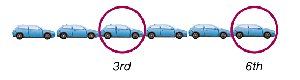
Systematic Sampling
Selects every kth element from a list after a random starting point.
Convenience Sampling
Uses data that are easy to obtain, but may not be representative of the population.

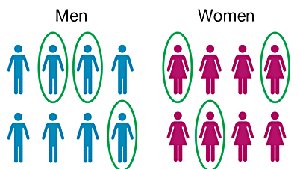
Stratified Sampling
Divides the population into subgroups (strata) with similar characteristics, then samples from each subgroup.
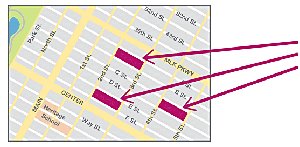
Cluster Sampling
Divides the population into clusters, randomly selects some clusters, and includes all members from those clusters.
Multistage Sampling
Combines several sampling methods in stages, often used in large-scale surveys.
Types of Observational Studies
Cross-sectional Study: Data collected at one point in time.
Retrospective (Case-Control) Study: Data collected from past records or interviews.
Prospective (Cohort) Study: Data collected in the future from groups sharing common factors.
Confounding
Confounding occurs when the effect of one variable cannot be separated from the effect of another. Proper experimental design aims to minimize confounding.
Controlling Effects of Variables
Completely Randomized Design: Subjects are randomly assigned to treatment groups.
Randomized Block Design: Subjects are grouped into blocks with similar characteristics, then randomly assigned treatments within each block.
Matched Pairs Design: Subjects are paired based on similarities, and each pair receives different treatments.
Rigorously Controlled Design: Subjects are carefully assigned to groups to ensure similarity, though this is difficult to achieve perfectly.
Sampling Errors
Sampling Error (Random Sampling Error)
Occurs due to chance fluctuations when a random sample does not perfectly represent the population.
Nonsampling Error
Results from human mistakes, such as data entry errors, biased questions, or inappropriate statistical methods.
Nonrandom Sampling Error
Occurs when a nonrandom method (e.g., convenience sample) is used, leading to bias.
