Pulse Rates Shown below are pulse rates from Data Set 1 “Body Data” in Appendix B, and the StatCrunch display from two-way analysis of variance of these data. In analyzing these data, what important feature is addressed with two-way analysis of variance that is not addressed with two separate tests of (1) difference between mean pulse rates based on gender, or (2) differences among the mean pulse rates in the different age brackets?
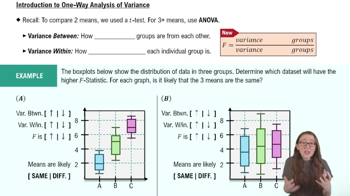
One vs. Two What is the fundamental difference between one-way analysis of variance and two-way analysis of variance?
Verified step by step guidance
Verified video answer for a similar problem:
Key Concepts
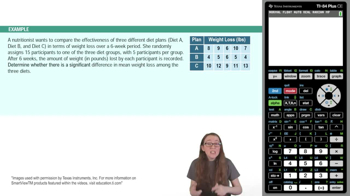
One-Way Analysis of Variance (ANOVA)
Two-Way Analysis of Variance (ANOVA)
Interaction Effect in Two-Way ANOVA
Win 4 Lottery Shown below is a histogram of digits selected in California’s Win 4 lottery. Each drawing involves the random selection (with replacement) of four digits between 0 and 9 inclusive.
c. Identify the frequencies, then test the claim that the digits are selected from a population in which the digits are all equally likely. Is there a problem with the lottery?
Interaction
b. If there does appear to be an interaction between gender and age bracket, how should we continue with the procedure for two-way analysis of variance?
Win 4 Lottery Shown below is a histogram of digits selected in California’s Win 4 lottery. Each drawing involves the random selection (with replacement) of four digits between 0 and 9 inclusive.
b. Does the display depict a normal distribution? Why or why not? What should be the shape of the histogram?
Gender and Age Bracket Based on the display included with Exercise 8, what are the final conclusions?
In Exercises 1–5, refer to the following list of numbers of years that deceased U.S. presidents, popes, and British monarchs lived after their inauguration, election, or coronation, respectively. (As of this writing, the last president is George H. W. Bush, the last pope is John Paul II, and the last British monarch is George VI.) Assume that the data are samples from larger populations.
[Image]
Exploring the Data Include appropriate units in all answers.
e. What is the level of measurement of the data (nominal, ordinal, interval, ratio)?
