Subacromial, subcoracoid, and subscapular bursae reduce friction in the____joint. (a) hip (b) knee (c) elbow (d) shoulder
Verified step by step guidance
1
Step 1: Understand what bursae are. Bursae are small fluid-filled sacs that reduce friction between moving structures such as bones, tendons, and muscles around joints.
Step 2: Identify the specific bursae mentioned: subacromial, subcoracoid, and subscapular bursae. These names are related to anatomical landmarks around the shoulder region.
Step 3: Recall the anatomy of the shoulder joint, which includes the acromion, coracoid process, and subscapularis muscle. These structures are all part of the shoulder complex.
Step 4: Recognize that the bursae named (subacromial, subcoracoid, subscapular) are located around the shoulder joint to reduce friction during shoulder movements.
Step 5: Conclude that the bursae reduce friction in the shoulder joint, so the correct answer is (d) shoulder.
Verified video answer for a similar problem:

This video solution was recommended by our tutors as helpful for the problem above
Play a video:
0 Comments
Key Concepts
Here are the essential concepts you must grasp in order to answer the question correctly.
Bursae and Their Function
Bursae are small fluid-filled sacs located near joints that reduce friction between bones, tendons, and muscles during movement. They act as cushions to prevent wear and tear, facilitating smooth motion.
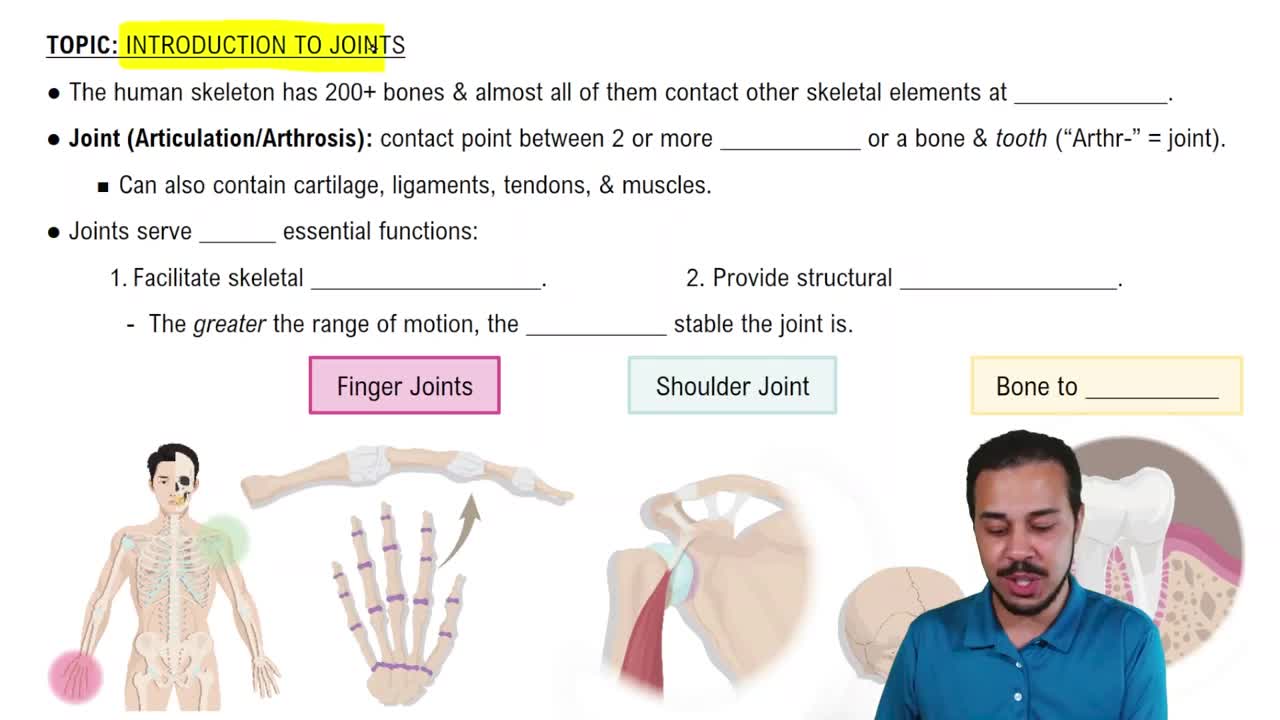
The shoulder joint is a ball-and-socket joint formed by the humerus and scapula, allowing a wide range of motion. It contains several bursae, including subacromial, subcoracoid, and subscapular, which help reduce friction in this highly mobile joint.
The subacromial bursa lies beneath the acromion, the subcoracoid bursa is under the coracoid process, and the subscapular bursa is near the subscapularis muscle. All these bursae are associated with the shoulder joint, aiding in smooth arm movements.