Mr. Jessup, a 55-year-old man, is operated on for a cerebral tumor. About a month later, he appears at his physician's office complaining of excessive thirst. He claims to have been drinking about 20 liters of water daily for the past week and says he has been voiding nearly continuously. A urine sample is collected and its specific gravity is reported as 1.001. What is your diagnosis of Mr. Jessup's problem? What connection might exist between his previous surgery and his present problem?
Verified step by step guidance
1
Step 1: Identify the key symptoms presented by Mr. Jessup: excessive thirst (polydipsia), very high water intake (about 20 liters daily), and nearly continuous urination (polyuria). These symptoms suggest a problem with water balance and urine concentration.
Step 2: Analyze the urine specific gravity value of 1.001, which is very close to pure water (1.000). This indicates that the urine is very dilute, meaning the kidneys are not concentrating the urine properly.
Step 3: Consider the physiological mechanisms controlling water balance: Antidiuretic hormone (ADH), also called vasopressin, regulates water reabsorption in the kidneys. A deficiency or lack of response to ADH leads to large volumes of dilute urine and compensatory excessive thirst.
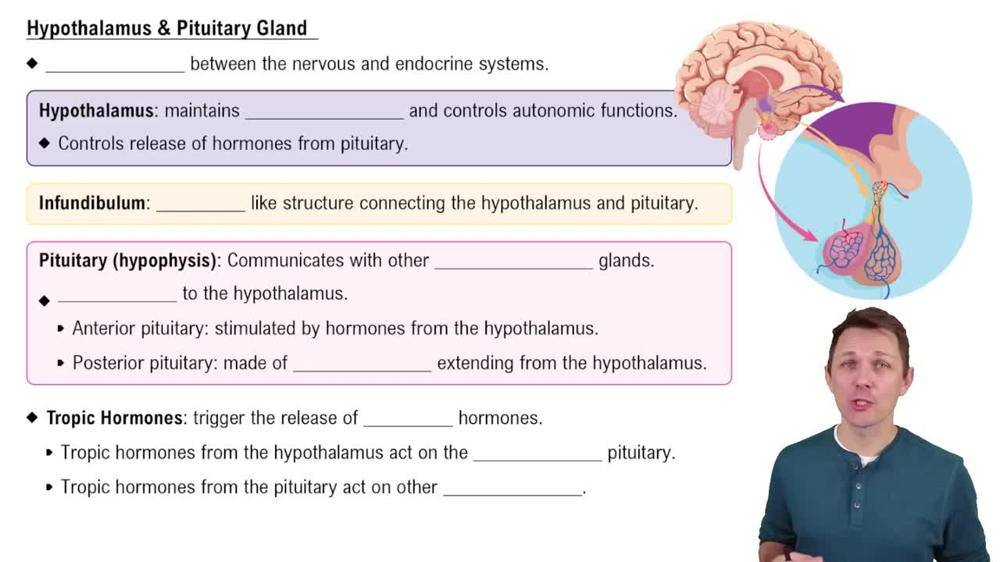
Step 4: Connect the previous cerebral tumor surgery to the current symptoms. The hypothalamus and posterior pituitary gland, located in the brain, produce and release ADH. Surgery in this area can damage these structures, causing central diabetes insipidus, characterized by ADH deficiency.
Step 5: Conclude that Mr. Jessup likely has central diabetes insipidus caused by damage to the hypothalamic-pituitary axis during his cerebral tumor surgery, leading to decreased ADH secretion, resulting in excessive urination of dilute urine and increased thirst.
Verified video answer for a similar problem:
This video solution was recommended by our tutors as helpful for the problem above
Video duration:
5m
Play a video:
0 Comments
Key Concepts
Here are the essential concepts you must grasp in order to answer the question correctly.
Diabetes Insipidus
Diabetes insipidus is a condition characterized by excessive thirst and large volumes of dilute urine due to the kidneys' inability to concentrate urine. It results from a deficiency of antidiuretic hormone (ADH) or the kidneys' resistance to it, leading to low urine specific gravity, typically close to 1.000.
Role of the Hypothalamus and Pituitary Gland in Water Balance
The hypothalamus produces ADH, which is stored and released by the posterior pituitary gland. ADH regulates water reabsorption in the kidneys, concentrating urine and maintaining body fluid balance. Damage to these areas, such as from brain surgery near the pituitary, can disrupt ADH secretion, causing diabetes insipidus.
Urine Specific Gravity and Its Clinical Significance
Urine specific gravity measures urine concentration, reflecting kidney function and hydration status. Normal values range from 1.005 to 1.030; a value near 1.001 indicates very dilute urine, often seen in diabetes insipidus. This helps differentiate causes of excessive urination and thirst.