Isotopes of an element differ from each other in the number of (a) Protons in the nucleus (b) Neutrons in the nucleus (c) Electrons in the outer shells (d) a, b, and c are all correct
Verified step by step guidance
1
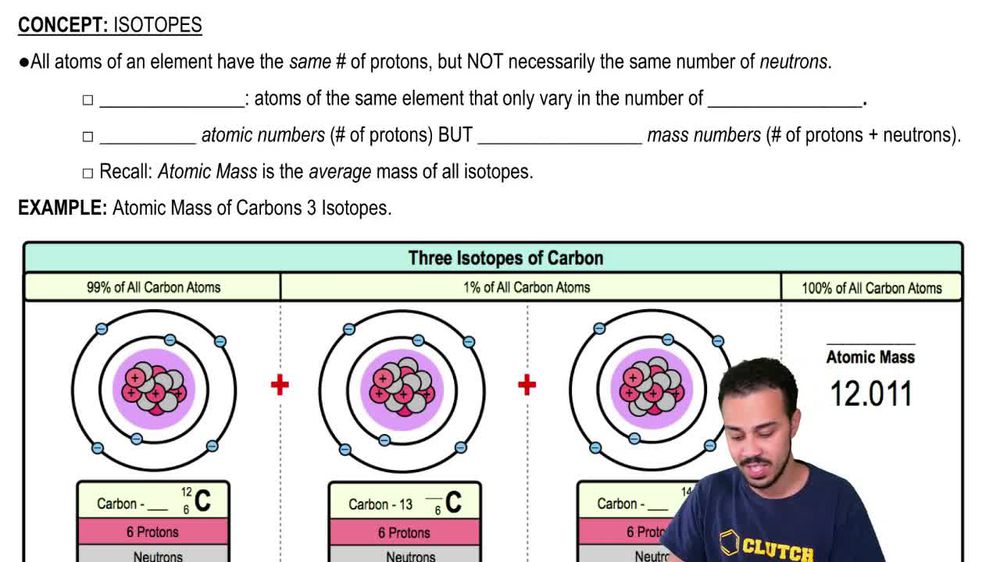
Understand the definition of isotopes: Isotopes are variants of the same chemical element that have the same number of protons but differ in the number of neutrons in their nuclei.
Recall that the number of protons defines the element itself, so isotopes must have the same number of protons.
Recognize that electrons can vary in number due to ionization, but this does not define isotopes; isotopes differ specifically in neutrons.
Conclude that isotopes differ only in the number of neutrons in the nucleus, while protons remain constant.
Therefore, the correct answer corresponds to option (b): Neutrons in the nucleus.
Verified video answer for a similar problem:
This video solution was recommended by our tutors as helpful for the problem above
Video duration:
1m
Play a video:
0 Comments
Key Concepts
Here are the essential concepts you must grasp in order to answer the question correctly.
Isotopes
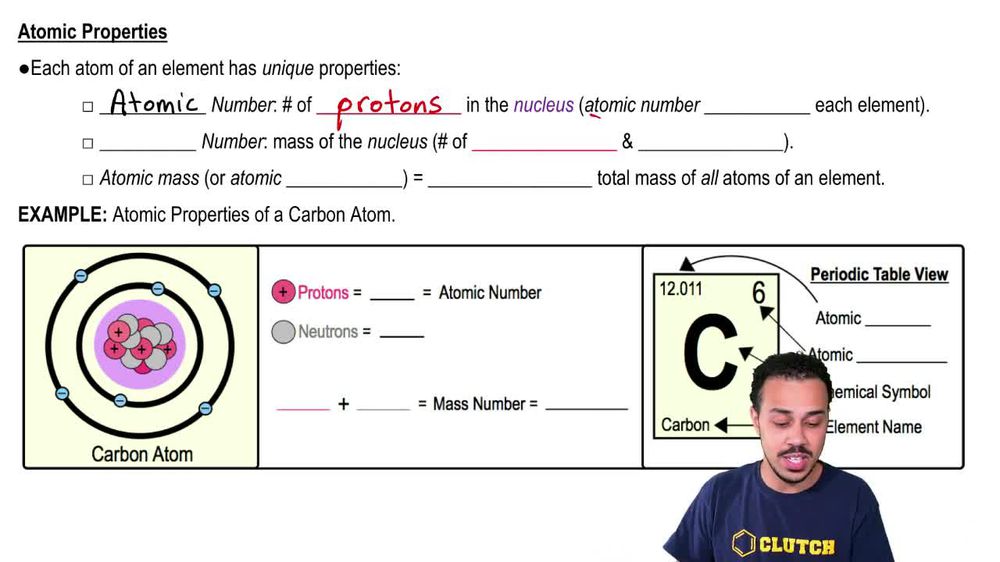
Isotopes are variants of the same chemical element that have the same number of protons but differ in the number of neutrons in their nuclei. This difference in neutron number results in different atomic masses but does not affect the chemical properties significantly.
Protons are positively charged particles in the nucleus, and their number defines the atomic number of an element. All atoms of an element have the same number of protons, which determines the element's identity.
Electrons orbit the nucleus in shells and determine the chemical behavior of an atom. While isotopes have the same number of electrons in a neutral state, changes in electron number create ions, not isotopes.