In which layer(s) of the epidermis does cell division occur?
Verified step by step guidance
1
Understand that the epidermis is the outermost layer of the skin, composed of multiple sublayers, each with distinct functions and cell types.
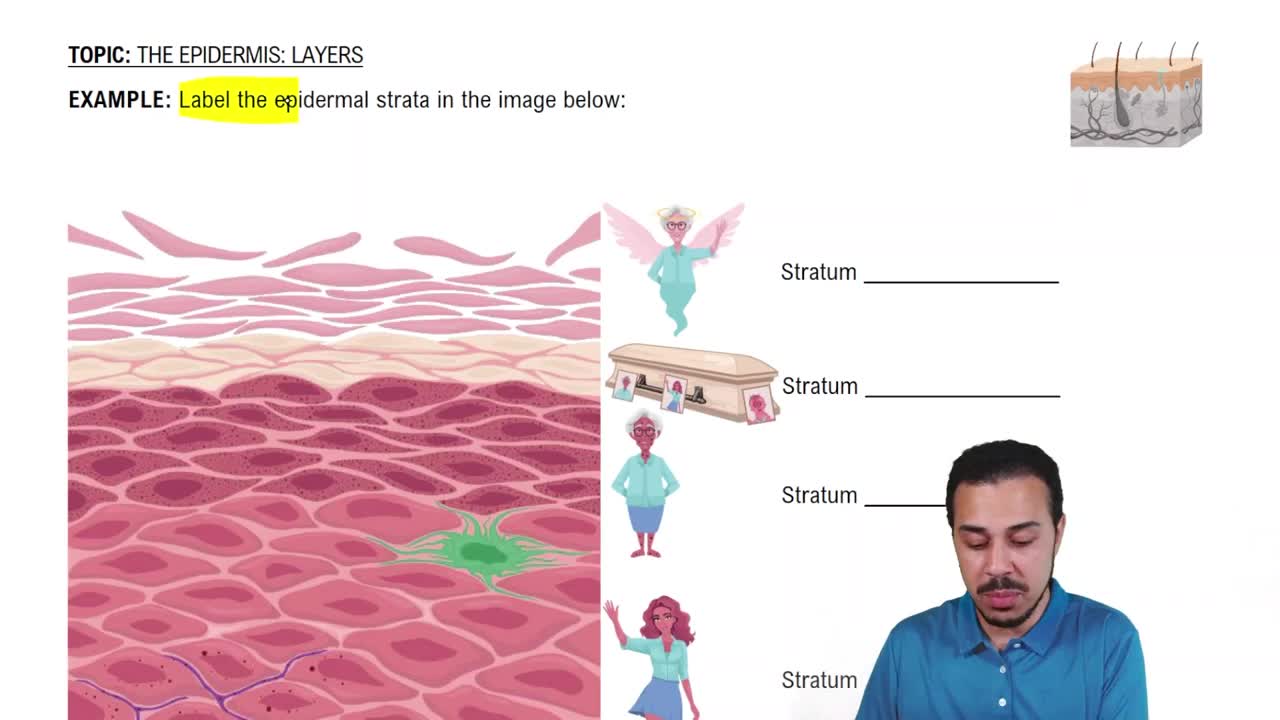
Recall the layers of the epidermis from deepest to most superficial: stratum basale, stratum spinosum, stratum granulosum, stratum lucidum (only in thick skin), and stratum corneum.
Identify that cell division primarily occurs in the stratum basale, which is the deepest layer of the epidermis and contains basal keratinocytes that actively divide to produce new cells.
Note that as new cells are produced in the stratum basale, they move upward through the other layers, undergoing differentiation and eventually forming the protective outer layers.
Conclude that the stratum basale is the main site of cell division in the epidermis, while the other layers mainly involve cell maturation and keratinization.
Verified video answer for a similar problem:
This video solution was recommended by our tutors as helpful for the problem above
Video duration:
2m
Play a video:
0 Comments
Key Concepts
Here are the essential concepts you must grasp in order to answer the question correctly.
Epidermis Structure
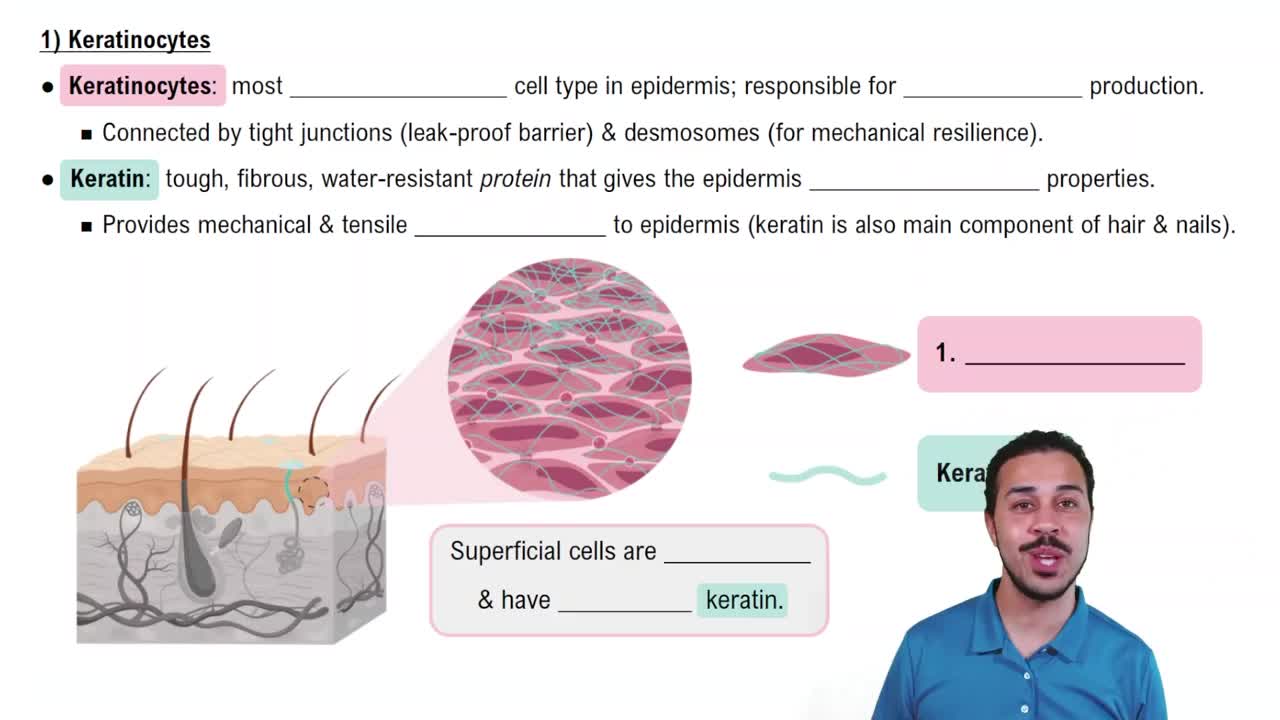
The epidermis is the outermost layer of the skin, composed of multiple sublayers including the stratum basale, stratum spinosum, stratum granulosum, stratum lucidum, and stratum corneum. Each layer has distinct functions and cell types, contributing to skin protection and regeneration.
Cell division in the epidermis primarily occurs in the stratum basale, the deepest layer, where basal keratinocytes undergo mitosis. This process replenishes skin cells, allowing continuous renewal and repair of the epidermis.
After cell division in the stratum basale, keratinocytes begin to differentiate and migrate upwards through the epidermal layers. As they move, they change shape and function, eventually forming the protective outer layer before being shed.